





Insulation System & Temperature Class of 1000kVA Dry Type Transformer
Apr 16, 2026
Leave a message
As a leading manufacturer, GNEE specializes in high-performance Dry-type Transformers, including Three-Phase Dry-type Transformers, Cast Resin Power Transformers, and customized Dry distribution transformers for global markets. In this guide, we focus on the Insulation System & Temperature Class of 1000kVA Dry Type Transformer, which are critical factors affecting safety, lifespan, and operational reliability.
Within the first stage of transformer selection, understanding the Insulation System & Temperature Class of 1000kVA Dry Type Transformer ensures you choose the right Indoor Three-Phase Transformer for demanding environments such as factories, hospitals, and commercial buildings.
Insulation System of 1000kVA Dry Type Transformer
The insulation system of a 1000kVA Dry Type Transformer is the core factor that determines its electrical strength, thermal performance, and environmental adaptability. Compared with oil-filled units, dry cast resin transformers use solid insulation materials, making them safer and more eco-friendly.
Epoxy Resin Insulation in Cast Resin Type Transformer
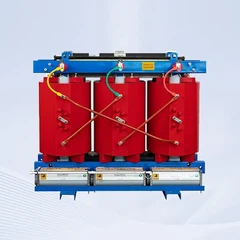
In a cast resin type transformer, the windings are encapsulated with epoxy resin using vacuum casting technology. This creates a solid insulation layer that protects against moisture, dust, and chemical contamination.
Key benefits:
- High dielectric strength
- Flame-retardant and self-extinguishing
- Excellent resistance to humidity and pollution
This makes the cast resin distribution transformer ideal for indoor installations where safety is a top priority.
Insulation Materials Used in Dry-type Transformer
A Low Loss Dry-type Transformer uses multiple insulation materials to ensure performance and durability:
- Epoxy resin (primary insulation)
- Glass fiber reinforcement
- Nomex insulation paper
- Polyester films
These materials work together to improve the insulation integrity of the dry core transformer, ensuring long-term stable operation under varying loads.

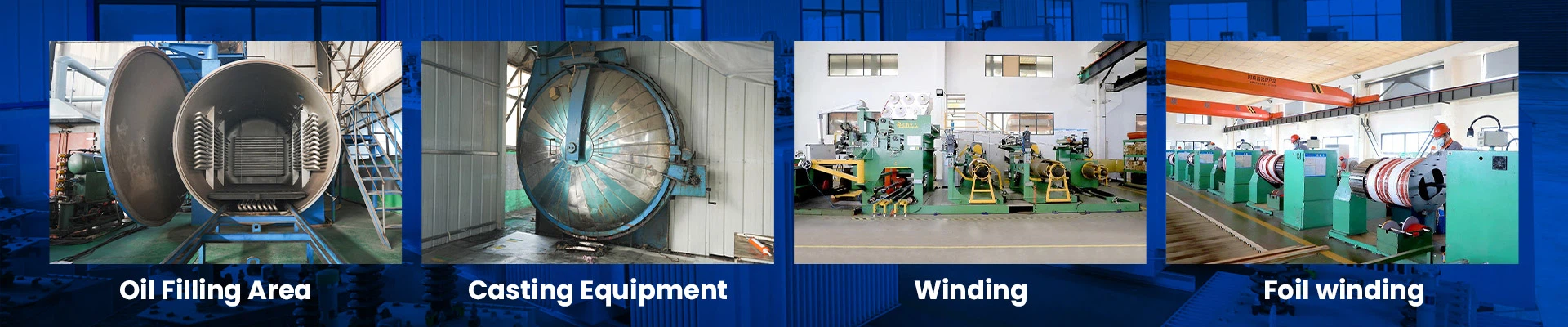
Transformer coil epoxy resin casting process in factory workshop
Temperature Class of 1000kVA Dry Type Transformer
The temperature class defines the maximum allowable operating temperature of the insulation system in a Three-Phase Dry-type Transformer.
Common Temperature Classes in Cast Resin Power Transformer
Typical temperature classes include:
- Class F (155°C)
- Class H (180°C)
Most cast coil dry type transformers are designed with Class F or Class H insulation systems, allowing higher thermal endurance and longer service life.
Temperature Rise Limits in Dry Distribution Transformer
Temperature rise refers to how much the transformer temperature increases above ambient conditions.
Standard limits for a Dry distribution transformer:
- Class F: Temperature rise ≤100K
- Class H: Temperature rise ≤125K
This ensures that the Three-Phase Cast Resin Transformer operates safely without degrading insulation materials.
Relationship Between Insulation System & Temperature Class in Dry-type Transformer
The insulation system and temperature class are closely linked in a cast resin dry type transformer.
How Insulation Determines Temperature Performance
The better the insulation material, the higher the temperature class a Cast Resin Power Transformer can achieve.
For example:
- Epoxy resin + glass fiber → Class F/H performance
- Enhanced insulation design → longer lifespan
This directly impacts:
- Transformer efficiency
- Overload capacity
- Maintenance frequency
A well-designed dry core transformer can handle short-term overloads without insulation damage.
Cooling Methods Supporting Temperature Class of Dry-type Transformer
Cooling plays a key role in maintaining the temperature limits of a Low Loss Dry-type Transformer.
Air Cooling Systems in Three-Phase Dry-type Transformer
Common cooling methods:
- AN (Air Natural)
- AF (Air Forced with fans)
With forced air cooling, a Three-Phase Dry-type Transformer can increase output capacity while maintaining safe temperature levels.
Advantages:
- Improved heat dissipation
- Enhanced load capacity
- Stable long-term operation

Monitoring System for Temperature Control in Cast Resin Transformer
Modern cast resin distribution transformers are equipped with intelligent monitoring systems.
Temperature Monitoring Devices in Cast Resin Power Transformer
Key components include:
- PT100 temperature sensors
- Digital temperature controllers
- Alarm and trip protection systems
These systems ensure real-time temperature tracking, preventing overheating and ensuring the reliability of the Indoor Three-Phase Transformer.
Technical Parameters Related to Insulation System & Temperature Class
Below is a typical parameter table for a 1000kVA Three-Phase Cast Resin Transformer:
| Parameter | Value |
|---|---|
| Rated Capacity | 1000 kVA |
| Phase | Three-Phase |
| Insulation Class | F / H |
| Max Winding Temperature | 155°C / 180°C |
| तापमान Rise | ≤100K / ≤125K |
| Cooling Method | AN / AF |
| Insulation Material | Epoxy Resin + Glass Fiber |
| Protection Class | IP20 / IP23 / IP44 |
| Frequency | 50/60 Hz |
| Efficiency | ≥98% |
These specifications highlight the advanced insulation and thermal performance of a cast resin type transformer.
Advantages of High-Quality Insulation System in Dry-type Transformer
A well-designed insulation system brings multiple advantages to a dry cast resin transformer.
Why Insulation Matters in Dry-type Transformer
Enhanced operational safety
- Longer service life
- Reduced maintenance costs
- High resistance to environmental factors
- Stable performance under heavy load
These benefits make cast resin dry type transformer manufacturers focus heavily on insulation technology.
Applications of Dry-type Transformer with High Temperature Class
A Three-Phase Cast Resin Transformer with advanced insulation is widely used in:
- Industrial plants
- Commercial buildings
- Hospitals and airports
- Renewable energy systems
- Data centers
Its safety and reliability make it the preferred Indoor Three-Phase Transformer in modern infrastructure.

Why Choose GNEE as Your Dry Type Transformer Manufacturer?
GNEE is a trusted supplier of Dry-type Transformers and Cast Resin Power Transformers.
Our strengths:
- Advanced manufacturing technology
- Strict quality control system
- OEM & ODM customization
- Global export experience
- Competitive pricing and fast delivery
We provide high-quality cast resin distribution transformers tailored to your project needs.
Conclusion: Insulation System & Temperature Class of 1000kVA Dry Type Transformer
The Insulation System & Temperature Class of 1000kVA Dry Type Transformer are key factors that determine performance, safety, and durability. Choosing the right cast resin dry type transformer ensures reliable operation in demanding environments while minimizing maintenance costs.
👉 Looking for a high-quality Dry-type Transformer with advanced insulation and temperature performance? Contact GNEE today to get expert support and a competitive quotation for your project!
What common quality defects occur during the production of 1000kVA cast resin dry type transformer?
Common defects include epoxy cracks, bubbles, high partial discharge, uneven winding, loose core, and over-temperature rise. These are mainly caused by poor vacuum casting, insufficient curing, or unqualified raw materials. Our epoxy cast dry type transformers adopt vacuum pressure casting to ensure no cracks, low partial discharge, and stable performance.
Why do some 1000kVA dry type transformers have high no-load loss and noise?
High loss and noise result from low-grade silicon steel sheet, improper core lamination, loose clamping, or uneven winding tension. We use high-quality cold-rolled grain-oriented silicon steel and precision assembly to control loss and noise within IEC standards.
What damages may happen during transportation of 1000kVA dry type transformer?
Vibration and collision may cause loose fasteners, core displacement, winding deformation, or epoxy surface damage. We use fixed shipping base, overall packaging, and pre-delivery testing to ensure safe transportation.
Can 1000kVA cast resin dry type transformer be placed horizontally during transport?
No. Horizontal placement may damage winding insulation and internal structure. It must be transported vertically with clear lifting and upright marks.
What are the key installation requirements for 1000kVA dry type transformer?
It needs a level, firm concrete foundation, sufficient ventilation space, safe distance from walls and barriers. Poor installation will lead to vibration, noise and overheating.
Can 1000kVA epoxy cast dry type transformer be installed outdoors directly?
Standard cast resin dry type transformer is for indoor use. Outdoor installation requires an IP54/IP56 enclosure for rainproof, sun protection and ventilation.
Why does insulation resistance decrease after installation?
Moisture, dust, high humidity and dirty surface are the main causes. Regular cleaning and drying can restore insulation performance.
What is the normal temperature rise for 1000kVA cast resin dry type transformer?
For Class F insulation, the winding average temperature rise is ≤100K, hot-spot temperature ≤155°C. Overload, poor ventilation and dust will cause abnormal high temperature.
What causes abnormal noise during operation of 1000kVA dry type transformer?
Loose core, unbalanced load, voltage fluctuation, harmonics, uneven foundation or internal looseness after transportation.
Is 1000kVA cast resin dry type transformer maintenance-free?
It is nearly maintenance-free, but needs regular dust cleaning, terminal torque check, insulation test and temperature monitoring.
Are small epoxy cracks acceptable for 1000kVA dry type transformer?
Superficial micro-cracks can be repaired, but deep or penetrating cracks affect insulation safety and must be repaired or replaced.
Why does the temperature controller alarm on 1000kVA epoxy cast transformer?
Common causes: overload, fan failure, poor ventilation, temperature sensor fault or heavy harmonics.
Send Inquiry