








Copper vs Aluminum Winding for 1000kVA Dry Type Transformer: Key Differences Explained
Apr 16, 2026
Leave a message
When selecting a 1000kVA Dry Type Transformer, one of the most debated topics among engineers and procurement managers is the choice of winding material: Copper vs. Aluminum. Both materials have served the electrical industry for decades, but understanding the nuance of Copper vs Aluminum Winding for 1000kVA Dry Type Transformer is essential for balancing initial investment against long-term operational reliability.
As a leading professional cast resin dry type transformer manufacturer, GNEE specializes in producing high-performance Three-Phase Cast Resin Transformers tailored to global industrial standards. With our state-of-the-art factory and rigorous quality control, we provide both copper and aluminum solutions to meet specific budgetary and technical requirements.
Understanding the 1000kVA Three-Phase Dry-type Transformer Winding Choices
The winding is the heart of any cast resin power transformer. For a 1000kVA capacity, the choice between copper and aluminum impacts the physical size, weight, and thermal performance of the unit. Copper is naturally more conductive than aluminum, meaning a copper-wound dry core transformer can typically be smaller than its aluminum counterpart for the same power rating.

However, modern engineering has bridged the gap. A well-designed cast coil dry type transformer using aluminum can perform just as reliably as copper if the cross-sectional area of the conductor is appropriately increased to compensate for aluminum's lower conductivity.
At GNEE, we ensure that regardless of the material chosen, our Indoor Three-Phase Transformers meet all local and international efficiency standards.
Technical Performance: Conductivity and Heat Management
The primary difference lies in electrical resistivity. Copper has lower resistivity, which translates to higher efficiency in compact designs. For a Low Loss Dry-type Transformer, copper is often preferred in high-density urban environments or data centers where space is at a premium.
On the other hand, aluminum has a higher coefficient of thermal expansion. This means that in a cast resin type transformer, the engineering of the resin-to-metal bond is critical. GNEE utilizes advanced vacuum casting technology to ensure that our dry cast resin transformers can handle the thermal cycling of aluminum windings without cracking the insulation, providing a stable and long-lasting dry distribution transformer solution.
Comparing Costs and Weight in Cast Resin Power Transformers
For many projects, the decision comes down to the budget. Aluminum is significantly lighter and less expensive than copper. A 1000kVA three-phase dry-type transformer with aluminum windings can be 20% to 50% cheaper in raw material costs than a copper-wound unit.
Because aluminum is lighter, it also reduces the total weight of the cast resin distribution transformer, which can lower shipping costs and simplify installation in high-rise buildings or remote sites. However, because aluminum windings are bulkier, the outer enclosure (cabinet) must be larger, which might offset some of the weight savings.

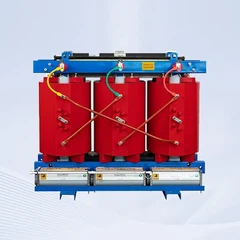
Close-up detail of the cast resin coils and high-quality copper/aluminum busbar connections on a GNEE transformer
Durability and Maintenance of Cast Resin Dry Type Transformers
When you source from reputable cast resin dry type transformer manufacturers like GNEE, durability is a guarantee. Copper is generally more resistant to "creep" (deforming under mechanical stress) and has superior corrosion resistance. This makes copper-wound three-phase cast resin transformers the ideal choice for harsh environments or applications with frequent heavy overloading.
Aluminum windings require specific termination techniques-usually using bi-metallic connectors-to prevent oxidation at the joints.
At GNEE, our factory-trained technicians use specialized cold-welding and bolted connection technologies to ensure that our aluminum-wound cast coil dry type transformers offer a maintenance-free lifespan exceeding 20 years.
Technical Specifications: 1000kVA Dry Type Transformer
To help you decide, here are the typical parameters for our 1000kVA series.
| Feature | Copper Winding Specification | Aluminum Winding Specification |
| Model Type | SCB13/SCB14/SCB18 | SCB13/SCB14/SCB18 |
| Rated Capacity | 1000 kVA | 1000 kVA |
| Phase/Frequency | 3-Phase / 50-60Hz | 3-Phase / 50-60Hz |
| Insulation Class | Class F or H | Class F or H |
| Cooling Method | AN (Air Natural) / AF (Air Forced) | AN (Air Natural) / AF (Air Forced) |
| No-Load Loss | Ultra-Low (Meets Tier 1 Standards) | Low (Meets Tier 2 Standards) |
| Relative Weight | 100% (Baseline) | Approx. 70-85% |
| Relative Dimensions | Compact | Slightly Larger |
Why Choose GNEE as Your Transformer Manufacturer?
GNEE stands out among cast resin dry type transformer manufacturers because we prioritize the "total cost of ownership." Whether you require a low loss dry-type transformer for an eco-friendly project or a cost-effective dry distribution transformer for a commercial complex, our engineering team provides:
- Custom Engineering: We design the winding structure to match your specific impedance and loss requirements.
- Premium Materials: We use high-quality epoxy resin and oxygen-free copper or high-grade electrical aluminum.
- Rigorous Testing: Every three-phase dry-type transformer undergoes partial discharge testing, impulse voltage tests, and temperature rise tests before leaving our warehouse.
Conclusion: Choosing the Right 1000kVA Solution
In the battle of Copper vs Aluminum Winding for 1000kVA Dry Type Transformer, there is no "wrong" choice-only the choice that best fits your project's footprint, budget, and efficiency goals. Copper offers compactness and ultimate durability, while aluminum provides a lightweight, cost-effective alternative for modern power distribution.
As a dedicated manufacturer of the Three-Phase Cast Resin Transformer, GNEE is ready to help you navigate these technical specs to find the perfect fit. Don't leave your power infrastructure to chance-work with a partner that understands the science of the cast resin dry type transformer.
Ready to upgrade your power system?
[Click here to get a Fast Quote on our 1000kVA Dry Type Transformers] or contact our technical team today to discuss your specific winding requirements. Let GNEE provide the reliable energy solution your business deserves!
What is the primary role of oil in oil immersed transformers?
The oil in oil immersed transformers serves dual functions: insulation and cooling. It acts as a barrier to prevent electrical leaks and dissipates heat generated, preventing overheating and potential electrical faults.
How often should the dielectric strength test be conducted?
Dielectric strength tests are typically recommended annually or as advised by the manufacturer, aligning with operational conditions to maintain optimal transformer performance.
Why is monitoring oil levels essential for transformer maintenance?
Monitoring oil levels is crucial because low oil levels can lead to overheating and reduced insulation ability, increasing the risk of electrical faults.
What measures can prevent thermal overloads in transformers?
Preventive measures for thermal overloads include optimizing load distribution, employing advanced cooling techniques, and continuous temperature monitoring with prompt corrective actions when necessary.
How can thermal imaging help in transformer maintenance?
Thermal imaging captures infrared images to identify hotspots that may indicate electrical issues or potential component failures, allowing for early intervention and prevention of larger failures.
Send Inquiry