








Key Design Differences Between 2000 kVA Oil Filled Transformers and Dry-Type Transformers
When specifying power distribution equipment, understanding the key design differences between 2000 kVA oil filled transformers and dry-type transformers is essential for making an informed investment.
As a factory-direct manufacturer of both transformer types, GNEE designs, tests, and ships oil-immersed and dry-type units from our integrated production lines in China. Our engineering team has supplied over 15,000 transformers globally, giving us deep insight into which technology fits which application.
This article breaks down every critical design distinction, helping you evaluate the two options from a thermal, mechanical, safety, and lifecycle perspective.

Core Insulation Medium: The Fundamental Design Difference of 2000 kVA Oil Filled Transformers vs. Dry-Type

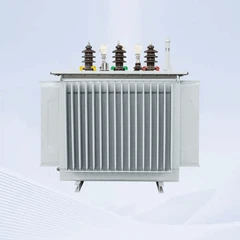
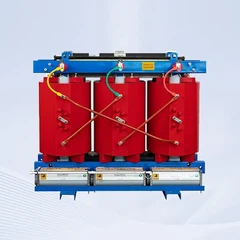
The primary design difference between 2000 kVA oil filled transformers and dry-type transformers lies in the insulation and cooling medium. Oil filled transformers immerse the core and coil assembly in mineral oil, synthetic ester, or natural ester fluid. This liquid serves dual functions: it insulates the windings and transfers heat from the core to the tank walls through natural convection. In contrast, dry-type transformers rely on solid insulation materials such as epoxy resin, Nomex paper, or polyester film, with air as the primary cooling medium.
This single design choice cascades into every other engineering decision. An oil filled 2000 kVA unit requires a leak-proof sealed tank, conservator tank or hermetic sealing, and Buchholz relay protection. A dry-type 2000 kVA transformer needs larger cooling ducts, external fan systems for forced-air cooling, and robust enclosure IP ratings to protect the exposed windings from dust and moisture.
At GNEE, our design teams for both technologies work under the same quality management system, ensuring each type is optimized to its inherent strengths.
Oil Selection and Its Impact on 2000 kVA Oil Filled Transformer Design
Within the oil filled category, the choice of insulating liquid further distinguishes designs. Mineral oil remains cost-effective and widely used, but GNEE also produces 2000 kVA units filled with FR3 natural ester for enhanced fire safety. Ester fluids have a flash point above 300°C versus mineral oil's 160°C, dramatically reducing fire risk.
The tank design adjusts for ester's higher viscosity - we increase cooling duct dimensions slightly to maintain the same current carrying capacity. This expertise allows us to offer fire-safe oil filled transformers without derating.
Cooling System Design: Critical Distinction in 2000 kVA Oil Filled and Dry-Type Transformer Performance
Cooling efficiency directly determines the continuous current carrying capacity of a 2000 kVA transformer, and the cooling mechanism represents a key design difference between 2000 kVA oil filled transformers and dry-type transformers. Oil filled units use the ONAN (Oil Natural Air Natural) principle: hot oil rises, circulates along tank walls cooled by ambient air, and descends to the bottom, establishing a continuous thermosiphon. Larger units may add radiators with fans (ONAF) to increase cooling capacity without increasing tank size.
Dry-type transformers use air as the primary heat transfer medium. Natural air convection (AN cooling) moves heat from exposed winding surfaces, but for a 2000 kVA dry-type unit, forced air cooling (AF) is typically required to achieve the full rated power without excessive temperature rise.
GNEE fits dry-type transformers with thermistor-controlled fans that activate at pre-set winding temperatures, providing an additional 30–40% capacity boost when needed.

Temperature Rise Ratings and the Effect on Transformer Design Methodology
The thermal class defines the maximum internal temperature each design can sustain. Oil filled 2000 kVA transformers typically maintain 55°C or 65°C average winding temperature rise over a 40°C ambient, limited by the oil's aging rate. Dry-type units use insulation classes F (155°C) or H (180°C), allowing higher internal temperatures and steeper thermal gradients. This means a dry-type 2000 kVA transformer can operate in hotter ambient environments without derating, a significant advantage for foundries or tropical installations.
GNEE engineers select insulation class and cooling configuration based on your site's maximum ambient temperature and altitude.
Physical Size, Weight, and Installation: How 2000 kVA Oil Filled and Dry-Type Transformer Designs Compare
The space and weight footprint constitutes a decisive design difference between 2000 kVA oil filled transformers and dry-type transformers for many projects. An oil filled 2000 kVA transformer typically weighs 2500–3500 kg, with the weight dominated by the steel tank and oil mass (approximately 800–1200 liters of oil). The complete unit is self-contained, weatherproof, and designed for outdoor installation on a concrete plinth or gravel base.
A dry-type 2000 kVA transformer weighs 3500–5000 kg - paradoxically heavier despite having no oil - because the solid insulation and larger core cross-sections needed for effective air cooling add substantial material mass. Dry-type units require indoor installation or a weatherproof enclosure, adding to the spatial footprint. However, they eliminate oil containment, bunding, and drainage requirements, simplifying civil works.
GNEE provides GA (General Arrangement) drawings early in the quotation process so your team can begin site preparation immediately.
Noise Levels and the Acoustic Design Divergence
Acoustic performance is another divergence point. Oil filled transformers benefit from the oil's natural sound-dampening properties, typically producing 55–65 dB at 2000 kVA. Dry-type transformers, with exposed magnetic core joints and active cooling fans, often register 65–75 dB.
When a 2000 kVA dry-type transformer must be installed near occupied spaces, GNEE supplies sound-reducing enclosures and low-noise core technology to bring levels within occupancy comfort ranges.
Fire Safety and Environmental Design Factors in Transformer Selection
Fire safety considerations dramatically shape the design differences between 2000 kVA oil filled transformers and dry-type transformers. Oil filled units, while highly reliable, introduce a combustible material into the installation. Building codes often require fire-rated separation, oil containment pits, and fire suppression systems when indoor installation is proposed. For outdoor substations, minimum clearance distances from buildings apply.
GNEE mitigates these concerns by offering sealed tank designs with pressure relief devices and by using high-flash-point ester fluids when indoor proximity is unavoidable.
Dry-type 2000 kVA transformers are inherently less flammable. Epoxy-resin-encapsulated windings meet F1 fire behavior classification, meaning they are self-extinguishing with no toxic emissions. This makes them the preferred choice for hospitals, shopping malls, metro stations, and underground installations where evacuation routes must remain smoke-free. The trade-off is moisture sensitivity - dry-type windings absorb ambient moisture, so anti-condensation heaters are essential when the transformer is de-energized in humid environments.

Comparative Technical Parameters: 2000 kVA Oil Filled vs. Dry-Type Transformers
The table below summarizes the key engineering parameters that define the design differences between 2000 kVA oil filled transformers and dry-type transformers.
| Parameter | 2000 kVA Oil Filled Transformer | 2000 kVA Dry-Type Transformer |
|---|---|---|
| Insulation Medium | Mineral oil / synthetic ester | Epoxy resin / cast coil |
| Cooling Method | ONAN / ONAF | AN / AF |
| Typical Weight (Total) | 2500–3500 kg | 3500–5000 kg |
| Typical Dimensions (L×W×H) | 2000×1300×2000 mm (approx.) | 2200×1500×2300 mm (approx.) |
| Winding Insulation Class | A (105°C) | F (155°C) / H (180°C) |
| Max Winding Temperature Rise | 55°C / 65°C | 80°C / 100°C |
| Typical Noise Level at 1m | 55–65 dB | 65–75 dB |
| Fire Risk Classification | Combustible (O1) | Self-extinguishing (F1) |
| Typical Installation | Outdoor, ground-mounted | Indoor, IP00–IP54 enclosure |
| Service Life Expectancy | 25–35 years | 20–30 years |
| Maintenance Frequency | Annual oil sampling & inspection | Bi-annual cleaning & thermal scan |
| Eco-Design Efficiency (EU Tier 2) | Compliant | Compliant |
GNEE manufactures both types to identical capacity accuracy, so the rated 2000 kVA output and voltage conversion performance are equivalent. The selection hinges entirely on installation environment, fire safety requirements, and maintenance philosophy.
Maintenance, Lifecycle, and Operational Cost Considerations
Long-term operational profiles reveal practical design differences between 2000 kVA oil filled transformers and dry-type transformers that affect total cost of ownership. Oil filled transformers require periodic oil sampling, dissolved gas analysis (DGA), and potential oil reclamation after 15–20 years. The oil acts as a diagnostic medium - DGA can detect incipient faults before they become catastrophic. This predictive maintenance capability is a genuine operational advantage that GNEE's service team supports through oil-testing partnerships.
Dry-type transformers eliminate oil management entirely, reducing scheduled maintenance to visual inspection, cleaning of cooling ducts, and thermal imaging of connections. However, internal winding faults are more difficult to diagnose early without oil sampling.
GNEE equips dry-type units with embedded temperature sensors and optional partial discharge monitoring, giving operators real-time health data equivalent to oil-based diagnostics.
Replacement and End-of-Life Design Factors
At end of life, oil filled transformers require professional oil disposal and metal recycling. The steel tank and copper windings are fully recyclable, and GNEE designs units for easy draining and disassembly. Dry-type cast-resin transformers present a recycling challenge - the epoxy-resin-encapsulated windings cannot be easily separated, so specialized recycling processes are needed. For clients prioritizing circular economy goals, we highlight these material considerations during the design consultation.

Application-Specific Design Recommendations
Choosing between the two technologies depends on your operational scenario:
Choose a 2000 kVA Oil Filled Transformer When:
- Outdoor installation with sufficient clearance is available.
- Lowest initial capital cost is a priority.
- High short-term overload capacity is required.
- Your maintenance team is equipped for oil handling and testing.
- The transformer feeds heavy industrial loads with occasional surges.
Choose a 2000 kVA Dry-Type Transformer When:
- Indoor installation near occupied spaces is mandatory.
- Fire safety codes restrict flammable materials.
- The site is environmentally sensitive with groundwater concerns.
- Minimal maintenance access is expected.
- The transformer serves commercial or institutional buildings with steady loads.
At GNEE, we do not bias toward one technology. Our fully owned manufacturing lines for both designs mean we deliver the optimal solution based on your requirements - not based on which product has higher margin.
Conclusion: Select the Right 2000 kVA Transformer Design with GNEE's Expertise
The key design differences between 2000 kVA oil filled transformers and dry-type transformers boil down to insulation medium, cooling method, physical footprint, fire safety profile, and maintenance philosophy. Each technology delivers the same 2000 kVA power rating with equivalent conversion efficiency when properly specified. The wrong choice, however, leads to installation headaches, unnecessary civil costs, or long-term reliability compromises.
At GNEE, we manufacture both transformer types in our integrated factory, backed by ISO 9001-certified processes and full type-test reports. Whether you need an outdoor oil filled unit built to IEC 60076 or an indoor dry-type transformer with custom IP enclosure, we have the engineering capability and the production capacity to deliver.
Send us your specification today. Tell us your voltage requirements, installation location, and ambient conditions, and our design team will recommend the exact 2000 kVA transformer configuration - oil filled or dry-type - that optimizes your total cost of ownership. Click the inquiry button, and let's power your project with a GNEE-built solution.
How much insulating oil is used in a 2000 kVA oil filled transformer?
A standard 2000 kVA oil immersed transformer typically contains around 1200 to 2500 liters of transformer oil. The exact oil quantity depends on radiator configuration, cooling design, voltage class, and manufacturer specifications.
What voltages are commonly available for a 2000 kVA transformer?
The most common primary voltages are 11kV, 13.8kV, 15kV, 20kV, 22kV, and 33kV, while common secondary voltages include 400V, 415V, 440V, 480V, and 690V. Customized voltage combinations can also be produced according to project requirements.
Which is better, an oil type or dry type transformer?
Oil immersed transformers are generally preferred for outdoor installations and high-capacity industrial applications because they offer better cooling efficiency, stronger overload capability, and longer service life. Dry type transformers are usually selected for indoor use because they provide better fire safety, lower environmental risk, and simpler maintenance.
What is the service life of a 2000 kVA transformer?
Under proper operating conditions and regular maintenance, a high-quality 2000 kVA transformer can operate reliably for 25 to 40 years. Periodic inspections, oil testing, temperature monitoring, and preventive maintenance help maximize transformer lifespan.
What protection devices are installed on a 2000 kVA transformer?
Most 2000 kVA transformers are equipped with protection accessories such as a Buchholz relay, oil level indicator, pressure relief valve, winding temperature indicator, oil temperature gauge, silica gel breather, and overcurrent protection system to ensure safe and stable operation.
What industries commonly use 2000 kVA transformers?
A 2000 kVA transformer is widely used in industrial manufacturing plants, mining operations, renewable energy projects, commercial complexes, hospitals, airports, data centers, petrochemical facilities, and infrastructure construction projects where stable medium-voltage power distribution is required.
Send Inquiry