


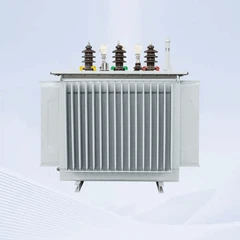





500 kVA Oil-Immersed Transformers under High Temperature and Load
Mar 19, 2026
Leave a message
Key Performance Challenges
In demanding environments such as the Middle East, Southeast Asia, and Africa, 500 kVA three-phase oil-immersed transformers must deliver stable performance despite extreme conditions. High ambient temperatures above 40 degrees C combined with continuous high load create several critical challenges: increased thermal stress on insulation systems, higher load losses leading to overheating, accelerated oil degradation, and reduced efficiency and lifespan.
Thermal Behavior and Insulation Aging
The internal temperature of a 500 kVA transformer is influenced by ambient temperature, load current, and cooling efficiency. For every 6 to 8 degrees C increase in operating temperature, insulation life may be reduced by up to 50 percent. The hot spot temperature, the hottest point in the winding, determines the insulation aging rate; excessive hot spot temperatures can cause insulation breakdown, lead to premature failure, and increase maintenance requirements. Effective thermal management is therefore the foundation of reliability.
Load Performance and Losses
Under high load, copper losses increase proportionally to the square of the current, resulting in increased heat generation, reduced efficiency, and higher operational costs. While transformers can handle short-term overloads, continuous overloading under high temperature conditions accelerates insulation degradation, reduces service life, and increases failure risk. Proper load management is essential for long-term reliability.
Cooling Performance
Most 500 kVA units use ONAN cooling, but high ambient temperatures reduce cooling efficiency because the smaller temperature difference between oil and air lowers the heat dissipation rate. Enhanced cooling solutions include larger radiator surfaces, improved oil circulation design, and optional forced cooling for extreme conditions. The cooling system should be optimized according to the project environment.
Material and Design Optimization
High-grade insulation materials improve thermal resistance and extend service life. Optimized design uses high-permeability silicon steel cores and copper windings with low resistance, reducing no-load and load losses, enhancing efficiency, and reducing heat generation. For high-temperature operation, typical optimized parameters are a temperature rise of no more than 60 K, a hot spot temperature limit of about 98 degrees C, no-load loss of no more than 680 W, and load loss of no more than 6000 W, with mineral oil or natural ester fluid as the insulating medium.
Best Practices for Operation
Ensure adequate spacing and airflow around the transformer to improve cooling efficiency. Avoid continuous overloading and keep load within rated capacity whenever possible. Monitor oil quality and temperature, check insulation condition, and perform routine inspections. These practices help extend transformer lifespan beyond 20 years even in demanding climates.
Frequently Asked Questions
Q: How does temperature affect insulation life?
A: For every 6 to 8 degrees C increase in operating temperature, insulation life may be reduced by up to 50 percent.
Q: Why do load losses increase with load?
A: Copper losses are proportional to the square of the load current, so heat generation rises rapidly under high load.
Q: What is the hot spot temperature?
A: The hottest point in the winding, which determines the insulation aging rate and is typically limited to about 98 degrees C.
Q: Why is ONAN cooling less effective at high ambient temperature?
A: The smaller temperature difference between oil and air reduces the heat dissipation rate.
Q: What cooling upgrade is available?
A: Larger radiators, improved oil circulation, and forced cooling for extreme conditions.
Q: What are the recommended loss limits?
A: No-load loss of no more than 680 W and load loss of no more than 6000 W for an optimized 500 kVA unit.
For 500 kVA oil-immersed transformer quotations for high-temperature regions, contact our engineering team.
Send Inquiry