


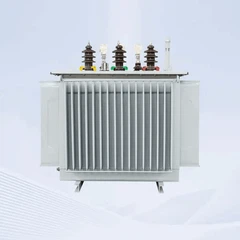






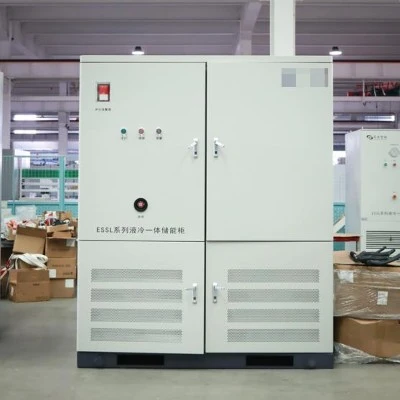


Why Does a 600kW Cabinet Need a 630kVA Transformer?
Nov 24, 2026
Leave a message
A 600kW load requires a 630kVA transformer because kW measures real power while kVA measures apparent power. With a typical power factor of 0.8–0.85 in industrial systems, 600kW translates to approximately 706–750kVA of apparent power - and after applying standard load factors and rounding to the next standard rating, 630kVA emerges as the optimal, cost-effective choice.


Understanding kVA vs kW: The Core of Transformer Sizing
Before we dive into the 600kW-to-630kVA calculation, let's clarify the two power units that cause 90% of sizing confusion.
What is kW (Kilowatt)?
kW = real power - the power that actually performs useful work. It turns motor shafts, heats elements, lights rooms, and powers electronic circuits. Your electricity bill is based on kW (and kWh). When a VFD panel says "600kW," it's telling you the useful output it can deliver to the load.
What is kVA (Kilovolt-Ampere)?
kVA = apparent power - the total power the electrical system must deliver. It's voltage × current (× √3 for three-phase). kVA is what heats transformer windings, determines conductor size, and sets the limit on how much current a transformer can safely carry - regardless of how much of that current is doing "useful" work.
kW = kVA × Power Factor (PF)
Transformers are always rated in kVA, not kW, because their thermal limit is driven by current (I²R losses in the windings), not by how efficiently that current is converted into mechanical or thermal output at the load.
The Power Factor Factor: Why 600kW ≠ 600kVA
Power factor (PF) is the ratio of real power (kW) to apparent power (kVA). It tells you how efficiently your load converts electrical current into useful work.
- Resistive loads (heaters, incandescent lights): PF ≈ 1.0 - nearly all current does useful work
- Motor-driven loads (pumps, compressors, conveyors): PF ≈ 0.80–0.85 - significant reactive current is needed to create magnetic fields
- Modern electronics + VFDs: PF ≈ 0.90–0.95 - power factor-corrected inputs improve efficiency
Most industrial cabinets with motors, VFDs, and mixed loads operate at a power factor between 0.80 and 0.85.
Let's apply this to our 600kW example:
| Scenario | Load (kW) | Power Factor | Apparent Power (kVA) |
|---|---|---|---|
| Resistive-only load | 600 kW | 1.00 | 600 kVA |
| Mixed industrial (typical) | 600 kW | 0.85 | 706 kVA |
| Motor-heavy plant | 600 kW | 0.80 | 750 kVA |
| Data center / IT load | 600 kW | 0.95 | 632 kVA |
Right away, you can see that at typical industrial power factors, the apparent power already exceeds 600kVA. A 600kVA transformer would already be overloaded at full 600kW output - and we haven't even factored in load factor, harmonics, or future growth yet.
❓ Not sure what power factor your facility runs at?
Get a professional load assessment and power factor analysis tailored to your specific equipment mix. Our engineers can review your single-line diagram and recommend the exact transformer kVA rating you need - no guesswork.
Load Factor and Diversity
Even after converting kW to kVA using power factor, you still need to account for how the load actually operates. In the real world, not all equipment runs at full capacity simultaneously.
What is Load Factor?
Load factor is the ratio of actual peak demand to the total connected load. Industry best practice is to size transformers so they operate at 60–80% of rated capacity at peak load. This provides:
- Headroom for motor starting inrush currents (which can be 5–7× rated current)
- Safety margin for high ambient temperatures (which reduce transformer capacity)
- Room for future load growth without immediate replacement
- Better efficiency (transformers are most efficient at 50–75% load)
The Complete Sizing Formula
Required kVA = Total Connected kW ÷ (Power Factor × Load Factor)
Let's apply this to our 600kW cabinet with realistic industrial parameters:
Calculation:
Required kVA = 600 kW ÷ (0.85 PF × 0.80 Load Factor)
Required kVA = 600 ÷ 0.68 = 882 kVA
Wait - that's even higher! But hold on: this formula assumes all 600kW runs simultaneously at peak. In practice, diversity factors reduce the actual simultaneous demand. Most industrial facilities see a maximum simultaneous demand of 65–80% of total connected load. Let's recalculate with a 75% diversity factor:
Refined calculation:
Peak demand = 600 kW × 0.75 diversity = 450 kW
Required kVA = 450 ÷ (0.85 × 0.80) = 450 ÷ 0.68 = 662 kVA
Now we're in the 630kVA neighborhood. With conservative assumptions (higher PF or slightly lower peak demand), 630kVA lands perfectly as the standard rating that covers the load while maintaining adequate headroom.
Why 630kVA and Not 600kVA?
Distribution transformers are manufactured in IEC standard capacity steps. You can't order a "600kVA" transformer - it's not a standard rating. The standard steps around this range are:
| Computed kVA | Standard Rating to Select |
|---|---|
| Up to 500 | 500 kVA |
| 501 – 630 | 630 kVA |
| 631 – 800 | 800 kVA |
| 801 – 1,000 | 1,000 kVA |
You always round up to the next standard rating. Never round down - an undersized transformer will overheat, degrade insulation prematurely, and fail prematurely. The price jump from one standard rating to the next can be 20–40%, so it pays to get the calculation right.
💡 Key Takeaway
630kVA is the standard IEC rating that covers a 600kW connected load with typical industrial power factor (0.85), realistic diversity, and proper headroom for motor starting and future growth. It's the sweet spot between capacity and cost.
Other Factors That Push You Toward 630kVA
1. Motor Starting Inrush
Direct-on-line (DOL) motor starting can draw 5–7 times rated current for several seconds. Even with soft starters or VFDs, the initial current surge stresses the transformer. A 630kVA unit provides the necessary impedance headroom to keep voltage dip within acceptable limits (typically < 10–15% during start).
2. Harmonic Distortion
VFDs, rectifiers, and nonlinear loads generate harmonic currents that cause additional heating in transformer windings. K-factor rated transformers or designs with extra derating are often required. The 630kVA rating gives you margin to absorb harmonic losses without overheating.
3. Ambient Temperature and Altitude
Transformers are rated for 40°C ambient at sea level. Hotter climates or high-altitude installations reduce cooling efficiency and require derating - typically 1% per 100m above 1000m, and 0.4% per °C above 40°C. The extra capacity of 630kVA absorbs these derates.
4. Future Growth
Well-designed electrical systems plan for 10–20% load growth over the transformer's 25–30 year life. A 630kVA transformer feeding a 600kW cabinet has built-in growth capacity without immediate upsize costs.
❓ Planning a facility expansion or new production line?
Don't guess at transformer sizing - get it wrong and you'll face costly downtime or wasted capital. Our engineering team provides certified transformer sizing calculations including load flow analysis, motor starting studies, and harmonic impact assessments.
The Cost of Getting It Wrong
| Problem | Undersized Transformer | Oversized Transformer |
|---|---|---|
| Overheating & insulation failure | High risk | Low risk |
| Premature end-of-life | 5–10 years early | Normal life |
| Purchase cost | Lower upfront | 20–40% higher |
| No-load losses (idle cost) | Lower | Higher (wasting money 24/7) |
| Voltage regulation | Poor (high voltage dip) | Excellent |
Both extremes cost money. The goal is to hit the sweet spot - and for a 600kW industrial cabinet, that sweet spot is almost always a 630kVA distribution transformer.
Oil-Immersed vs Dry-Type: Which 630kVA Transformer Do You Need?
Once you've settled on 630kVA, the next decision is technology:
| Factor | Oil-Immersed (S13-M) | Dry-Type (SCB13) |
|---|---|---|
| Best location | Outdoor, substations, plants | Indoor, buildings, data centers |
| Fire safety | Contains insulating oil | No oil, self-extinguishing |
| Maintenance | Periodic oil checks | Minimal |
| Relative price | Lower | Higher (+20–30%) |
| Typical 630kVA FOB price | ~$6,965 | ~$8,690 |
For most industrial cabinet applications outdoors or in dedicated substations, an oil-immersed 630kVA transformer delivers the best balance of performance and cost.
Need Help Sizing Your Transformer?
Our engineering team has helped 500+ international clients specify the right transformer for industrial, commercial, and renewable energy projects. Get expert sizing advice - free, no obligation.


FAQ
Q: Can I use a 500kVA transformer for a 600kW load?
A: No - a 500kVA transformer cannot supply 600kW at any realistic power factor. Even at PF 0.95, 500kVA delivers only 475kW of real power. You would overload the transformer, causing overheating and premature failure.
Q: What if I have power factor correction capacitors?
A: If you correct power factor to 0.95 or higher, you can reduce the required kVA. A 600kW load at PF 0.95 needs only ~632kVA apparent power - making 630kVA borderline and 800kVA a safer choice with headroom. Always factor in the cost of capacitors vs a larger transformer.
Q: How do I calculate transformer kVA for my specific project?
A: List all connected loads in kW, apply diversity factors to find peak demand, divide by (power factor × load factor), then round up to the next standard kVA rating. For complex loads with motors and VFDs, consider a formal load study.
Q: What does kVA stand for on a transformer?
A: kVA stands for kilovolt-ampere. It's the product of voltage (in kilovolts) and current (in amperes), representing the total apparent power the transformer can deliver. For three-phase: kVA = (V × I × 1.732) ÷ 1,000.
Send Inquiry