









How to Calculate Transformer Price from Capacity and Copper Price
Nov 24, 2026
Leave a message
Transformer prices are driven primarily by two factors: kVA capacity (which determines how much copper and steel go into the unit) and the LME copper price (which accounts for 25–40% of material cost). The pricing formula is straightforward: Price = Base Price(kVA) × Copper Factor, where the copper factor adjusts by ±3% for every ±$1,000/ton move in LME copper from the base of $14,185/ton.
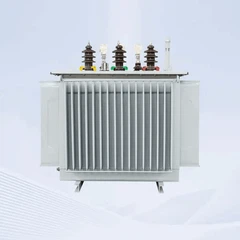
A genuine 400kVA all-copper S13 distribution transformer costs $5,500–$8,300 FOB (2026 prices at ~$15,200/ton LME copper). If you see one listed for under $3,000, it's not a bargain - it's aluminum windings, a refurbished unit, or missing critical components. This guide walks you through a four-step cost breakdown so you can verify any quote in under a minute.
Here's a puzzle every transformer buyer has faced: two suppliers both claim to be "direct factories," both offer a 400kVA pad-mounted transformer - and one quotes 38 times less than the other. One says $530, the other says $20,000+. Same rating, same "factory direct" label. How is that even possible?
The answer is in the bill of materials. A real 400kVA all-copper transformer contains roughly 180–250 kg of copper winding alone. At 2026 copper prices, that's $2,700–$3,800 worth of copper - before you add the silicon steel core, the tank, the oil, insulation, labor, or testing. A quote that can't even cover the copper inside the windings is telling you something important - just not what you want to hear.


The Transformer Pricing Formula: Capacity + Copper
Professional transformer pricing works on a two-part model:
Final Price = Base Price (by kVA rating) × Copper Price Adjustment Factor
Capacity-Based Price Bands - Know the Range First
Distribution transformer pricing follows a predictable band based on capacity and efficiency class. Before you compare quotes, you need to know what ballpark a legitimate price should fall into.
The table below shows FOB factory price ranges for oil-immersed all-copper transformers at S13 efficiency class (Tier 3 / NX3), based on 2026 LME copper at approximately $15,200/ton. These are real-world ranges from verified Chinese export manufacturers.
| Capacity | FOB Price Range (Oil-Immersed, All-Copper, S13) | Approx. Price per kVA |
|---|---|---|
| 200 kVA | $2,800 – $4,400 | $14 – $22 / kVA |
| 400 kVA | $5,500 – $8,300 | $14 – $21 / kVA |
| 630 kVA | $7,600 – $11,800 | $12 – $19 / kVA |
| 1,000 kVA | $11,000 – $16,500 | $11 – $17 / kVA |
| 1,600 kVA | $16,500 – $24,800 | $10 – $16 / kVA |
| 2,000 kVA | $20,000 – $31,000 |
$10 – $16 / kVA |
Three pricing rules of thumb:
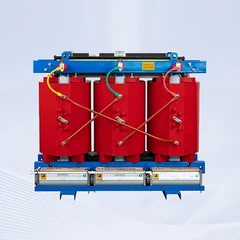
- Dry-type (SCB series) costs 40–60% more than oil-immersed at the same capacity, due to cast-resin winding technology and fire-resistant materials.
- Tier 2 efficiency (S20 / SCB14) costs 20–25% more than Tier 3, but reduces no-load losses by ~30%. The premium pays itself back in 2–3 years through lower electricity bills.
- Aluminum windings cost ~35% less than copper - and this is where most low-ball quotes come from. Aluminum windings also run ~8% higher load losses, meaning you pay the difference many times over in electricity.
💡 Quick Cross-Check: Price per kVA
Divide any quote by the kVA rating. Small capacity (100–400 kVA) should land around $14–$22/kVA for all-copper oil-immersed. At 1000 kVA it drops to $11–$17/kVA (economies of scale). If a quote comes in well below this range - say $5–$8/kVA - the first question to ask is: are those windings actually copper?
❓ Got a quote that looks too cheap - or too expensive - and not sure why?
Send us the quote and your specification. Our engineers will do a line-by-line cost breakdown and tell you exactly which tier it falls into, whether the price matches the claimed materials, and where the gaps are. Free, no obligation.
Full Cost Breakdown - Where Every Dollar Goes
Now let's open the black box. We'll use a 400kVA all-copper S13 oil-immersed transformer as our reference unit and build the cost from the ground up. Every figure includes its basis so you can audit it yourself.
| Cost Component | Cost Range (USD) | Basis & Notes |
|---|---|---|
| Copper windings | $2,700 – $3,800 | Copper weight: capacity × 0.45–0.6 kg/kVA = 180–250 kg. Magnet wire includes processing cost on top of raw copper. Based on LME copper ~$15,200/ton. |
| Grain-oriented silicon steel (core) | $1,900 – $3,000 | Silicon steel weight: capacity × 2.2–3.0 kg/kVA = 900–1,200 kg. Standard grade at ~$2.1–2.5/kg. |
| Tank, transformer oil & insulation | $700 – $1,100 | Mineral oil at ~$1,100–1,700/ton; oil weight ~20% of total unit weight. Steel tank, bushings, insulating paper. |
| Assembly, testing & labor | $400 – $700 | Temperature rise, short-circuit, and loss tests - all required factory acceptance tests. |
| Subtotal (material + labor) | $5,700 – $8,600 | Matches the factory price band in Step 1 |
| Factory margin & overhead (~10–15%) | +$570 – $1,290 | |
| FOB factory price | $6,270 – $9,890 | Realistic range for a genuine all-copper 400kVA S13 |
Copper + silicon steel together account for roughly 55% of total transformer cost. This is why transformer quotes change week to week - two commodities with daily price swings control more than half the bill of materials.
Rule of thumb: For every $1,400/ton move in LME copper,
a 400kVA unit's total cost shifts by ~$280–$350 (≈4–5%)
Here's what that means for your procurement: direct materials represent about 90% of total cost. When copper moves 1%, the factory's gross margin moves about 1.2 percentage points. In a volatile market, factories would rather breach a contract than honor an old price. That's why legitimate transformer quotes are typically only valid for 15–30 days.


The Copper Price Adjustment Formula
Professional transformer quotes use a copper-linked price adjustment formula. The base price is set at a reference copper price, then adjusted up or down based on the actual LME price at time of order:
Copper Factor = 1 + (Current LME − Base LME) ÷ $1,000 × 0.03
In plain English: every ±$1,000/ton move in LME copper shifts the transformer price by ±3%.
Why 3%? Because copper represents roughly 30% of total cost on average. A $1,000/ton move (about 7% of a $14,000 base) × 30% cost share ≈ 2.1% - rounded up to 3% to account for correlated moves in other materials and overhead.
📊 Example: Copper Price Impact on a 400kVA Transformer
Base price: $6,900 at $15,200/ton LME copper
| Copper Scenario | Copper Factor | Adjusted Price | Change |
|---|---|---|---|
| $13,000/ton (low) | 0.934 | $6,445 | −$455 (−6.6%) |
| $15,200/ton (base) | 1.000 | $6,900 | - |
| $17,000/ton (high) | 1.054 | $7,273 | +$373 (+5.4%) |
| $19,000/ton (spike) | 1.114 | $7,687 | +$787 (+11.4%) |
A $6,000/ton copper swing - which has happened within 12-month windows - moves your transformer budget by ±11%. On a 10-unit project, that's $7,000+.
Reverse Calculation - Why "Too-Good-To-Be-True" Prices Exist
Let's go back to that $530 (3,800 RMB) 400kVA pad-mounted transformer. We already know the copper windings alone cost $2,700–$3,800. A genuine unit starts at $5,500+ for the transformer body alone - before you add the HV/LV cabinet, the enclosure, or the assembly.
So where does the 90%+ discount come from? Three places - and all three cost you money in the long run.
🚩 1. Copper replaced with aluminum (or copper-clad aluminum)
Aluminum windings cut winding material cost by ~35%. The nameplate still says "copper winding." In operation, the windings run hotter, and full-load operation is essentially a countdown to burnout. Aluminum has 61% of copper's conductivity - so you need more material for the same rating, and losses are ~8% higher.
🚩 2. Refurbished units sold as new
Prices are 30–40% below genuine new units. You get an old tank with fresh paint and a core made from recycled silicon steel. No-load losses are typically 30%+ above spec. No-load losses run 24/7 - over 10 years, a 400kVA unit with elevated no-load losses can waste $15,000+ in electricity - more than the transformer itself cost.
🚩 3. Component substitution + missing accessories
HV/LV switchgear uses no-name brands instead of Chint or Schneider - the price difference is 2×. Temperature controllers, fans, metering instruments, and protective enclosures are all omitted from the base quote, then added back one by one after you sign. By the time you've added everything you actually need, the "bargain" is often more expensive than a proper quote.
Add all three together and a $530 price tag becomes mathematically possible. The cost shows up on your electricity bill - and on the day the transformer fails and production stops.
❓ Received a suspiciously low quote and worried about copper-aluminum substitution or refurbished units?
We can help you verify. Send us the supplier's quote and datasheet - we'll tell you if the numbers add up, what red flags to look for, and what to specify in your contract to protect yourself. Get expert guidance before you pay.
How to Verify What You're Really Buying
Anyone can print a nameplate. Here are three verification methods that don't lie - use them on every delivery.
1. Scan the energy efficiency QR code
Grid-tendered transformers in major markets carry a mandatory energy label with a QR code. Scanning it pulls up the model number, efficiency class, and loss values - and they must match what's on the nameplate. If there's no QR code, or the scan doesn't match, the unit doesn't meet the claimed efficiency standard. Note: S13 = Tier 3 (NX3); S20 = Tier 2 (NX2) - make sure your contract and test reports use the same naming convention.
2. Cross-check the type test report
A legitimate transformer comes with a full type test report covering temperature rise, short-circuit withstand, and load/no-load losses. The report serial number must match the nameplate. Borrowed reports don't match - and refurbished units can't produce current test reports. Always verify the report is from a recognized third-party lab and less than 5 years old.
3. Weigh the unit
A 400kVA all-copper oil-immersed transformer weighs roughly 1,500–2,000 kg. If it's noticeably lighter, it's either aluminum windings, skimped silicon steel, or both. Copper is 3.3× denser than aluminum - you can't fake the weight. For critical projects, you can also request a core inspection to verify copper winding color (copper is reddish; aluminum is silvery-white).
Pad-Mounted Substation Pricing - The Full Package
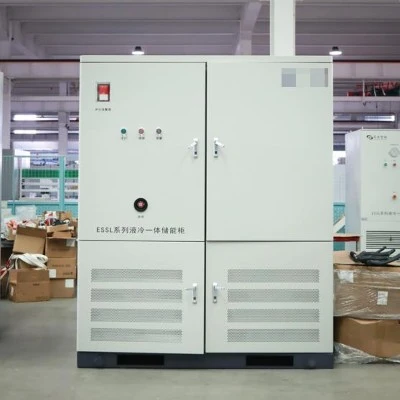
If you're buying a complete box-type substation rather than just a transformer, the bill of materials splits into three main parts. The transformer itself is only 40–50% of the total package price.
| Component | Share of Package Price | What to Check |
|---|---|---|
| Transformer body | 40% – 50% | Verify with Steps 1–3 above: capacity, winding material, efficiency class |
| HV / LV switchgear cabinet | 25% – 30% | Specify component brands by name in the contract. Chint/Schneider vs no-name = 2× price difference |
| Enclosure / cabinet body | ~15% | IP54 vs IP65 makes a noticeable price difference. Add corrosion treatment for coastal areas |
| Assembly & factory testing | ~10% | Full station test per GB/T 17467 / IEC 62271-202 |
For a 400kVA package, the typical FOB ranges are:
- American-style pad-mounted (simpler, compact): $11,000 – $16,500
- European-style box-type substation (more features, ring main unit): $16,500 – $27,500
The "European-style" label covers enormous variation. Ring main unit or no ring main unit? How much capacitor compensation? Circuit breaker or load switch? Every one of these changes the price. Always compare against a detailed component list - never just a capacity number.
Installation and commissioning at your site typically adds another $400–$1,100 per unit depending on local labor rates.


Get a Transformer Quote You Can Trust
All-copper windings, certified test reports, transparent pricing with copper-linked adjustment, and 2-year warranty. Tell us your capacity, voltage, and quantity - we'll send a detailed FOB quotation within 24 hours.


FAQ
Q: How much does a 400kVA transformer really cost in 2026?
A: A genuine 400kVA S13 oil-immersed all-copper distribution transformer costs $5,500–$8,300 FOB in 2026, depending on the LME copper price at time of order. Dry-type SCB13 units cost $7,700–$11,600. Pad-mounted substations (complete package) range from $11,000 for basic American-style to $27,500+ for fully featured European-style with ring main unit. Anything well below these ranges should be carefully vetted for winding material and quality.
Q: How do I calculate transformer price from copper price?
A: Use the copper factor formula: Copper Factor = 1 + (Current LME − Base LME) ÷ $1,000 × 0.03. Then: Final Price = Base Price × Copper Factor. Every $1,000/ton move in LME copper shifts transformer prices by approximately 3%. For a 400kVA unit, that's roughly $200–$250 per $1,000/ton move.
Q: How can I tell if a transformer has copper or aluminum windings?
A: Three reliable methods: (1) Weigh the unit - copper is 3.3× denser than aluminum, so a copper-wound unit is significantly heavier. (2) Check the test report - loss values will differ between copper and aluminum designs. (3) Visual inspection - if you can access the winding terminals, copper is reddish while aluminum is silvery-white. Always specify "100% copper winding" with minimum copper weight in your contract.
Q: What's the total cost of ownership difference between copper and aluminum transformers?
A: Aluminum-wound transformers are ~35% cheaper to buy but have ~8% higher load losses and higher no-load losses from cheaper core steel. Over a 25–30 year service life, the extra electricity cost typically far exceeds the upfront savings. For continuously operated installations, copper-wound transformers have lower total cost of ownership - usually by year 3–5.
Send Inquiry