









How to Choose the Right High Voltage Switchgear for Your Power System
Nov 24, 2026
Leave a message
What Is High Voltage Switchgear?
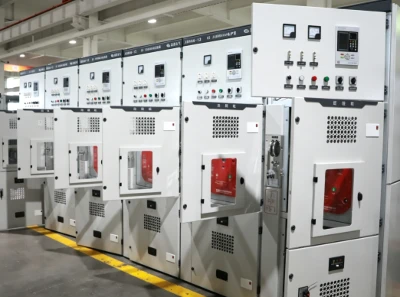
High voltage switchgear is a combination of electrical switching devices, circuit breakers, disconnect switches, protection relays, and control panels designed to operate at voltage levels typically above 35 kV. It serves as the backbone of power transmission and distribution networks, performing four essential functions:
- Switching power circuits - controlling the flow of electricity through transmission and distribution lines
- Protecting equipment - interrupting fault currents to prevent damage to transformers, generators, and downstream loads
- Isolating faulty sections - safely de-energizing equipment for maintenance while keeping the rest of the system online
- Ensuring grid reliability - minimizing downtime and maintaining stable power quality for critical operations


The global HV switchgear market is experiencing robust growth, driven by rapid grid modernization, renewable energy integration, and urban infrastructure expansion. According to industry analysis, the gas-insulated switchgear (GIS) segment alone is projected to grow at a CAGR of 6.83% through 2034, reflecting the increasing demand for compact, reliable solutions in space-constrained environments.
For power system operators and project engineers, the stakes are high. According to the Institute of Electrical and Electronics Engineers (IEEE), improperly sized or specified switchgear can reduce overall system efficiency by up to 5% and significantly increase the risk of catastrophic failures. A well-chosen HV switchgear system, by contrast, can operate reliably for 30+ years with proper maintenance, delivering a strong return on investment over its lifecycle.
💡 Not sure which HV switchgear type fits your project?
Our engineering team provides free technical consultation to help you evaluate AIS, GIS, hybrid, or SF6-free solutions based on your voltage level, site conditions, and budget. Get a customized recommendation within 24 hours.
Key Types of HV Switchgear: AIS, GIS, Hybrid and SF6-Free Solutions
Understanding the different types of HV switchgear is the first step toward making the right choice. Each type uses a different insulation medium and is optimized for specific applications, environments, and budget levels.
1. Air-Insulated Switchgear (AIS)
Air-insulated switchgear uses ambient air as the primary insulation medium. Live conductors and circuit breakers are housed in an open-air configuration with clear physical separation between phases. AIS is the traditional and most widely deployed HV switchgear technology worldwide.
Advantages: Lower upfront cost, simple design, easy maintenance and inspection, well-established technology, familiar to most technicians
2. Gas-Insulated Switchgear (GIS)
Gas-insulated switchgear encapsulates all live parts in sealed metal-enclosed compartments filled with sulfur hexafluoride (SF₆) gas - a medium with exceptional dielectric strength roughly 235 times that of air at atmospheric pressure. This allows GIS to achieve dramatic space savings.
Advantages: Extremely compact (up to 90% space reduction vs. AIS), immune to environmental conditions, high reliability, low maintenance, enhanced personnel safety
3. Hybrid Switchgear
Hybrid switchgear combines elements of both AIS and GIS, using gas-insulated circuit breakers with air-insulated busbars and disconnectors. This approach delivers many of the benefits of GIS at a more moderate price point.
Advantages: Balanced cost-to-footprint ratio, reduced installation area vs. AIS, lower cost than full GIS, flexible configuration options
4. SF6-Free / Eco-Friendly Switchgear
The newest category of HV switchgear replaces SF₆ with environmentally friendly alternatives such as vacuum interrupters, clean air (dry air), or C4-FN / C5-FK gas mixtures with near-zero global warming potential (GWP). This market segment is rapidly growing as regulatory pressure intensifies.
Advantages: Zero or near-zero GWP, compliance with F-gas regulations, easier end-of-life handling, no toxic decomposition products, many designs are sealed-for-life


| Switchgear Type | Insulation Medium | Footprint | Initial Cost | Maintenance | Best Application |
|---|---|---|---|---|---|
| AIS | Air | Large | Low | High | Outdoor substations, utilities |
| GIS | SF₆ Gas | Very Small | High | Low | Urban areas, data centers |
| Hybrid | Air + Gas | Medium | Medium | Low-Medium | Industrial, renewables |
| SF₆-Free | Vacuum / Clean Air / Eco-Gas | Small-Medium | Medium-High | Very Low | Sustainability projects, EU markets |
Voltage Level Selection: Matching Switchgear to Your Power System
One of the first and most fundamental decisions is determining the correct voltage class. HV switchgear is categorized by voltage level, and each class has distinct design requirements, insulation strategies, and standard compliance frameworks.
| Voltage Class | Nominal Voltage Range | Typical Applications | Common Switchgear Types |
|---|---|---|---|
| Medium Voltage (MV) | 3.3 kV – 36 kV | Industrial plants, data centers, distribution substations, renewable energy farms | AIS, GIS, Vacuum Breaker Panels |
| High Voltage (HV) | 66 kV – 245 kV | Transmission substations, large industrial complexes, power plant switchyards | AIS, GIS, Hybrid |
| Extra High Voltage (EHV) | 300 kV – 800 kV | Long-distance power transmission, national grid backbone, bulk power transfer | AIS, GIS (specialized) |
💡 Key Takeaway: Always select switchgear with a rated voltage at least 10–15% above the system's nominal operating voltage. This safety margin accounts for voltage fluctuations, switching surges, and future system upgrades.
Beyond the nominal voltage, you must also evaluate the lightning impulse withstand voltage (LIWV) and power frequency withstand voltage (PFWV) - critical parameters that define the insulation level required for your specific application and site conditions. Higher altitude installations, for example, require greater insulation clearances due to reduced air dielectric strength.
🔧 Need help calculating your system's fault current and switchgear ratings?
Our technical team offers a free system analysis - just send us your single-line diagram and we'll recommend the optimal switchgear voltage class, short-circuit rating, and breaker type for your specific project. No obligation, just expert engineering guidance.
7 Critical Factors to Consider When Choosing HV Switchgear
Every power system is unique, and the ideal switchgear solution depends on a combination of technical, environmental, and economic factors. Here are the seven most critical factors to evaluate during your selection process:
1. Short-Circuit Current Rating
The short-circuit (or fault) current rating is the maximum current the switchgear can safely interrupt. This is arguably the most critical safety specification. The circuit breaker's interrupting capacity must always exceed the calculated maximum fault current at that point in the system.
Under-sizing the short-circuit rating can lead to catastrophic failure - including arc flash hazards, equipment destruction, and personnel injury. Always perform a detailed short-circuit study, and consider adding a safety margin of 10–20% for future system growth.
2. Application Type and Load Profile
Different applications impose different demands on switchgear:
- Power transmission: High fault currents, frequent switching, outdoor durability requirements
- Distribution networks: Operational flexibility, load switching, coordination with downstream protection
- Data centers / critical loads: Maximum reliability, redundant designs, fast fault clearing, arc-flash protection
- Renewable energy (solar/wind): Fluctuating generation profiles, rapid switching requirements, modular design, grid code compliance
- Industrial plants: Motor starting currents, variable load profiles, harsh environmental conditions
3. Installation Environment
The physical environment directly impacts switchgear performance, lifespan, and maintenance requirements:
- Indoor vs. outdoor: Outdoor switchgear requires weatherproof enclosures and corrosion protection
- Temperature extremes: Cold climates may require GIS with gas heating or SF₆-free alternatives with lower liquefaction temperatures
- Humidity and altitude: High humidity accelerates corrosion; high altitude reduces air dielectric strength
- Pollution and contamination: Coastal (salt spray), industrial (chemicals), and desert (dust) environments demand specialized enclosures or GIS solutions
- IP rating requirements: Ensure enclosure ingress protection matches the site conditions
4. Available Space and Footprint Constraints
Land cost and available space are often deciding factors in switchgear selection, particularly in urban areas. GIS can reduce the required substation footprint by 70–90% compared to conventional AIS - a difference that can translate to millions in land cost savings in dense urban environments.
Hybrid switchgear offers a middle ground, typically reducing footprint by 30–50% compared to AIS while maintaining lower costs than full GIS.
5. Maintenance Strategy and Accessibility
Consider your organization's maintenance capabilities and the accessibility of the installation site:
- Remote substations: GIS or SF₆-free switchgear with long maintenance intervals (15–30 years) may be preferable
- On-site maintenance teams: AIS may be more economical if you have qualified staff available for regular inspections
- Critical operations: Prioritize switchgear with condition monitoring capabilities for predictive maintenance
6. Future Expansion and Scalability
Power systems rarely remain static. Choose switchgear that can accommodate future growth:
- Modular designs allow adding feeder bays without major reconfiguration
- Digital protection relays can be reprogrammed for updated coordination schemes
- Consider whether your load is expected to grow (e.g., factory expansion, EV charging infrastructure)
- Plan for potential renewable energy integration or grid storage additions
7. Digital and Smart Grid Compatibility
Modern HV switchgear increasingly includes digital features such as:
- Built-in sensors for real-time condition monitoring (temperature, gas density, partial discharge)
- IoT connectivity for remote monitoring and predictive maintenance
- Digital protection relays with advanced metering and fault recording
- Integration with SCADA and distribution management systems (DMS)
Digital switchgear reduces operational costs, improves reliability, and enables data-driven maintenance decisions - making it a strategic investment for forward-thinking operators.


How to Choose the Right HV Switchgear
Use this structured decision framework to systematically evaluate your options and arrive at the optimal HV switchgear solution for your project:
Define System Parameters
- Determine nominal system voltage (MV, HV, or EHV)
- Calculate maximum short-circuit fault current
- Define continuous current rating (normal and emergency)
- Identify number and type of feeders / bays required
01
Characterize the Application
- Identify the primary application (transmission, distribution, industrial, data center, renewable energy)
- Define reliability and uptime requirements (e.g., N-1 redundancy for critical loads)
- Assess switching frequency and operating duty cycle
- Determine protection and automation requirements
02
Evaluate Site Conditions
- Assess available space and layout constraints
- Evaluate environmental factors (temperature, humidity, altitude, pollution)
- Determine indoor vs. outdoor installation
- Consider seismic zone requirements
03
Select Switchgear Type
- Based on space constraints: AIS (ample space) → GIS (limited space) → Hybrid (moderate space)
- Based on environmental sensitivity: Standard → SF₆-free (regulated markets or ESG targets)
- Based on maintenance strategy: Low-maintenance (GIS/SF₆-free) → Cost-sensitive (AIS)
- Based on digital requirements: Conventional → Smart/digital switchgear
04
Specify Circuit Breaker Technology
- SF₆ circuit breakers - proven, compact, high performance (where regulations allow)
- Vacuum circuit breakers - eco-friendly, excellent for frequent switching (primarily MV, expanding to HV)
- Eco-gas circuit breakers - C4-FN or clean air alternatives for SF₆-free HV applications
05
Verify Standards and Compliance
- Confirm compliance with applicable IEC or ANSI/IEEE standards
- Verify local regulatory requirements and certifications
- Check environmental compliance (F-gas, local emissions regulations)
- Ensure type test reports are available and valid
06
Perform Lifecycle Cost Analysis
- Compare CAPEX across shortlisted options
- Estimate OPEX over 20–30 year lifecycle
- Factor in land, civil works, and installation costs
- Calculate TCO and ROI for each option
07
Plan for the Future
- Evaluate modular expandability
- Consider digital upgrade paths
- Plan for load growth and system evolution
- Assess supplier long-term support and parts availability
08
Get Expert HV Switchgear Solutions for Your Project
With 20+ years of experience delivering HV switchgear solutions to 50+ countries worldwide, our team of certified engineers can help you select, customize, and deploy the optimal switchgear solution for your power system. From 12 kV distribution to 550 kV transmission - we've got you covered.
What you get when you contact us:
✅ Free technical consultation with senior engineers
✅ Customized solution based on your exact specifications
✅ Competitive pricing with transparent cost breakdown
✅ Full IEC/IEEE certification and test reports
✅ Global shipping and on-site commissioning support

FAQ
Q: What is the difference between MV and HV switchgear?
A: Medium voltage (MV) switchgear typically covers 3.3 kV to 36 kV and is used for distribution and industrial applications. High voltage (HV) switchgear operates above 36 kV (commonly 66 kV to 245 kV) and is used for transmission substations and bulk power transfer. The design, insulation requirements, and cost differ significantly between the two categories.
Q: Which is better: AIS or GIS?
A: There's no universal answer - it depends on your specific project. AIS is more economical for outdoor sites with ample space and lower labor costs. GIS is generally better for urban areas, indoor installations, harsh environments, and critical applications where space is limited and reliability is paramount. Many projects find that hybrid switchgear offers the best balance.
Q: How long does HV switchgear last?
A: With proper maintenance, HV switchgear typically has a service life of 30–40 years. GIS and SF₆-free sealed designs often require less maintenance and can last even longer. AIS may require more frequent component replacement but can still achieve similar lifespans with proper upkeep.
Q: What is SF6 and why is it being phased out?
A: SF₆ (sulfur hexafluoride) is a synthetic gas with excellent dielectric properties used in GIS and circuit breakers. However, it is the most potent greenhouse gas known - 23,500 times more effective at trapping heat than CO₂. Regulatory bodies in the EU, California, and other regions are phasing out SF₆ in new switchgear to combat climate change, driving the adoption of SF₆-free alternatives like vacuum interrupters and eco-gas mixtures.
Q: What certifications should I look for when importing HV switchgear?
A: For international projects, verify IEC 62271 series certification (or IEEE C37 for North American projects) from reputable test laboratories. Also check for ISO 9001 quality certification, and any country-specific requirements (e.g., GOST for Russia/CIS, INMETRO for Brazil, BIS for India). Always confirm with your local utility or authority having jurisdiction (AHJ) for specific requirements.
Send Inquiry