










How To Choose A DC Fast Charging Station In 2026
Oct 26, 2026
Leave a message
What Is a DC Fast Charging Station and How It Differs from AC Level 2 Charging

What Is DC Fast Charging?
EV batteries store DC power, while the grid provides AC. On-board chargers convert AC to DC, but DC fast charging bypasses this, converting power at the station and charging the battery much faster. Known as DCFC, Level 3, or rapid/ultra-fast charging, it significantly reduces EV charging time.
| Parameter | Level 1 | Level 2 (AC) | DC fast charging (Level 3) |
|---|---|---|---|
| Supply | 120 V single-phase | 208–240 V (NA) / 230–400 V (EU) | Three-phase AC input, 400 V typical |
| Power delivered | 1.0–1.8 kW | 3–22 kW | 15–360 kW today, >1 MW in pilot fleets |
| Conversion location | On-board charger | On-board charger | Inside the charging station |
| Typical use case | Emergency home cable | Home, workplace, hotel | Highway corridor, fleet depot, retail forecourt |
Because a DC fast charging station converts power off-board, it bypasses the vehicle's on-board charger entirely - which is the real speed limiter on AC. Output voltage typically spans 200–1,000 V DC, and the vehicle's battery management system (BMS) negotiates current demand continuously.
Small Tip - Start from duty cycle, not from the datasheet. Before you compare models, write down three numbers: target dwell time per bay (minutes), daily session count you must serve to break even, and the acceptance rate of the top five EV models in your market. Everything downstream - power rating, transformer size, cabinet count - derives from these three inputs
How to Size DC Fast Charging Station Power (kW) Against Vehicle Acceptance Rate
A charger's nameplate kW is the ceiling. What actually fills the battery is the lower of two values: charger output and the vehicle's acceptance rate.
| Charger rating | Typical average power in 20–80% window | Estimated session time | Approx. kWh per minute |
|---|---|---|---|
| 60 kW | ~50 kW | ~43 min | 0.83 |
| 120 kW | ~95 kW | ~23 min | 1.58 |
| 180 kW | ~140 kW | ~16 min | 2.33 |
| 240 kW | ~180 kW | ~12 min | 3.00 |
| 350 kW (800 V platform) | ~250 kW | ~9 min | 4.17 |
Assumes an 800 V architecture able to accept ~250 kW average; a 400 V vehicle on the same 350 kW unit still behaves like a 120–150 kW unit.
Practical sizing rules used in tender documents
- Retail forecourt, dwell ≤ 30 min: 120–180 kW per bay.
- Highway corridor, dwell 15–25 min: 180–240 kW per bay, with power sharing across 2–4 dispensers.
- Urban taxi / ride-hail queue: 60–120 kW is often enough; throughput comes from bay count, not rated power.
- Bus / logistics depot, 4–6 hour dwell: 60–150 kW per vehicle with smart load management beats high-power hardware - the battery has hours, not minutes.
- Heavy-duty truck corridor: plan for 350 kW today and reserve conduit, foundations and transformer headroom for SAE J3271 megawatt charging.
Small Tip - Do not model with 0–100%. The last 20% of a charging curve can take longer than the first 60%. Build your throughput forecast on a 20–80% window; anything else overstates bay turnover by 30–40% and will make your business case fail against reality.
Where megawatt charging fits
The Megawatt Charging System (MCS), published as SAE J3271 in March 2025, specifies DC charging on the order of 1 MW and above - up to 1,250 V and 3,000 A, a theoretical ceiling near 3.75 MW. At those currents the connector and cable are liquid-cooled by design. First heavy-vehicle implementations are in the 750 kW class, with European corridor hubs commissioning 1,000–1,440 kW units. If your site could plausibly serve electric trucks within five years, buy the electrical room, not the connector: reserve transformer capacity, duct banks and switchgear space now.
Send us your vehicle mix and target dwell time and our engineering team will return a recommended per-bay power rating, bay count and upstream transformer rating - no charge, no obligation.
Email :sales@gneeelectric.com
WhatsApp :+8615824687445


DC Fast Charger Connector Types and Regional Standards: CCS1, CCS2, CHAdeMO, GB/T, NACS
| Standard | Primary market | Typical max power | 2026 status |
|---|---|---|---|
| CCS1 (Combo 1) | North America | 350 kW | Being displaced by NACS on new passenger models |
| CCS2 (Combo 2) | Europe, most of Asia-Pacific, Middle East | 350 kW | Default tender requirement in EU projects |
| NACS (SAE J3400) | North America (rapidly global) | 250 kW+ passenger; higher in truck variant | Standard on most new North American EVs |
| CHAdeMO | Legacy Japanese fleet | Historically ~62.5 kW | Declining; keep one unit only if your fleet has it |
| GB/T | China (mandatory) | 250 kW+ | Mandatory for domestic Chinese projects |
Specification habits that prevent stranded assets
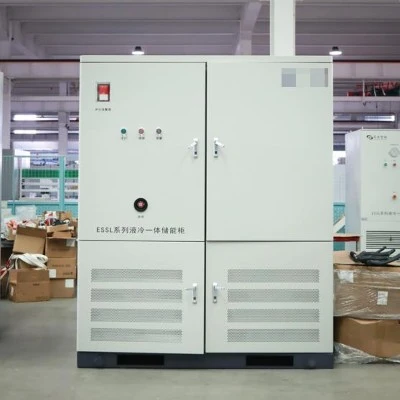
- Buy modular power, not fixed output. A 400 kW power cabinet feeding two liquid-cooled dispensers can be re-allocated as your vehicle mix shifts.
- Specify replaceable cables. Cables are the highest-wear consumable on site. Field-swappable cable sets cut truck rolls.
- Require dual-cable dispensers in public sites. CCS2 + GB/T, or NACS + CCS1 depending on market.
- Liquid cooling is optional below ~300 A, mandatory above it. Cables above roughly 500 A need active cooling for usable ergonomics.
Small Tip - Quote the standard, not the plug shape. In your RFQ, name the applicable IEC 62196 part, ISO/IEC communication layer, and required country approvals. Vendors who answer with photos instead of clause numbers tend to disappear at the factory acceptance test.
DC Fast Charging Station Grid Requirements: Transformer Sizing, Voltage and Harmonic Limits
This is the section most buyers read last, and it is the one that decides whether your project ships. To size your transformer, use this field rule:
- Required transformer kVA ≈ (installed DC output kW × diversity factor + auxiliary load kW) ÷ 0.85 loading limit.
Typical diversity factor for a public hub is 0.6–0.8; all bays rarely draw peak simultaneously.
| Site configuration | Installed DC output | Auxiliary load (HVAC, lighting, payment) | Recommended transformer |
|---|---|---|---|
| 1 × 60 kW | 60 kW | ~8 kW | 100 kVA pad-mount |
| 2 × 120 kW (shared) | 180 kW | ~15 kW | 250 kVA |
| 4 × 180 kW | 720 kW | ~35 kW | 800–1,000 kVA |
| 6 × 360 kW HPC | 2,160 kW | ~60 kW | 2,000 kVA package substation, MV metering |
Electrical specs to write into the tender
- Input: 400 V AC ±10%, 50/60 Hz, three-phase + N + PE, TN-S or TT per local code.
- Power factor: ≥ 0.99 at rated load.
- Efficiency: ≥ 95% at rated output (peak ~96%) - each point of loss is paid for every kWh sold, forever.
- Total harmonic distortion (current): ≤ 5% at rated load, verified by type test report.
- Ingress protection: IP54–IP55 enclosure, IK08–IK10 impact rating for public sites.
- Operating temperature: −30 °C to +55 °C, with derating declared above ambient 40–50 °C (many sites lose 20–30% output in summer heat).
- Measurement: MID- or ANSI C12-compliant revenue meter per outlet where you sell by kWh.
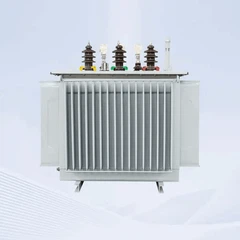
GNEE supplies the charger and the power equipment behind it - pad-mount or oil-immersed transformer, MV ring main unit, LV switchgear and distribution cabinet - as one coordinated package with a single single-line diagram and one delivery schedule. That removes the classic failure mode: chargers arriving on site with no transformer to plug into.


How to Sanity-Check a DC Fast Charging Station Quote in 7 Steps
- Write the duty cycle first. Target dwell time, required sessions/day, top five vehicle models and their acceptance rates.
- Convert dwell time into kW per bay using the 20–80% average-power method above, not the nameplate.
- Multiply by bay count, apply a diversity factor of 0.6–0.8, and size the transformer with a 15% loading margin.
- Fix the connector family per market, then decide which dispenser gets the second cable.
- Request the type-test reports, not just the certificate number: efficiency curve, THD measurement, IP and IK ratings, and the derating curve above 40 °C.
- Price the whole site, including grid upgrade, civil works, software licence for five years and spare cable sets.
- Run the ROI twice - once at your realistic utilisation and once at half of it. If the project only works at the higher number, change the site, not the spreadsheet.
Ready to Specify Your DC Fast Charging Site?
Send your duty cycle, grid voltage and target opening date. Get a matched power rating, upstream transformer spec and itemised quotation within 3 business days.
Request My Free Site Assessment
- Chat on WhatsApp +8615824687445
- Email sales@gneeelectric.com
- WhatsApp +8615824687445

FAQ
How many kW is a DC fast charger?
Production units span roughly 15 kW to 360 kW for passenger vehicles. By IEA convention, anything above 150 kW is classed as ultra-fast. Megawatt-class units for heavy trucks, governed by SAE J3271, are entering early commercial deployment.
How long does DC fast charging take?
A 20–80% session takes about 40–45 minutes on 60 kW, 20–25 minutes on 120 kW, and 10–18 minutes on 180–240 kW for a typical 60 kWh passenger EV. The dominant variables are the vehicle's acceptance rate and the charging curve above 60% SOC.
Is DC fast charging bad for an EV battery?
Not meaningfully. Idaho National Laboratory's controlled study found the difference in capacity decline between vehicles charged exclusively by DC fast charging and those charged at Level 2 AC was minimal, because the BMS caps acceptance rate and reduces current when cells warm. Charging to 80% instead of 100% reduces both session time and pack stress.
What is the difference between a 60 kW and a 180 kW DC fast charging station cost per bay?
At the FOB China reference band of US$0.09–0.15/W, hardware ranges from roughly US$5,400–9,000 for 60 kW to US$16,200–27,000 for 180 kW. Total installed cost per port is dominated by civil works and grid upgrades, typically US$100,000–300,000.
Can all electric vehicles use DC fast chargers?
Most modern battery-electric vehicles can. Many plug-in hybrids and older entry-level BEVs have small packs or no DC inlet. If your site must serve mixed traffic, verify minimum pack sizes in your market before sizing.
Send Inquiry