








160 kWh Energy Storage Battery Cabinet: Specifications, Applications and Cost
Oct 19, 2026
Leave a message
What Is a 160 kWh Energy Storage Battery Cabinet?
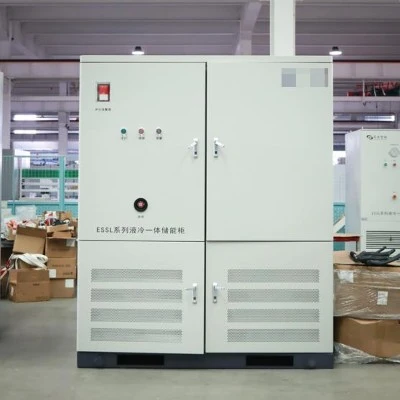
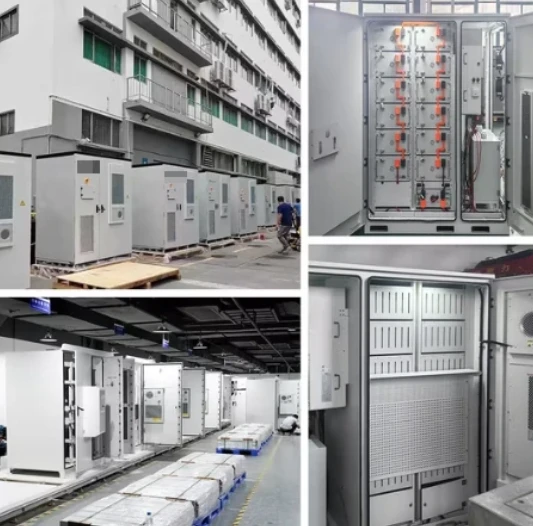
A 160 kWh energy storage battery cabinet - also called a C&I BESS cabinet, a battery energy storage cabinet, or an outdoor LFP battery cabinet - is a complete energy storage system built inside a single floor-standing enclosure. Unlike a containerized BESS, which starts around 1–2 MWh and needs a crane, a cabinet arrives pre-wired and pre-commissioned, and can be placed on a prepared concrete pad in a day.

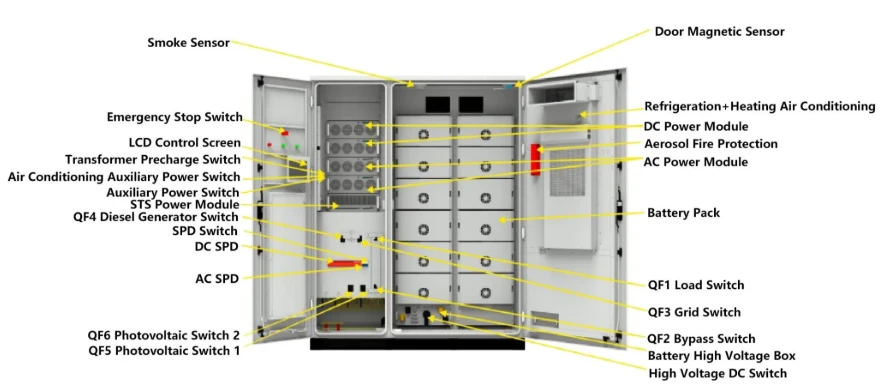
Inside one enclosure you get five functional blocks:
- LFP battery packs - prismatic 3.2 V cells, commonly 280 Ah or 314 Ah, wired into high-voltage strings.
- BMS (Battery Management System) - cell-level voltage, temperature and current monitoring, active balancing, and SOC/SOH calculation.
- PCS (Power Conversion System) - bidirectional inverter that charges from grid or PV and discharges to loads; modular designs allow 60 kW to 100 kW in the same frame.
- Thermal management - air cooling with PID-controlled variable-speed fans, or liquid cooling with a coolant loop.
- Fire and electrical protection - smoke, gas and temperature detection, aerosol suppression at pack level, perfluorohexanone at cabinet level, explosion relief venting, and an external emergency stop.
An EMS (Energy Management System) layer sits on top, dispatching charge and discharge against your tariff structure. This is what turns a battery into a peak-shaving asset rather than an expensive UPS.
160 kWh Energy Storage Battery Cabinet: Technical Specifications That Matter
Specifications vary by manufacturer, but the 160 kWh class has converged on a recognizable set of numbers. Use this table as your comparison baseline when you review quotations.
|
Parameter |
Typical value for the 160 kWh class |
|
Nominal capacity |
160 kWh (157 kWh usable on shipped designs) |
|
Usable energy @ 80–90% DoD |
128–144 kWh |
|
Cell chemistry |
LiFePO4 (LFP), 3.2 V / 280–314 Ah prismatic |
|
System voltage |
400 V – 1500 V DC; 51.2 V for residential stacks |
|
Continuous power |
60–100 kW (≈0.5P rate) |
|
Cycle life |
≥ 6,000 cycles @ 80% DoD, 25 °C |
|
Round-trip efficiency |
88–94% |
|
Thermal management |
Air cooling, or liquid cooling with cell ΔT ≤ 3 °C vs 5–8 °C for air |
|
Enclosure rating |
IP54 / IP55 cabinet, IP67 battery pack; corrosion class C4 (C5-M for coastal) |
|
Operating ambient |
−25 °C to +55 °C, derating above 45 °C |
|
Footprint and weight |
≈1.3 × 1.2 × 2.4 m, ≈2.1–3.1 t |
|
Fire suppression |
Pack-level aerosol + cabinet-level perfluorohexanone + water-mist interface |
|
Communication |
RS485, CAN, Ethernet (Modbus RTU/TCP); optional IEC 61850, MQTT, 4G |
|
Certifications |
IEC 62619, IEC 62477-1, IEC 61000-6-2/-4, UN 38.3, UL 9540 / 9540A, UL 1973, GB/T 36276 |
How to Size a 160 kWh Energy Storage Battery Cabinet Correctly
Sizing is three independent calculations, and skipping any one of them is how projects end up over- or under-built.
1. Energy (kWh) - how long must it run?
Take your critical or shiftable load in kW and multiply by required hours, then divide by usable depth of discharge. A 160 kWh cabinet at 90% DoD gives 144 kWh: that supports a 20 kW average load for roughly 7.2 hours, or a 10 kW average load for about 14.4 hours. If your discharge window is only two hours, you do not need 160 kWh - you need power, not energy.
2. Power (kW) - how fast must it discharge?
Most C&I cabinets are rated around 0.5P, meaning 80 kW for a 160 kWh pack and a two-hour discharge. Backup-heavy projects push toward 1P; pure energy-arbitrage projects accept 0.25P and buy more cabinets. A useful rule of thumb from the field: 20 kW for long-duration backup, 30–50 kW for large homes and villas, 60–100 kW for meaningful commercial load shifting.
3. Solar (kWp) - can you refill it?
Divide the energy you need to replace each day by your site's peak sun hours. Recharging 80 kWh needs about 20 kW of PV at 4 sun hours; 120 kWh needs about 30 kW; a full 160 kWh needs about 40 kW. Sizing PV below this is the most common reason a solar-plus-storage project fails to hit its modelled savings.
Where a 160 kWh Energy Storage Battery Cabinet Fits Best
The 160 kWh size is deliberately in the middle of the market: big enough to matter on a commercial tariff, small enough to permit and install without substation work.
Peak shaving and demand charge reduction - charge overnight at off-peak rates, discharge against your monthly peak demand. Typical peak demand reduction is 20–40%, with payback in the 3–5 year range for sites with a steep demand charge.
Solar self-consumption - store midday PV export and use it after sunset. Well-dispatched systems reach 60–80% solar self-consumption versus 30–40% without storage.
Backup power for critical loads - sub-10 ms to sub-20 ms transfer keeps data rooms, telecom equipment, cold chain refrigeration and production lines running through grid outages.
EV charging load management - buffer fast-charging peaks so a site can install more chargers without upgrading its utility transformer or service connection.
Farms, villas and rural assets - pumps, refrigeration, lighting and communications across large or remote properties.
Microgrids and off-grid hybrid systems - pair with PV and a diesel genset; storage typically cuts diesel runtime by 40–60% through solar shifting and genset load optimisation.
Above roughly 500 kWh, stop comparing cabinets and start pricing a containerized BESS on total installed cost, footprint, cabling and maintenance access - the two are not interchangeable.
160 kWh Energy Storage Battery Cabinet Cost: What to Expect in 2026
Battery prices vary by chemistry sourcing, PCS rating, thermal design, certification package, quantity and Incoterm, so treat any single number with suspicion. The tiers below reflect how quotations are actually structured.
|
Scope of supply |
Indicative price |
160 kWh project total |
|
Battery modules only |
$150–250 / kWh |
$24,000–40,000 |
|
Cabinet with BMS |
$220–350 / kWh |
$35,200–56,000 |
|
Complete system with PCS/inverter |
$300–500 / kWh |
$48,000–80,000 |
|
Fully installed commercial ESS |
$400–700+ / kWh |
$64,000–112,000+ |
Factory-direct procurement from a China-based manufacturer generally lands at the lower end of each band; turnkey Western EPC delivery lands at the upper end. The variables that move you within a band are cell grade (280 Ah vs 314 Ah, grade A vs B), PCS power and whether an isolation transformer is required, liquid versus air cooling, fire suppression level, and the target-market certification package.
Industry Trends Shaping the 160 kWh Battery Cabinet Class
Five shifts are worth watching if you are specifying a system that needs to still be competitive in 2032:
- 314 Ah cells are replacing 280 Ah. fewer cells per kWh means fewer connections, higher rack density and lower balance-of-system cost.
- Liquid cooling is becoming the default above ~200 kWh. Tighter cell temperature spread translates directly into more consistent cycle life across the pack.
- 1500 V DC architectures are moving from utility scale into C&I, cutting current and copper losses.
- Modular parallel scaling. Cabinets are now designed from the start to be paralleled - start at 160 kWh, expand toward 1 MWh without replacing the first unit.
- Smarter EMS dispatch. Dynamic tariffs, real-time grid signals and AI-assisted forecasting are turning storage from a fixed schedule into a revenue-optimising asset - which is why open Modbus/IEC 61850 connectivity now matters as much as cell capacity.
Get your 160 kWh BESS quotation within 24 hours
OEM / ODM · Custom capacity · Global shipping
📧 sales@gneeelectric.com · 💬 WhatsApp: +86 158 2468 7445

FAQ
How long will a 160 kWh energy storage battery cabinet power my building?
It depends on load. At 90% depth of discharge you have about 144 kWh usable: roughly 7 hours at a 20 kW average load, or about 14 hours at 10 kW. Most C&I sites use it for a 2–4 hour peak window rather than whole-building backup.
What size inverter or PCS do I need?
Around 80 kW (0.5P) is typical for general peak shaving. Choose 20 kW for long-duration light backup, 30–50 kW for villas and large homes, and 60–100 kW where you need to compress a commercial peak.
Is 160 kWh too big for a home?
For a standard single-family home with basic backup needs, usually yes. It makes sense for large villas, homes with multiple EV chargers, farms, multi-family buildings, off-grid houses with large PV arrays, or homes needing several days of autonomy.
Air cooling or liquid cooling?
Liquid cooling holds cell temperature spread to roughly 3 °C within a pack against 5–8 °C for air, which preserves cycle life and delays derating in hot climates. Air cooling remains a defensible, lower-cost choice for moderate climates and low-cycling backup duty.
How many cabinets do I need for 1 MWh?
Six 160 kWh cabinets, in parallel, assuming your PCS and switchgear are sized for the aggregate power. Confirm the parallel limit with your manufacturer before finalising the layout.
Send Inquiry