







75 kVA Dry Type Transformer with 480V Delta Primary: Full Specifications
Jan 13, 2026
Leave a message
Transformer Overview and Key Ratings
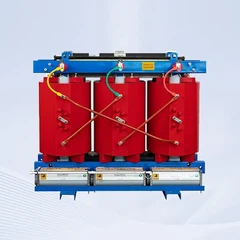
The 75 kVA dry type transformer with a 480V delta primary is a three-phase unit designed for indoor power distribution in commercial and industrial facilities. It steps down a 480V delta supply to a utilization voltage such as 208Y/120V, and its air-cooled, oil-free construction makes it suitable for installation inside buildings where fire codes discourage liquid-filled equipment. The main ratings of a typical configuration are shown below, designed and tested per IEC 60076-11:
| Parameter | Value |
|---|---|
| Rated power | 75 kVA |
| Phase configuration | Three phase, 60 Hz for 480V systems |
| Primary voltage | 480 V delta |
| Secondary voltage | 208Y/120 V typical, other voltages customizable |
| Insulation system | Class 220, rated 220 degrees Celsius |
| Temperature rise | 150 K |
| Enclosure | NEMA 2 indoor drip-proof type |
| Winding material | Copper |
| Voltage taps | Off-circuit taps, typically plus or minus 2 by 2.5 percent |
All values are declared by the manufacturer on the nameplate and verified by routine tests before delivery.
Current Ratings at Primary and Secondary
The rated line current of a three-phase transformer is calculated by dividing the apparent power by the line voltage times the square root of three. For the 75 kVA unit at 480V the primary full-load current is about 90 amperes. On the secondary side, a 208Y/120V configuration delivers about 208 amperes per phase at full load. These values are used to size the protective devices, cables, and busbar connections on both sides. When a different secondary voltage is specified, the secondary current changes accordingly, and the switchgear must be sized for the actual value.
Why a 480V Delta Primary Is Used
The 480V delta primary is standard in North American style industrial and commercial distribution systems. A 480V feed reduces line current for a given power compared with lower voltages, which lowers voltage drop over long cable runs and reduces distribution losses. The delta connection allows the transformer to operate without a system neutral on the primary side, simplifying the supply arrangement. This configuration is well matched to industrial loads such as motors, large HVAC equipment, and process machinery, and it is widely used where a facility receives power at 480V and needs a 208Y/120V supply for lighting, receptacles, and small equipment.
Applications of the 75 kVA 480V Delta Unit
The 75 kVA dry type transformer serves a broad range of indoor applications:
Industrial facilities converting a 480V incoming supply to 208Y/120V for control circuits, lighting, and auxiliary equipment.
Commercial buildings feeding lighting, HVAC, and general power panels.
Data and telecommunication rooms providing an isolated 208Y/120V supply for sensitive loads.
Machine shops and maintenance areas powering tools, test benches, and small motors.
Any indoor location where a clean, low-maintenance, oil-free transformer is preferred.
Because the unit is dry, it can be placed close to the load, shortening secondary cable runs and improving voltage regulation at the point of use.
Installation and Maintenance Considerations
Installation of the 75 kVA dry type transformer is straightforward, with a few important points:
Provide clearance and ventilation around the unit so that hot air can escape, per the guidance of IEC 60076-11.
Use the NEMA 2 enclosure for indoor drip-proof service, and select a higher protection degree for dusty or wet environments.
Check the tap setting against the actual supply voltage before energizing.
Verify the secondary voltage and vector group match the downstream switchgear and loads.
Plan annual dust cleaning of the windings and cooling ducts, and check connection tightness during scheduled shutdowns.
Measure insulation resistance before re-energizing after long idle periods.
With this routine, the unit provides decades of reliable service without oil handling or special fire protection.
FAQ
Q: What does 480V delta primary mean?
A: It means the primary windings are connected in delta and designed for a 480V line-to-line supply. The delta connection carries no system neutral on the primary side and is standard for industrial distribution.
Q: What is the full-load current of a 75 kVA transformer at 480V?
A: About 90 amperes on the primary at 480V, calculated by dividing 75,000 VA by 480V times the square root of three. At a 208Y/120V secondary the full-load current is about 208 amperes per phase.
Q: Can the secondary voltage be customized?
A: Yes. While 208Y/120V is the most common secondary for a 480V delta primary, other secondary voltages such as 240V three-phase can be supplied to match the equipment requirements of the project.
Q: Is this transformer suitable for indoor installation?
A: Yes. The dry type design contains no oil, so it can be installed indoors with normal ventilation and no oil containment, subject to the clearance and fire code requirements for dry type transformers.
Q: Why is copper used for the windings?
A: Copper has lower resistance and higher mechanical strength than aluminum, giving lower load losses and better reliability for continuous duty. It is the standard choice for this rating.
Q: What maintenance does the unit need?
A: Routine maintenance is limited to annual dust cleaning of windings and cooling ducts, connection torque checks, and periodic insulation resistance measurement. There is no oil to sample, filter, or replace.
Send Inquiry