










What Are The Different Types Of DC EV Chargers?
Oct 27, 2026
Leave a message
What Is DC EV Charger?
DC chargers, or Direct Current chargers, are used for charging electric vehicles (EVs). They convert alternating current (AC) from the power grid into direct current that can be used to charge the battery of an EV. The main advantage of DC charging stations is their speed. They can deliver a high-power output, which significantly reduces the charging time compared to AC chargers.
Key takeaways
- DC vs AC is a conversion-location difference. A DC charger performs AC-to-DC rectification inside its own cabinet and feeds the battery directly, bypassing the vehicle's onboard charger. That is why 50–350 kW is achievable in the field while AC Level 2 stalls at 7–22 kW.
- Usable power tiers: 30–60 kW destination (~45–70 min), 90–150 kW urban hub (~25–40 min), 180–350 kW highway corridor (~15–30 min), 400 kW+ ultra-fast for flagship sites and truck pilots.
- Grid hardware decides your go-live date. Six 120 kW chargers (720 kW nameplate) need roughly 560–600 kVA of transformer capacity after diversity and efficiency derating - specify 630 kVA minimum, 800 kVA if you will expand. Standard prefabricated substation lead time is about 2 months, which is longer than most charger lead times.

DC Fast Charger Types by Connector Standard: CCS1, CCS2, CHAdeMO, GB/T and NACS
The connector is the first purchasing decision, because it is the only one you cannot fix later with a software update.
CCS2 - Europe and most export markets
Defined in IEC 62196-3, the Combined Charging System adds two DC power pins to the Type 2 AC inlet, so one port handles both AC and DC. Standard CCS2 cables are rated around 200 A, which caps unconditioned output near 150–170 kW at 400 V. CharIN's High Power Charging profile pushes the envelope to roughly 500 A at 1000 V - around 500 kW - but only with liquid-cooled cables. CCS2 is the default specification for Europe, the UK, Australia, much of Southeast Asia, the Middle East and Latin America.
CCS1 - North America
Same Combo principle on the Type 1 (J1772) base. Functionally equivalent electrically, physically incompatible. If you are quoting a North American project, CCS1 and NACS are the two interfaces your client will ask about.

NACS / SAE J3400
Tesla's compact connector, published as SAE J3400 and now being adopted by most North American automakers. V3 Supercharger cabinets peak around 250 kW; V4 hardware is rated higher. The small form factor and single-pin layout make it popular with fleets, and adapters bridge CCS1 vehicles in both directions.
CHAdeMO - Japan-origin
Historically the first widely deployed DC standard and still the reference platform for vehicle-to-grid work, because CHAdeMO specified bidirectional power from the start. Deployed CHAdeMO 1.x hardware commonly sits at up to about 62.5 kW per port; the CHAdeMO 3.0 / ChaoJi roadmap targets several hundred kilowatts. Specify it when the site serves Japanese-brand fleets or a V2G pilot - otherwise it is a legacy port you maintain for a shrinking vehicle population.
GB/T - mainland China
GB/T 20234.3 defines the DC interface and GB/T 27930 the communication protocol. Most installed DC units run in the 750 V / 250 A class, with higher-current variants entering service. Mandatory for any project inside mainland China.
MCS - Megawatt Charging System
Being standardized as SAE J3271, targeting up to about 3.75 MW at 1250 V / 3000 A for heavy trucking. Not a 2026 purchase for most operators, but worth naming in any corridor RFP so the civil and MV provisions are not undersized.
Small Tip - selection logic: size your connector mix from the actual fleet, not from the brochure. A typical European highway site in 2026 runs two CCS2 guns plus one legacy gun; a North American site runs CCS1 plus NACS. Adding a second connector type costs less during manufacturing than a retrofit on site.
DC EV Charger Power Levels Explained: 30 kW to 400 kW+
| Tier | Nameplate power | Typical 10–80 % time (60–80 kWh pack) | Typical site | LV supply requirement |
|---|---|---|---|---|
| AC Level 2 (reference) | 7–22 kW | 3–8 h | Home, workplace, hotel | 230/400 V, 32 A |
| DC entry / destination | 30–60 kW | 45–70 min | Retail, restaurant, small fleet depot | 400 V 3-phase, 63–100 A |
| DC fast | 90–150 kW | 25–40 min | Urban hub, supermarket, taxi rank | 400 V 3-phase, 160–250 A |
| DC high-power | 180–350 kW | 15–30 min | Highway corridor, motorway service area | 400 V 3-phase, 400–630 A or dedicated transformer |
| Ultra-fast / HPC | 400 kW+ | 10–20 min | Flagship corridor, bus and truck pilot | Dedicated substation, usually an MV feed |
| Megawatt (MCS, emerging) | 1–3.75 MW | 20–40 min for a 300–500 kWh truck pack | Freight corridors, ports | Purpose-built MV substation |
Two derating realities sit behind that table. First, almost every charger tapers hard above roughly 60–80 % state of charge, which is why specifications quote 10–80 % rather than 0–100 %. Second, cold packs charge slowly: an unconditioned battery at 0 °C can accept half its warm-weather rate, which is why Nordic and Canadian operators budget for battery pre-conditioning and, in some cases, higher nameplate power just to hit the same session time.
Small Tip - cost trap: a 350 kW cabinet does not deliver 350 kWh per hour. With tapering, vehicle acceptance limits and idle gaps, realistic daily energy throughput is often 30–45 % of nameplate × 24 h. Model revenue on kWh delivered, never on kW installed.
DC Charger Form Factors: All-in-One, Split-System, Wall-Mount and Containerized
All-in-one pedestal (typically 60–240 kW)
Rectifier, controller, payment terminal and one or two cables in a single cabinet. Lowest capex per kW, fastest to install, simplest to permit. The limitation is power allocation: two vehicles on one 120 kW cabinet usually split 60/60.
Split system (central power cabinet 240–1000 kW + 2–8 dispensers)
Rectifier modules live in a central power cabinet and feed slim dispensers. Dynamic power allocation lets an unoccupied dispenser release its share to a vehicle that can use it, which raises utilisation and revenue per installed kW. The trade-off is more civil work, more DC cabling and a higher minimum project size before the economics work - generally worth it from about four dispensers upward.
Wall-mount / compact DC (20–40 kW)
The right answer for fleet depots, service workshops and overnight destination sites where dwell time is measured in hours. Cheaper per port than any fast charger and far gentler on the grid connection.
Containerized and battery-buffered DC chargers
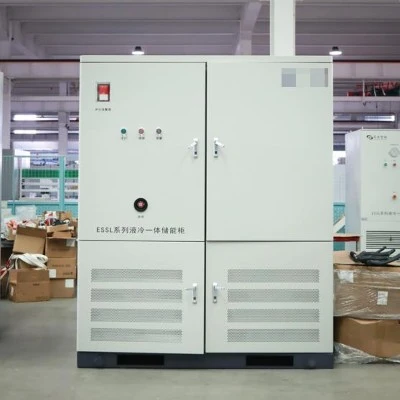
A 100–200 kW charger paired with 200–500 kWh of site storage lets you install high-power dispensing behind a weak grid connection: the battery covers the peak and recharges continuously at a fraction of the peak rate. This is increasingly the only viable option for highway sites where a new MV feeder is 12 months away.

Small Tip - modelling correction: when comparing all-in-one against split-system, compare cost per kWh delivered per day, not cost per kW. A split system at 1.4× the capex can beat an all-in-one on payback if it lifts utilisation from 12 % to 20 %.
Air-Cooled vs Liquid-Cooled DC Fast Chargers: Which Cooling Type Fits Your Site?
Air-cooled chargers move heat with filtered forced air. They are cheaper to buy, easier to service, and entirely adequate up to roughly 150–200 kW in temperate climates. Their weaknesses are real, though: filters clog in dusty and coastal sites, fans add 65–75 dB of noise that will complicate permitting near housing, output derates once ambient temperature climbs past about 40 °C, and the heavy copper in a high-current cable makes the gun physically hard to handle.
Liquid-cooled chargers circulate coolant through the power modules and, in high-power models, through the cable itself. That removes most of the heat at the source, allows 300–500 A cables at roughly a third of the weight, and is what makes 350 kW and above practical at a dispenser a driver can actually lift. Against that: higher capex, a coolant pump and loop that become a new maintenance item with a glycol service interval, and a leak-tightness requirement you should verify in the type-test report rather than the datasheet.
Small Tip - comparison method: ask every bidder for the same three numbers - output at 25 °C ambient, output at 45 °C ambient, and noise in dB(A) at 1 m. Vendors who will not provide the 45 °C figure are quoting you a number you cannot deliver in summer.
How to Choose the Right DC EV Charger Type for Your Site: Power, Grid Capacity and Duty Cycle
Work through these six factors in order; the first two eliminate more bad options than the rest combined.
- Vehicle acceptance rate. List the actual models you will serve and their peak DC acceptance (typically 50–150 kW for 400 V family cars, 200–350 kW for 800 V platforms). There is no reason to buy 350 kW cabinets for a fleet that caps at 90 kW.
- Dwell time. If drivers park for 60–90 minutes anyway - restaurants, cinemas, workplaces, hotels - a 60 kW unit delivers the same daily throughput as a 150 kW unit at roughly half the hardware and grid cost.
- Connector mix and future-proofing. Provision conduit and cabinet space for a connector you do not install on day one.
- Available grid capacity. This is the hard ceiling. Confirm available kVA, nominal voltage, prospective short-circuit current and the utility's timeline for any upgrade before you sign for chargers.
- Cooling and noise. Fixed by climate and neighbours, not preference.
- Backend and compliance. OCPP 1.6J or OCPP 2.0.1 for station-to-backend communication, ISO 15118 for Plug & Charge and the V2G pathway, plus local payment-terminal and metrology certification.
Small Tip - revenue-model risk: utilisation is the variable that kills charging-hub business cases, not hardware price. Underwriting at 25 % utilisation when the site realistically reaches 10 % doubles your payback period. Pressure-test the traffic count before you pressure-test the supplier quote.

Get your DC charging hub powered - not just specified
Most delayed charging projects are not delayed by the chargers. They are delayed by a transformer that was specified too late, undersized, or without harmonic and power-factor provisions.
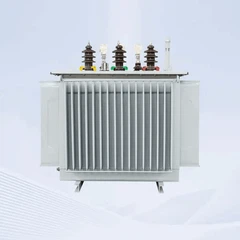
GNEE builds the other half of your hub: IEC 62271-202 prefabricated EV charging substations with MV switchgear, dry-type (up to 5000 kVA) or oil-immersed (up to 10 000 kVA) transformers, IEC 61439 LV distribution, reactive-power compensation and harmonic mitigation - factory assembled, factory tested, and shipped to 6 / 10 / 35 kV or 11 / 22 / 33 kV grid standards. Standard lead time is approximately 2 months, with free remote engineering guidance for installation and commissioning.
FAQ
What is the difference between AC and DC EV charging?
An AC charger delivers alternating current to the car, and the vehicle's onboard charger converts it to DC - that converter is the bottleneck, usually 7 kW to 22 kW. A DC charger does the conversion in its own cabinet and feeds the battery directly, so the vehicle's onboard limit no longer applies and power can reach 50–350 kW or more.
How many kW is a DC fast charger, and how fast does it charge?
Public DC chargers are commonly 50 kW to 350 kW, with 400 kW+ ultra-fast units in deployment. A 50 kW unit adds roughly 60–90 minutes for a 10–80 % charge on a typical 60–80 kWh pack; a 150 kW unit needs about 25–40 minutes; a 350 kW unit on a compatible 800 V vehicle reaches 10–80 % in roughly 15–25 minutes. The vehicle's acceptance rate and battery temperature set the real figure.
Can all EVs use all DC charger types?
No. Compatibility depends on the physical connector (CCS1, CCS2, CHAdeMO, GB/T, NACS) and on the vehicle's maximum acceptance rate. A car that accepts 50 kW gains nothing from a 350 kW cabinet beyond convenience of finding a free bay. Adapters exist between some standards but are not a substitute for specifying the right connector mix at the site.
Send Inquiry