


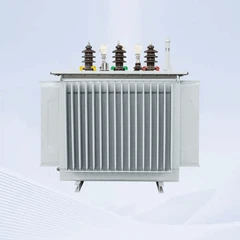
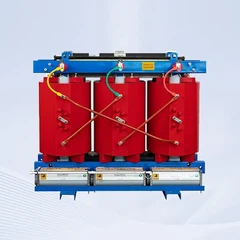





What is a K1 rating on a dry type Transformer?
Jan 09, 2026
Leave a message
What Is a K1 Rating on a Dry Type Transformer?
When selecting a dry type transformer for modern power systems, engineers often focus on capacity, voltage, insulation class, and cooling method. However, in projects involving non-linear loads, another key parameter becomes critical: the K-factor rating. Among these, the K1 rating is the most common-but also one of the most misunderstood.

This article explains what a K1 rating on a dry type transformer means, why it matters, and when it is required.
Understanding K-Factor Ratings in Transformers
The K-factor is a rating that indicates a transformer's ability to handle harmonic currents generated by non-linear electrical loads.
Non-linear loads include:
- Variable frequency drives (VFDs)
- UPS systems
- Rectifiers
- LED lighting
- Data center equipment
These loads distort the current waveform, producing harmonics that increase transformer losses and heating.
The higher the K-factor, the more harmonic current the transformer can safely handle without overheating.
 What Does K1 Mean on a Dry Type Transformer?
A K1-rated dry type transformer is designed to handle minimal harmonic distortion.
In practical terms, K1 means:
- The transformer is suitable for linear or near-linear loads
- Harmonic current content is very low
- No special harmonic-mitigation design is required
- Most standard dry type transformers are K1 by default.
K1 Rating vs Higher K-Factor Ratings
| K-Factor | Typical Load Type | Application |
|---|---|---|
| K1 | Linear loads | Motors, heaters, lighting (incandescent) |
| K4 | Moderate non-linear loads | Small VFDs, mixed loads |
| K13 | High harmonic loads | Data centers, UPS systems |
| K20 / K30 | Severe harmonics | Large rectifiers, industrial drives |
Key takeaway:
If your system does not contain significant non-linear loads, a K1 dry type transformer is sufficient and cost-effective.
Why K1 Rating Matters in Dry Type Transformers
Dry type transformers rely on air or solid insulation for cooling. Excess harmonic currents cause:
- Increased copper losses
- Higher operating temperature
- Accelerated insulation aging
- Reduced transformer lifespan
A K1-rated transformer is optimized for normal thermal performance, assuming sinusoidal current conditions.
Using a K1 transformer in a high-harmonic environment may lead to:
❌ Overheating
❌ Reduced efficiency
❌ Premature failure
Is K1 Rating Mandatory for All Dry Type Transformers?
No. The required K-factor depends entirely on the load profile.
 Use a K1-rated dry type transformer if:
✔ Loads are mostly motors or resistive equipment
✔ Harmonic distortion is less than 5%
✔ No large power electronics are connected
✔ System is conventional industrial or commercial
Consider higher K-factor transformers if:
⚠ The system includes UPS or VFDs
⚠ Data center or IT loads dominate
⚠ Harmonic analysis shows elevated THD
K1 Rating and International Standards
K-factor ratings are referenced in:
- IEEE C57.110
- UL standards
- ANSI transformer guidelines
While IEC standards focus more on thermal design and losses, K-factor is widely used in North American and international projects, especially for dry type transformers.
Does K1 Rating Affect Transformer Cost?
Yes-positively.
Compared with higher K-rated transformers:
- K1 transformers have lower copper content
- No oversized neutral conductors
- Standard thermal design
This results in:
✔ Lower initial cost
✔ Shorter delivery time
✔ Higher efficiency under linear loads
For many projects, specifying K1 avoids unnecessary oversizing and expense.
 How GNEE Helps You Select the Right K-Rated Transformer
At GNEE, we support customers with proper transformer selection based on real operating conditions, not over-specification.
Our dry type transformer solutions offer:
- K1, K4, K13 and custom K-factor designs
- Cast resin and VPI dry type transformers
- Compliance with IEC, IEEE, and ANSI standards
- Technical review of load harmonic profiles
We help you choose a transformer that is safe, efficient, and cost-effective.
Conclusion
So, what is a K1 rating on a dry type transformer?
A K1 rating means the transformer is designed for linear or low-harmonic loads, offering reliable performance, normal temperature rise, and the most economical solution for conventional power systems.
Selecting the correct K-factor ensures longer service life, higher efficiency, and reduced operating risk.
📩 Contact GNEE today for expert guidance on dry type transformer selection and customized power solutions for your project.
Confused between epoxy resin and non-encapsulated dry-type transformers?
Fill in your application scenario (data center/factory/construction), and we'll send a free scenario-adapted comparison table with 1-on-1 selection consultation!
What is the rating of a dry transformer?
1 The standard ratings of transformers shall be 100,200, 315, 630, 1000,1250,1600,2000 & 2500.
What is a k1 transformer rating?
A K-1 transformer is designed for linear loads (pure sine-wave current). K-rated transformers (e.g., K-4, K-9, K-13, K-20, and higher) are engineered for environments with increasing levels of harmonic distortion.
What is the K-factor of a dry type transformer?
A K-Factor rating is an index of the transformers ability to supply harmonic content in its load current while operating within it temperature limits. For Dry Type Transformers a K-Factor calculation is made to determine the amount of the Harmonic Content present in a power system.
What is the difference between k1 and K4 transformers?
K-Factor 4:
Transformers with this rating are designed to supply the rated KVA without overheating. These transformers have the ability to withstand four times the eddy current as the K-1 transformers. These transformers are used for systems with a harmonic current of up to 35% or less.
Send Inquiry