









Why Use an OLTC Transformer for Voltage Fluctuation? | 750kVA 11/0.49kV Solution
Aug 07, 2026
Leave a message
The short answer is because an On-Load Tap-Changer (OLTC) transformer can automatically regulate output voltage without interrupting the power supply. Unlike conventional distribution transformers with fixed tap settings, an OLTC transformer continuously adjusts its tap position in response to changes in the incoming voltage or load conditions, helping maintain a stable secondary voltage and protect downstream electrical equipment.
Voltage fluctuations are becoming increasingly common in modern power distribution systems.For applications that require continuous and reliable power, such as manufacturing plants, hospitals, commercial buildings, data centers, mining operations, and renewable energy facilities, maintaining voltage stability is essential rather than optional. This is why many engineers and project designers specify 750kVA 11/0.49kV Oil-Immersed On-Load Tap-Changer (OLTC) Transformers. By automatically adjusting the voltage under load, these transformers improve power quality, enhance equipment reliability, and reduce long-term operating costs.
This article explains how OLTC transformers work, why they outperform conventional off-circuit tap-changing transformers in voltage-fluctuating environments, and what factors should be considered when selecting a 750kVA 11/0.49kV Oil-Immersed OLTC Transformer for industrial and commercial power distribution systems.

What Causes Voltage Fluctuations in Distribution Systems?
Voltage fluctuations are one of the most common power quality issues in modern electrical distribution systems. They occur when the supply voltage continuously deviates from its nominal value due to changes in power generation, transmission conditions, or electrical loads. While short-term fluctuations may only affect lighting or sensitive electronics, prolonged or frequent voltage instability can reduce equipment efficiency, accelerate insulation aging, increase maintenance costs, and even lead to unexpected production downtime.
Understanding the root causes of voltage fluctuations is the first step toward selecting the appropriate voltage regulation solution, such as a 750kVA 11/0.49kV Oil-Immersed On-Load Tap-Changer (OLTC) Transformer.
| Cause | Description | Impact on the Distribution System | How an OLTC Transformer Helps |
|---|---|---|---|
| Utility Grid Instability | Voltage variations caused by grid load changes, switching operations, faults, or severe weather. | Causes overvoltage, undervoltage, and unstable power quality. | Automatically adjusts tap positions to maintain a stable secondary voltage. |
| Renewable Energy Integration | Fluctuating output from solar PV and wind power due to changing weather conditions. | Frequent voltage rise and drop, affecting grid stability. | Continuously regulates voltage to compensate for renewable power variations. |
| Large Motor Starting | High inrush current (typically 5–7× rated current) during motor startup. | Temporary voltage dips that may affect nearby equipment. | Minimizes voltage drop by automatically regulating transformer output. |
| Rapid Load Changes | Sudden load variations from welding machines, cranes, elevators, and automated production lines. | Causes frequent voltage fluctuations and reduced power quality. | Responds to changing loads without interrupting the power supply. |
| Long Distribution Feeders | Voltage loss caused by long cable lengths and conductor impedance. | Low terminal voltage, especially during peak demand. | Compensates for voltage drop to maintain the required output voltage. |
| Harmonic-Producing Equipment | Nonlinear loads such as VFDs, UPS systems, EV chargers, and arc furnaces generate harmonic distortion. | Increased transformer losses, overheating, voltage distortion, and insulation aging. | Maintains stable voltage and improves system performance in harmonic-rich environments. |
1.Utility Grid Instability
The utility power grid is one of the primary sources of voltage fluctuations. Changes in regional electricity demand, switching operations at substations, transmission line faults, and weather-related events can all cause the incoming voltage to rise or fall unexpectedly. These fluctuations are often transferred directly to industrial and commercial distribution systems.

An OLTC transformer automatically compensates for these voltage variations by adjusting its tap position under load, ensuring that the secondary voltage remains within the required operating range.
2. Renewable Energy Integration
The increasing adoption of solar photovoltaic (PV) and wind power systems has introduced new challenges to voltage regulation. Since renewable energy output depends on weather conditions such as sunlight intensity and wind speed, the generated power can change rapidly throughout the day. These variations may result in voltage rise during peak generation periods and voltage drop when generation decreases.

An OLTC transformer helps stabilize the distribution voltage by continuously adapting to these changing power inputs, making it an ideal solution for renewable energy applications.
3. Large Motor Starting
Industrial facilities often use high-power induction motors for pumps, compressors, conveyors, and manufacturing equipment. During startup, these motors typically draw 5 to 7 times their rated current, creating a temporary voltage dip across the distribution network.

Although the voltage usually recovers after the motor reaches normal operating speed, repeated starts can negatively affect nearby equipment, particularly PLC systems, variable frequency drives (VFDs), and sensitive electronic devices. Proper voltage regulation minimizes these disturbances and improves overall system stability.
4. Rapid Load Changes
Production lines rarely operate under constant load conditions. Welding machines, cranes, elevators, rolling mills, and automated manufacturing equipment can create sudden increases or decreases in electrical demand within seconds.

These rapid load variations alter transformer loading and feeder voltage, causing frequent voltage fluctuations. Transformers equipped with on-load tap changers can respond automatically to these changes without interrupting power, providing a more stable supply voltage for critical loads.
5. Long Distribution Feeders
Voltage drop naturally occurs as electrical power travels through cables and overhead lines. The longer the distribution feeder and the higher the load current, the greater the voltage loss due to conductor resistance and impedance.

Facilities located far from substations or supplied through long distribution networks often experience lower terminal voltages during peak demand. Installing an OLTC transformer helps compensate for these voltage drops and ensures adequate voltage at the point of use.
6. Harmonic-Producintg Equipmen
Modern electrical systems contain increasing numbers of nonlinear loads, including variable frequency drives (VFDs), UPS systems, data centers, battery energy storage systems (BESS), EV chargers, and arc furnaces. These devices generate harmonic currents that distort the voltage waveform and increase transformer losses.

Excessive harmonic distortion may lead to overheating, poor voltage regulation, premature insulation aging, and reduced transformer efficiency. Selecting a transformer designed for harmonic-rich environments and implementing proper voltage regulation strategies can significantly improve power quality and equipment reliability.
What Is an Oil-Immersed On-Load Tap-Changer (OLTC) Transformer?
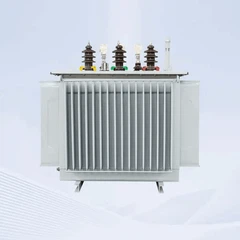
An Oil-Immersed On-Load Tap-Changer (OLTC) Transformer is a power transformer equipped with an on-load tap changer (OLTC) that can automatically adjust the transformer's turns ratio while it remains energized and supplying power. Unlike conventional transformers that require the transformer to be de-energized before changing tap positions, an OLTC transformer performs voltage regulation without interrupting the power supply.
Because of its ability to regulate voltage in real time, the 750kVA 11/0.49kV Oil-Immersed OLTC Transformer is widely used in industrial plants, commercial buildings, renewable energy systems, substations, mining operations, and other applications where voltage stability is critical.
Vacuum tap changers have become the industry standard for modern OLTC transformers worldwide due to their longer contact service life, reduced maintenance requirements, and lower oil contamination. However, conventional oil-switching OLTCs remain widely deployed in many distribution applications and existing power systems because of their proven reliability and lower initial investment.
How Does an OLTC Transformer Work?
An OLTC transformer continuously monitors the output voltage through an automatic voltage regulator (AVR) or transformer control relay.
When the measured voltage deviates from the preset range, the controller sends a command to the tap changer mechanism. The tap changer switches to a different tap position while the transformer remains energized, changing the effective number of winding turns and restoring the secondary voltage to its target value.
Unlike an off-circuit tap changer, the entire adjustment process is completed without interrupting the electrical load, ensuring continuous power supply to critical equipment.
The basic operating sequence is:
Incoming Voltage Changes
│
▼
Voltage Controller Detects Deviation
│
▼
OLTC Receives Control Signal
│
▼
Tap Position Changes Under Load
│
▼
Secondary Voltage Returns to the Target Range
Why Choose a 750kVA 11/0.49kV OLTC Transformer?
A 750kVA 11/0.49kV Oil-Immersed On-Load Tap-Changer (OLTC) Transformer is designed to provide continuous voltage regulation without interrupting the power supply.The transformer specifications are as follows:
| No. | Item | Specification | Remark |
|---|---|---|---|
| 1 | Power Rating | 750 kVA | Standard range: 100 kVA – 2500 kVA oil-immersed distribution transformers |
| 2 | Primary Voltage | 11 kV (Delta) | Also available: 6.6 kV, 10.5 kV, 13.2 kV, 15 kV, 22 kV |
| 3 | Secondary Voltage | 0.49 kV (Wye grounded) | Options: 0.4kv,0.415 kV, 0.33 kV, 0.208 kV based on local standards |
| 4 | Phase | Three-phase | Suitable for utility, commercial, and municipal grid use |
| 5 | Cooling Type | ONAN (Oil Natural Air Natural) | Efficient passive cooling for urban or rural installations |
| 6 | Core Material | CRGO silicon steel | Minimizes iron losses and improves magnetic performance |
| 7 | Insulation Fluid | Electrical grade mineral oil | IEEE/IEC-compliant with excellent thermal stability |
| 8 | Temperature Rise | 55°C / 65°C options | Compliant with North American and European requirements |
| 9 | Enclosure Type | Outdoor sealed tank, IP44/IP54 | Rust-resistant, anti-corrosion coating, tamper-proof design |
| 10 | Standards | IEC 60076, ANSI C57, CSA, EN 50588 | Meets EU & North American grid compliance standards |
| 11 | Certifications | CE, UL, CSA, cUL, RoHS, ISO | Third-party testing for safety and performance |
| 12 | Connection Type | Delta – Wye grounded (standard) | Custom configurations: Delta-Delta, Wye-Wye, etc. |
| 13 | Applications | Industrial parks, data centers, local substations | Widely used in Canada, UK, Germany, Spain, Portugal |
| 14 | Protection Devices | Oil level gauge, pressure valve, temp gauge | Optional: surge arresters, drain valve, PRV |
| 15 | Dimensions & Weight | Customizable | Weight ~1200–1500 kg depending on spec |
| 16 | Energy Efficiency | DOE 2016 & EU Eco Design-compliant | Reduces operating losses and carbon emissions |
| 17 | Installation Method | Pad-mounted or pole-mounted | Includes lifting lugs and skid base for transport |
| 18 | Ambient Temperature Range | -25°C to +45°C | Arctic-ready versions available for -40°C |
| 19 | Total Transformer Loss | ≤1.6% @ full load | Designed for long-term low-cost operation |
| 20 | No-Load Loss | ≤ 0.3% of rated capacity | Helps improve energy savings in idle conditions |
| 21 | Load Loss | ≤ 1.25% of rated power | Optimized for continuous load distribution |
| 22 | Impedance | 5.5% typical | Custom range: 5% – 7% depending on design |
| 23 | Short-Circuit Strength | Withstands 25 kA for 2 sec | Mechanical integrity under fault conditions |
| 24 | Insulation Class | Class A (105°C) | Class F or B available for higher performance |
| 25 | Windings Material | Copper (standard) or Aluminum | Copper preferred for lower losses and longer life |
| 26 | Tap Changer | ±2 x 2.5% Off-Circuit Tap Changer | OLTC available for automatic voltage adjustment |
| 27 | Bushings | Porcelain per ANSI standards | Polymeric bushings available for severe climates |
| 28 | Cooling Oil Volume | Approx. 350–400 liters | Depends on final tank size and rating |
| 29 | Transformer Lifespan | 25–30 years average | Designed for high-reliability utility applications |
| 30 | Noise Level | ≤ 58 dB at 1 meter | Urban-friendly acoustic design |
| 31 | Warranty | 2 years standard | Optional 5-year extended support |
| 32 | Delivery Time | 30–45 days | Fast delivery via sea or air freight |
| 33 | Custom Lead Time | 60–75 days | Tailored builds per project specs |
| 34 | Price Range | Contact for quote | Based on copper content, specs, and certification level |
| 35 | Country of Origin | China (Energy Transformer Factory) | CE/UL/CSA-certified direct manufacturing supply |
High-quality 750kVA 11/0.49kV OLTC transformers are typically designed and manufactured in accordance with internationally recognized standards such as IEC 60076, ensuring reliable performance, safety, and compatibility with global power distribution systems.
OLTC Transformer vs Off-Circuit Tap Changer Transformer
| Feature | OLTC Transformer | Off-Circuit Tap Changer (OCTC) Transformer |
|---|---|---|
| Tap Adjustment | Under load (energized) | Only when de-energized |
| Power Interruption | Not required | Required |
| Voltage Regulation | Automatic and continuous | Manual and periodic |
| Response to Voltage Fluctuations | Real-time compensation | Cannot respond during operation |
| Suitable Load Conditions | Frequently changing loads | Stable loads |
| Voltage Stability | Excellent | Moderate |
| Automation Level | High | Low |
| Maintenance Frequency | Periodic inspection of OLTC mechanism | Lower mechanical maintenance |
| Initial Investment | Higher | Lower |
| Operating Cost | Lower over the equipment lifecycle due to improved efficiency and reduced downtime | Lower initial cost but potentially higher operational losses |
| Typical Applications | Industrial plants, substations, renewable energy, hospitals, data centers | Residential areas, commercial buildings with stable loads, rural distribution networks |
Unlike conventional Off-Circuit Tap Changer (OCTC) transformers, OLTC transformers regulate voltage without requiring a power outage. By automatically adjusting the tap position in response to changes in the input voltage and load demand, they provide real-time voltage compensation and ensure a stable secondary output voltage.
Why Pay More for an OLTC Transformer?
At first glance, an On-Load Tap Changer (OLTC) transformer may cost several thousand dollars more than a comparable transformer equipped with an Off-Circuit Tap Changer (DETC). For many buyers, this raises an important question: Is the additional investment really justified?
The answer depends on your application and operating requirements.
| Comparison Item | DETC (Off-Circuit Tap Changer) | OLTC (On-Load Tap Changer) |
|---|---|---|
| Tap Changing Method | Tap position can only be changed when the transformer is de-energized | Tap position can be changed while the transformer remains energized |
| Power Interruption Required | Yes | No |
| Automatic Voltage Regulation | Not supported | Supported (with an AVR controller) |
| Purchase Cost | Lower | Higher |
| Maintenance Needs | Low | Moderate to High |
| Typical Applications | Standard distribution transformers | Power transformers, utility substations, renewable energy systems, and industrial power distribution |
Paying more for an OLTC transformer is not simply about purchasing a more advanced transformer-it is an investment in voltage stability, operational continuity, and long-term system reliability.
Key Advantages of an OLTC Transformer
- Continuous Voltage Regulation:
Automatically adjusts the output voltage during operation without shutting down the transformer.
Improved Power Quality
Maintains a stable voltage supply, reducing the impact of overvoltage, undervoltage, and voltage fluctuations on connected equipment.
-
Reduced Equipment Downtime:
Critical loads continue operating while voltage adjustments are performed, improving system availability.
-
Better Adaptability to Variable Loads:
Suitable for facilities with rapidly changing electrical demand, such as manufacturing plants, mining operations, renewable energy systems, and data centers.
-
Extended Equipment Life:
Stable voltage reduces thermal stress on motors, drives, UPS systems, and other electrical equipment, helping extend service life.
Choosing a 750kVA 11/0.49kV Oil-Immersed OLTC Transformer is more than selecting a transformer with automatic tap changing capability-it is an investment in voltage stability, equipment protection, operational continuity, and long-term cost efficiency.
Common Applications of a 750kVA 11/0.49kV Oil-Immersed OLTC Transformer
A 750kVA 11/0.49kV Oil-Immersed On-Load Tap-Changer (OLTC) Transformer is widely used in power distribution systems where maintaining a stable voltage is essential for operational reliability. Thanks to its ability to automatically regulate voltage under load, it is particularly suitable for facilities with fluctuating power demand, renewable energy integration, or sensitive electrical equipment.
Below are some of the most common applications.
-
Industrial Manufacturing Plants
Manufacturing facilities often operate heavy-duty equipment such as CNC machines, compressors, pumps, conveyors, welding machines, and large induction motors. These loads frequently start and stop throughout the day, causing rapid changes in current demand and resulting in voltage fluctuations.
-
Commercial Buildings and Business Complexes
Large commercial buildings, shopping malls, office towers, hotels, airports, and convention centers experience continuously changing electrical loads due to HVAC systems, elevators, escalators, lighting, and tenant operations.
-
Renewable Energy Power Plants
Solar photovoltaic (PV) plants and wind farms generate electricity that varies according to weather conditions. Changes in solar irradiation or wind speed can cause frequent voltage fluctuations on the distribution network.
Successful Projects:750KVA 11KV/04KV Step Down transformer Shipped To Mozambique in October 2025.


Conclusion
In distribution networks where voltage fluctuations are common, conventional distribution transformers are limited to fixed tap settings and cannot respond dynamically to changes in load or input voltage. The 750kVA 11/0.49kV Oil-Immersed On-Load Tap-Changer (OLTC) Transformer, however, automatically regulates the tap position under load without requiring a power outage. By maintaining a stable output voltage, it minimizes the risk of equipment downtime, improves power quality, and maximizes energy efficiency.
GNEE can manufacture OLTC transformers from 630 kVA to 25 MVA with voltage ratings up to 35 kV, compliant with IEC 60076 and GB/T 1094 standards. Customized impedance, vector groups, and tap ranges are available for industrial plants, substations, renewable energy, and utility applications.
At GNEE Electric, our experienced engineering team provides customized transformer selection solutions tailored to your project requirements, ensuring optimal performance, reliability, and cost-effectiveness.Contact us today to receive free technical selection support and a factory-direct quotation.
FAQ
What Are the Common Signs of a 750 kVA 11/0.49 kV Oil-Immersed OLTC Transformer Failure?
Common signs include abnormal noises, excessive heating, erratic voltage regulation, increased contact resistance, and oil degradation.
How Often Should a 750 kVA 11/0.49 kV Oil-Immersed OLTC Transformer Change Tap Positions?
Tap changes depend on load and grid conditions but should be monitored to avoid excessive mechanical wear. Frequent unnecessary switching should be minimized.
What Maintenance Is Required for a 750 kVA 11/0.49 kV Oil-Immersed OLTC Transformer?
Regular inspections, oil testing, contact resistance checks, and mechanical wear assessments are essential to ensure reliable operation.
Send Inquiry