







How to Troubleshoot Voltage Problems in a 1600 kVA Three-Phase Cast Resin Dry-Type Transformer
Aug 06, 2026
Leave a message
A 1600 kVA three-phase cast resin dry-type transformer plays a critical role in modern power distribution systems. It is widely used in commercial buildings, hospitals, manufacturing plants, data centers, renewable energy projects, and other facilities that require a reliable and continuous power supply. Compared with oil-immersed transformers, epoxy resin dry-type transformers offer superior fire safety, environmental protection, and lower maintenance requirements. However, maintaining a stable operating voltage remains one of the most important factors in ensuring their long-term performance.

Voltage abnormalities-including undervoltage, overvoltage, voltage fluctuations, and phase imbalance-can significantly affect both the transformer and the electrical equipment connected to it. Even minor voltage deviations, if left unresolved, may increase winding temperature, accelerate insulation aging, reduce energy efficiency, and shorten the transformer's service life. In severe cases, voltage instability can trigger protection devices, interrupt production processes, or even lead to costly equipment failures.
This article explains the most common voltage problems encountered in 1600kVA Three-Phase Epoxy Resin Dry-Type Transformers, analyzes their underlying causes, and provides practical troubleshooting methods and preventive maintenance recommendations. Whether you are an electrical engineer, maintenance technician, EPC contractor, or transformer purchaser, this guide will help you improve power quality, reduce downtime, and maximize the operational reliability of your transformer system.
The Four Most Common Voltage Abnormalities in Dry-Type Transformers and Their Causes
Voltage abnormalities refer to any condition in which the supply or output voltage deviates from the transformer's rated operating range. For a 1600kVA Three-Phase Epoxy Resin Dry-Type Transformer, maintaining stable voltage is essential to ensure reliable power distribution, protect downstream equipment, and extend the transformer's service life.
When voltage becomes unstable, the transformer may operate under abnormal electrical stress, leading to increased winding temperature, insulation deterioration, reduced efficiency, and even unexpected shutdowns. If these issues are not identified and corrected promptly, they can result in expensive repairs and interruptions to critical operations.
The most common voltage abnormalities in dry-type transformers include the following.
Voltage Drop (Undervoltage)
Voltage drop, also known as undervoltage, occurs when the operating voltage falls below the transformer's rated value. This is one of the most common voltage problems in industrial power systems.
Undervoltage is typically caused by overloaded transformers, long transmission distances, undersized power cables, or insufficient utility supply during peak demand periods. As the supply voltage decreases, connected equipment attempts to maintain the required power by drawing higher current. This increased current causes additional heating in the transformer windings and accelerates insulation aging.

Common Effects
- Increased operating current
- Higher winding temperature
- Reduced transformer efficiency
- Poor performance of connected electrical equipment
- Shortened insulation lifespan
Overvoltage
Overvoltage occurs when the supply voltage exceeds the transformer's rated voltage for a sustained period or during transient events.
Common causes include incorrect tap changer settings, utility switching operations, lightning strikes, capacitor bank switching, or sudden load removal. Excessive voltage increases the magnetic flux inside the transformer core, resulting in higher core losses, increased noise levels, and greater thermal stress on the insulation system.
If left unaddressed, prolonged overvoltage can significantly reduce the service life of an epoxy resin dry-type transformer.

Common Effects
- Excessive core losses
- Increased operating temperature
- Accelerated insulation aging
- Higher risk of partial discharge
- Possible equipment damage
Voltage Fluctuation
Voltage fluctuation refers to continuous or frequent changes in voltage magnitude over a short period. Unlike undervoltage or overvoltage, voltage fluctuations involve repeated rises and drops in voltage rather than a consistently high or low level.
This issue is common in facilities with rapidly changing loads, such as steel plants, mining operations, manufacturing facilities, and renewable energy systems. Large motors, welding equipment, variable frequency drives (VFDs), and photovoltaic inverters can all contribute to voltage fluctuations.
Frequent voltage fluctuations reduce power quality and may cause sensitive equipment to malfunction.

Common Effects
- Flickering lighting systems
- Frequent operation of protective relays
- Reduced equipment stability
- Increased transformer thermal stress
- Lower overall power quality
Voltage Imbalance (Three-Phase Voltage Imbalance)
Voltage imbalance occurs when the three-phase voltages differ in magnitude or phase angle beyond the acceptable tolerance. Even a small imbalance can create a much larger current imbalance in the transformer windings.
Common causes include uneven single-phase loading, loose electrical connections, damaged cables, or faults within the utility distribution network.
A transformer operating under unbalanced voltage conditions experiences uneven heating among the three phases, reducing efficiency and increasing the likelihood of insulation failure.

Common Effects
- Uneven winding temperatures
- Increased neutral current
- Higher vibration and noise
- Reduced transformer efficiency
- Premature insulation failure
Comparison of Common Voltage Abnormalities
| Voltage Abnormality | Typical Causes | Possible Impact |
|---|---|---|
| Voltage Drop (Undervoltage) | Transformer overload, long cable runs, weak utility supply | Increased current, overheating, reduced efficiency |
| Overvoltage | Incorrect tap settings, lightning, switching operations | Insulation stress, higher core losses, overheating |
| Voltage Fluctuation | Rapid load changes, VFDs, welding equipment, renewable energy systems | Power quality issues, relay trips, equipment instability |
| Voltage Imbalance | Uneven phase loading, loose connections, distribution faults | Uneven heating, higher losses, shortened transformer life |
Understanding these four common voltage abnormalities is the first step toward effective transformer maintenance. In the following sections, we will examine the root causes of each issue, discuss practical diagnostic methods, and present proven solutions to help maintain the stable and reliable operation of a 1600kVA Three-Phase Epoxy Resin Dry-Type Transformer.
Step-by-Step Troubleshooting Guide for 1600 kVA Three-Phase Cast Resin Dry-Type Transformer Voltage Abnormalities
1600kVA three-phase epoxy-resin dry-type transformer Specifications
| Rated Power | 1600 kVA | |
| Rating Primary Voltage | 2.4-34.5kV | |
| Secondary Voltage | 480/277V 400/230V 380/220V Customized |
|
| Frequency | 50/60Hz | |
| Vector Group | Dyn11,Yyn0,Dyn5 | |
| Winding Material | Aluminum/Copper | |
| Efficiency | As IEEE,Doe 2016,CAS Std or Customized | |
| Impedance Voltage | Nominal 2% or Customized 1.1-5.75% | |
| Altitude | ≤1,000m or Customized | |
| Enclosure material | 304 Stainless Steel | |
| Total Weight | 10000 kg | |
| Outline Dimensions(L×W×H)in. | 2600×1980×2820(mm | |
Detailed Inspection Procedure
1600 kVA • Primary Voltage: 2.4–34.5 kV • Secondary Voltage: 480/277 V, 400/230 V, or 380/220 V • 50/60 Hz
Inspection Items
- Measure the primary-side voltage.
- Compare it with the transformer's nameplate rating.
Acceptable Range
- Rated voltage ±5% (Normal Operation)
- Warning: ±5% to ±10%
- Critical: > ±10%
Example
- Rated Voltage: 13.8 kV
- Normal Range:13.11–14.49 kV
↓
Inspection Items
Measure the secondary voltage under normal load.
Acceptable Range
For a 480/277 V transformer:
- Line-to-Line:456–504 V
- Line-to-Neutral:263–291 V
For a 400/230 V transformer:
- 380–420 V
- 219–242 V
For a 380/220 V transformer:
- 361–399 V
- 209–231 V
Deviation greater than ±5% should be investigated.
↓
Step 3
Inspection Items
- Verify the tap position.
- Compare the selected tap with the actual supply voltage.
Typical Tap Range
- ±2 × 2.5%
- ±5%
- ±2 × 5%
- (Depending on manufacturer)
Acceptable Condition
Tap position should compensate for long-term voltage variation rather than temporary fluctuations.
↓
Inspection Items
Measure:
- Phase Current
- Transformer Loading
- Load Balance
Recommended Values
Transformer Loading
- 80–90% (Recommended)
- ≤100% (Continuous Operation)
- >110% (Investigate)
- Phase Current Imbalance
- <10% preferred
- >20% requires correction
↓
Inspection Items
Use a Power Quality Analyzer.
Measure:
- THD-V
- THD-I
Recommended Limits
Voltage THD
- <5%
Current THD
- <8%
Higher harmonic levels may increase winding temperature and losses.
↓
Inspection Items
Check:
- Loose terminals
- Oxidation
- Cable damage
- Hot spots
Recommended Values
Terminal temperature rise:
- <30°C above ambient
Thermal Scan:
Temperature difference between similar phases:
- <10°C
Torque:
- Follow manufacturer's specified tightening torque.
↓
Inspection Items
Verify:
- Overvoltage Protection
- Undervoltage Protection
- Overcurrent Protection
- Overtemperature Alarm
Typical Settings
Undervoltage Alarm
- 90–95% of rated voltage
Overvoltage Alarm
- 105–110% of rated voltage
Temperature Alarm
- 120–130°C
Trip Temperature
- 140–150°C
(Adjust according to insulation class and manufacturer's recommendations.)
↓
Possible causes include:
- Low utility voltage
- Incorrect tap setting
- Transformer overload
- Loose cable connections
- Excessive harmonic distortion
- Phase voltage imbalance
- Faulty protection settings
Check Your Transformer in 5 Minutes
Implement Corrective Actions
- Adjust tap changer settings.
- Balance three-phase loads.
- Reduce transformer loading.
- Tighten or replace cable connections.
- Install harmonic filters if THD exceeds recommended limits.
- Repair upstream power quality issues.
- Re-test voltage and current to verify normal operation.
Why Choose GNEE Electric 1600kVA Dry-Type Transformer
Henan GNEE Electric Co., Ltd. is one of the most reliable manufacturers and suppliers of 1600kva three-phase epoxy-resin dry-type transformer in China. At GNEE Electric , we manufacture more than just "standard" transformers.We are dedicated to producing premium dry-type transformers with superior performance, exceptional quality, and extended service life.
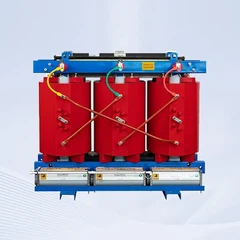
GNEE Electric supplies 1600kVA epoxy-resin dry-type transformer.The cast resin transformer features of low loss, compact and light weight,low noise level,damp-proof,high mechanical strength,flame resisting, strong overoad ability and low partial discharge quality.
three-phase epoxy-resin dry-type transformer characteristics
- 1. No oil, no pollution, flame retardant, self-extinguishing and fire prevention.
- 2. Low loss, high efficiency and low noise.
- 3. Small local discharge (under 30 PC) and high reliability, can ensure long-term safe operation, life up to 30 years.
- 4. Resistance to crack and temperature change, high mechanical strength, strong ability to resist sudden short-circuit.
- 5. Good moisture-proof property, it can run normally under 100% humidity and can be put into operation without drying treatment after shutdown.
- 6. There is no need for a separate transformer room, core maintenance or load-bearing beam saving civil land and occupation No oil, so it will not produce toxic gas to pollute the environment. No need of oil collecting pits or other ancillary buildings which reduces the cost of construction.
- 7. Easy installation, no debugging, almost no maintenance; No need to replace or check the oil, low operation and maintenance cost.

Conclusion
Voltage abnormalities are among the most common operational issues affecting dry-type transformers. If left unaddressed, they can reduce power quality, increase energy losses, accelerate insulation aging, and shorten the transformer's service life.
Fortunately, most voltage-related problems can be effectively prevented through proper installation, correct tap changer settings, balanced load management, routine inspections, and regular preventive maintenance. Implementing these best practices helps ensure stable transformer performance, minimizes unexpected downtime, and reduces long-term operating costs.
Choosing a 1600 kVA Three-Phase Epoxy Resin Dry-Type Transformer that complies with IEC 60076-11, features high-quality epoxy resin casting technology, and incorporates a low-loss design further enhances power supply reliability, improves energy efficiency, and extends equipment lifespan. These advantages make it a dependable solution for commercial, industrial, and critical power distribution applications.
FAQ
A high-quality 1600kVA three-phase epoxy resin dry-type transformer improves voltage stability through optimized winding design, precision manufacturing, superior epoxy resin insulation, and lower temperature rise. These features reduce voltage regulation, minimize impedance variation under changing loads, improve resistance to harmonics and short circuits, and help maintain a more stable output voltage for industrial, commercial, and renewable energy applications.
An Automatic Voltage Regulator (AVR) is recommended when the power supply experiences frequent voltage fluctuations, unstable utility conditions, or when supplying sensitive equipment such as data centers, hospitals, semiconductor manufacturing, or automated production lines.
For applications with a stable utility supply and properly configured tap changer settings, an AVR may not be necessary. A power quality assessment should be performed before deciding whether additional voltage regulation equipment is required.
Keep an eye out for lights that flicker, equipment that stops working without warning, measures of growing harmonic distortion, or thermal images that show hotspot temperatures rising over time. When voltage measurements show differences of more than ±5% between no-load and full-load conditions, it means that there are problems with the regulation that need to be looked into.
How do you ensure quality control and provide after-sales support?
Every transformer undergoes 100% inspection and comprehensive factory testing before delivery to ensure compliance with quality and performance standards. Our quality inspection team can provide live online inspections, video verification, or detailed inspection videos via email upon request. All products are rigorously tested to ensure reliable operation and easy maintenance. In addition, we offer professional online after-sales technical support to help customers quickly resolve installation, operation, and maintenance issues whenever needed.
Send Inquiry