







Analysis on the Application Scenarios of Dry-Type Transformers
Aug 04, 2026
Leave a message
Selecting the right dry-type transformer is critical to ensuring long-term power system safety,reliable operation, and lower maintenance costs. Choosing an unsuitable transformer may resultin overheating, insulation failure, excessive noise, or costly project delays.Dry-type transformers have become the preferred solution for commercial buildings, industrialfacilities, transportation infrastructure, and renewable energy projects because they offerexcellent fire safety, environmental protection, and reliable indoor operation without insulating oil.
In this guide, you'll learn where dry-type transformers are most commonly used, how to choosethe right model for different applications, and the key technical factors every buyer shouldconsider before purchasing.
What Exactly Is a Dry-Type Transformer

Electrical transformers are essential for voltage conversion in power generation, transmission, distribution, and industrial applications. Traditionally, many transformers have relied on insulating liquids such as mineral oil for cooling and dielectric protection. However, in locations where fire safety, environmental protection, and indoor installation are major concerns, an alternative solution is often preferred: the dry-type transformer.
Dry-type transformers have become increasingly popular in commercial buildings, hospitals, data centers, renewable energy facilities, industrial plants, and transportation systems because they eliminate the need for liquid insulation. Instead, they use air and solid insulating materials to provide electrical insulation and cooling. This design reduces fire risks, simplifies maintenance, and makes them particularly suitable for indoor and environmentally sensitive applications.
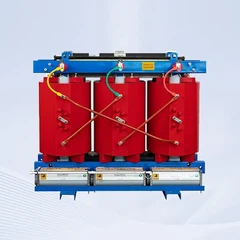
A dry-type transformer is a transformer that uses air and solid insulating materials instead of liquid-filled insulation systems such as mineral oil. Its windings are insulated using materials like epoxy resin, varnish, or cast resin, while cooling is achieved through natural or forced air circulation. Dry-type transformers are widely used in indoor installations where safety, environmental protection, and low maintenance requirements are important.
Their combination of reliability, safety, and environmental friendliness has made dry-type transformers a preferred choice for many modern electrical systems.
Dry-Type Transformer Application Selection Guide
We need to select suitable dry-type transformers according to different application scenarios to extend equipment service life and reduce maintenance costs.
| Application | Recommended Transformer Features |
|---|---|
| Hospitals | Cast resin insulation, low noise, fire safety compliance |
| Data Centers | High efficiency, low loss, continuous operation capability |
| Metro Systems | IP protection, Class F/H insulation, low maintenance |
| Solar PV Plants | High voltage ratio, inverter compatibility, outdoor enclosure |
| Industrial Plants | High overload capacity, customized cooling |
Before selecting a dry-type transformer, buyers should evaluate not only the installation environment but also the electrical specifications and future operating conditions. Choosing the correct transformer at the design stage can significantly reduce maintenance costs and improve
system reliability.
The following factors are among the most important:
| Selection Factor | Why It Matters |
|---|---|
| Rated Capacity (kVA) | Prevents overload or oversized investment |
| Primary & Secondary Voltage | Must match the power distribution system |
| Vector Group | Ensures compatibility with existing transformers |
| Cooling Method (AN/AF) | Determines overload capability |
| Insulation Class | Affects service life and temperature resistance |
| IP Protection Rating | Important for dusty or humid environments |
| Ambient Temperature | Influences transformer derating |
| Noise Level | Critical for hospitals, schools and offices |
| Compliance Standards | IEC 60076-11, CE or local utility requirements |
Urban residential and commercial buildings are its main application scenarios
High-rise residential buildings, large shopping malls, office buildings, hotels, and other densely populated places have strict requirements for fire safety, and also high requirements for the safety of power distribution equipment. Dry-type transformers do not contain flammable insulating oil and have excellent flame-retardant and fire-resistant properties. They can be directly installed in indoor areas such as basements and power distribution rooms without the need for complex fire protection and oil storage facilities. This not only saves building space but also ensures stable and safe electricity supply for residents and businesses, adapting to the dense urban power distribution model.
Typical projects include shopping malls, hospitals, schools, office buildings, hotels, airports, anddata centers where fire safety regulations prohibit the use of oil-filled transformers.

Rail transit and underground engineering are their core application areas
Subways, urban integrated pipeline corridors, underground tunnels, and other enclosed spaces are characterized by dampness, poor ventilation, difficult equipment maintenance, and high fire risk. Dry-type transformers, with their fully sealed structure, possess characteristics such as moisture-proof, dust-proof, shock-resistant, and aging-resistant properties. They can adapt to complex underground working environments, operate stably, have a low failure rate, and fully meet the long-term, safe, and uninterrupted power supply requirements of rail transit systems.
In metro stations and underground utility tunnels, dry-type transformers are often specified with IP23 or higher enclosure protection, Class F or Class H insulation systems, and low-noise designs to ensure reliable operation under high humidity and continuous loading conditions.

Dry-type transformers are also indispensable in industrial production and new energy fields
They can prevent oil contamination in cleanrooms used for food and electronics manufacturing, and significantly reduce potential safety hazards in flammable and explosive factories such as chemical plants and building materials plants. Meanwhile, in new energy power plants such as photovoltaic and wind power plants, dry-type transformers, with their maintenance-free operation and stable grid connection capabilities, enable the boosting and transmission of electrical energy, thus supporting the efficient utilization of new energy sources.
For photovoltaic and wind power projects, dry-type transformers are widely used in inverter stations, energy storage systems (ESS), and compact substations. Their maintenance-free design minimizes operating costs while ensuring stable grid connection under varying load conditions.

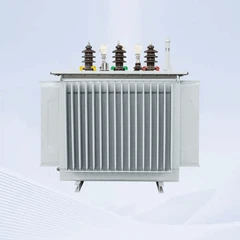
Dry-Type Transformer vs Oil-Immersed Transformer
| Feature | Dry Type | Oil Filled |
|---|---|---|
| Fire Safety | Excellent | Moderate |
| Indoor Installation | Excellent | Limited |
| Oil Leakage Risk | None | Possible |
| Routine Maintenance | Very Low | Oil Testing Required |
| Noise | Lower | Higher |
| Initial Cost | Higher | Lower |
| Environmental Impact | Excellent | Moderate |
| Outdoor Installation | Optional | Better |
The primary difference is the insulation and cooling method. So, when is a dry-type transformer the right choice?
Choose dry-type transformer when:
V Transformer installed inside buildings
V Fire safety regulations restrict oil equipment
V Maintenance access is difficult
V Environmental protection is required
V Installation space is limited
Common Mistakes When Buying a Dry-Type Transformer
Many buyers focus only on transformer capacity while overlooking other critical specifications.
Common purchasing mistakes include:
⊙Selecting an incorrect voltage ratio
⊙Choosing an unsuitable vector group
⊙Underestimating overload demand
⊙lgnoring ambient temperature requirements
⊙Selecting insufficient enclosure protection (IP rating)
⊙Failing to verify compliance with IEC 60076-11
⊙Purchasing without considering future load expansion
Avoiding these mistakes helps reduce project risks and unexpected maintenance costs.
Why Choose GNEE Electric Dry-Type Transformers
At GNEE Electric , we manufacture more than just "standard" transformers.We are dedicated to producing premium dry-type transformers with superior performance, exceptional quality, and extended service life.
⊙Strict IEC 60076 compliance certification: Every unit undergoes a 120% full-load temperature rise test before leaving our factory, ensuring an extra safety margin that cheaper alternatives simply cannot match.
⊙Factory testing including:winding resistance test;insulation resistance test;no-load loss test;load loss test;dielectric test.
⊙20+ years of insulation life: Manufactured with high-grade copper windings and premium insulating materials, maintaining long-term stable operation even at 85% continuous load rate.

Need Help Selecting the Right Dry-Type Transformer?
Every project has unique voltage levels, installation conditions, and load requirements. Selecting the correct transformer can improve system reliability, reduce operating costs, and simplify future maintenance.
At GNEE Electric, our engineering team provides customized transformer selection based on your project specifications, including:
⊙Capacity from 10 kVA to 2000 kVA
⊙Voltage up to 34.5 kV
⊙Cast Resin or VPI Dry-Type Transformers
⊙Indoor and Outdoor Solutions
⊙IEC 60076-11 Compliant Designs
⊙Customized Vector Groups and IP Ratings
Simply send us your single-line diagram, load data, or project requirements, and our engineers will recommend the most suitable solution and provide a competitive quotation within 24 hours.
Contact us today to receive free technical selection support and a factory-direct quotation.
Send Inquiry