


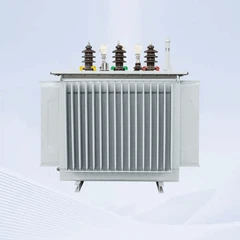
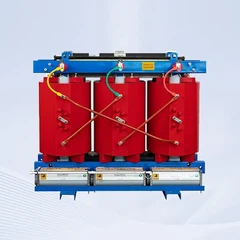





How to Stop 1600kVA Transformer Overheating Under 50℃ Desert Ambient Temperature
Jul 27, 2026
Leave a message
1600kVA transformer overheating in 50℃ desert ambient temperature is one of the most common and destructive faults for desert photovoltaic power stations, open-pit mines and remote industrial power distribution systems, where the 1600kVA distribution transformer serves as the core foundational power conversion and transmission equipment.
Standard power transformers are typically designed for a maximum ambient temperature of 40℃. However, most desert regions face persistent extreme high temperatures of up to 50℃, coupled with intense solar radiation, dry air and wind-blown sand. Such harsh environments easily cause abnormal temperature rise, thermal overload tripping, insulation aging and even premature scrapping of 1600kVA transformers.
According to the Arrhenius thermal aging rule, every 10℃ increase in operating temperature will double the aging rate of transformer cellulose insulation, directly cutting the equipment service life by half.
This article systematically analyzes the thermal mechanism, root causes, field diagnosis steps and targeted prevention solutions for 1600kVA transformer overheating in 50℃ desert conditions, providing executable technical guidelines for overseas engineering procurement and daily operation and maintenance.
Basic Thermal Generation Principle of 1600kVA Transformers
Transformer overheating is essentially the accumulation of irreversible energy loss. All transformers generate heat through two core physical losses, and the 1600kVA medium-capacity model is more sensitive to extreme high-temperature environments due to its large load capacity and high operating power.

As long as the 1600kVA transformer is connected to the grid, magnetic hysteresis loss and eddy current loss will continuously occur inside the silicon steel core.
This part of heat loss exists 24 hours a day regardless of the load status, forming a stable basic temperature rise. In 50℃ high-temperature deserts, this basic heat cannot be effectively dissipated, resulting in continuous heat accumulation inside the equipment.
Winding copper loss (I²R loss) is the main heat source of loaded transformers. The heat generation is proportional to the square of the operating current.
When the 1600kVA transformer runs at full load or bears harmonic loads, the winding heat surges sharply. Different from conventional scenarios, the heat dissipation temperature difference of transformers in 50℃ deserts is greatly reduced, and the natural convection cooling efficiency of oil-immersed units drops significantly, finally causing serious overheating.

Six Root Causes of 1600kVA Transformer Overheating in 50℃ Desert Environment
Combined with desert high temperature, sand dust and strong radiation characteristics, the overheating of 1600kVA transformers is not caused by a single factor but the superposition of environmental, equipment and human factors. The six core causes are summarized as follows:
Extreme Ambient Temperature and Solar Radiant Heat Derating
Standard 1600kVA transformers are designed for 40℃ ambient temperature. When the desert ambient temperature reaches 50℃ and the surface temperature of the equipment exposed to direct sunlight exceeds 70℃, the transformer must be derated by 10%. Long-term over-temperature operation reduces the heat dissipation margin and triggers continuous overheating.

Harmonic Distortion and Skin Effect Heating
Desert photovoltaic power generation equipment, VFDs and industrial electronic loads produce a large number of high-frequency harmonics. The skin effect makes the current only circulate on the surface of the copper wire, reducing the effective conductive area and increasing winding resistance. Even if the 1600kVA transformer runs at 80% rated load, it will generate heat equivalent to 120% overload.
Sand Dust Blocking Heat Dissipation Channels
Desert wind-blown sand and fine dust adhere to transformer radiators and ventilation holes for a long time. A 2mm thick dust layer will reduce the cooling efficiency by 25%. Blocked heat dissipation fins cause internal heat to fail to diffuse outward, forming a thermal insulation layer and raising the top oil temperature rapidly.

Oil Aging and Sludge Accumulation
Long-term 50℃ high temperature accelerates the oxidation reaction of transformer insulating oil, producing acidic substances and viscous sludge. The sludge adheres to windings and blocks internal oil ducts, destroying the natural circulation of insulating oil and forming a vicious cycle of "higher temperature - more sludge - worse heat dissipation".
Loose Connection and Local High-Resistance Hotspots
Desert large temperature difference between day and night causes frequent thermal expansion and contraction of terminal joints and tap changers. Long-term operation leads to loose connections, forming high-resistance points. Concentrated current heating causes local hot spots, which is easy to trigger partial discharge and arcing faults.
Unreasonable Installation and Insufficient Ventilation Space
Many desert temporary substations adopt compact installation. The 1600kVA transformer lacks standardized heat dissipation clearance, and the enclosed equipment room forms hot air backflow. The accumulated hot air cannot be discharged, resulting in thermal runaway of the equipment.
The six causes above rarely occur in isolation. If you notice that the top oil temperature of your transformer has risen by more than 5°C compared to the same period last month, or if visible sand/dust accumulation is present on the radiator fins, it indicates that at least 2–3 superimposed faults may already exist internally. Rather than blindly scheduling an outage for maintenance, use our custom‑designed rapid diagnostic checklist-tailored for field engineers in overseas desert projects-to pinpoint the suspect area with confidence.
Step-by-Step Field Diagnosis for Overheating Faults
To accurately locate overheating causes, field maintenance personnel shall implement standardized step-by-step diagnosis to avoid blind maintenance:
Step 1: Record basic parameters, including transformer nameplate temperature rise rating, real-time desert ambient temperature, three-phase load current and operating voltage.
Step 2: Conduct full-point infrared thermal imaging detection to check the temperature difference of radiator fins, box body, bushing terminals and tap changers; a temperature difference exceeding 10℃ between phases indicates abnormal faults.
Step 3: Calculate the actual load rate and three-phase voltage imbalance; a voltage imbalance exceeding 2% will cause asymmetric heating of windings.
Step 4: Inspect cooling system visually, check oil level of oil-immersed transformers, fan operation status and dust and sand blockage of heat dissipation channels.
Step 5: Conduct power quality analysis to test total harmonic distortion (THD); current THD exceeding 15% will cause severe harmonic heating.
Step 6: Professional deep detection, including DGA dissolved gas analysis (judge internal thermal faults) and DP polymerization degree test (evaluate insulation aging degree).
Full Set of Anti-Overheating Solutions for Desert 1600kVA Transformers
Aiming at the 50℃ desert extreme working conditions, we provide systematic solutions covering factory customization, standardized installation, on-site transformation and daily maintenance to completely solve overheating problems.
Factory Customized High-Temperature Resistant Design (Fundamental Solution)
For desert 50℃ ambient environment, the standard 1600kVA transformer structure is optimized and upgraded:
- Adopt high-temperature resistant Class H insulation system, special high-temperature insulating oil, and thickened anti-sand radiator;
- Expand the internal oil flow channel to accelerate heat circulation;
- Upgrade IP54 dust-proof and sand-proof protection level, with external anti-ultraviolet thermal insulation coating to reduce solar radiation heat.
The optimized model can operate continuously and stably at full load under 50℃ ambient temperature without derating.

Standardized Desert Installation Specification
- Reserve 36-inch (900mm) heat dissipation gap around the 1600kVA transformer;
- Install special sunshade and rainproof equipment for desert outdoor installation;
- Avoid closed installation and hot air backflow;
- Reasonably plan the equipment orientation to prevent long-term direct sunlight.
On-Site Cooling Transformation for Existing Equipment
- Install intelligent temperature-controlled forced cooling fans to upgrade ONAN natural cooling to ONAF forced air cooling;
- Regularly clean radiator sand and dust;
- Replace aging insulating oil and clean internal oil sludge;
- Install harmonic filters to eliminate nonlinear load heating.

Scientific Daily Operation and Maintenance
- Implement peak load staggering operation in summer high-temperature seasons;
- Avoid long-term full-load or overload operation;
- Conduct monthly visual inspection and quarterly infrared temperature measurement;
- Thoroughly clean heat dissipation channels before high-temperature seasons to prevent sand and dust accumulation.
One critical point to emphasize: the core design benchmarks mentioned above-such as winding current density ≤2.5 A/mm² and core flux density ≤1.55 T-are based on the stringent assumption of full load operation and a dust accumulation cycle of 3 months. However, the actual daily output curve of your PV plant, or the start/stop frequency of your mining crushers, will directly affect the final thermal field distribution. Simply applying a standard drawing to your specific project may still leave thermal margin deviations.
Request A Free Design Review For Your Project
Please upload your existing technical specification sheet or site layout drawing (PDF/DWG format). Our engineers will provide a professional review with annotated comments within 48 hours.
Emergency Response for Sudden Overheating Failure
When the 1600kVA transformer has a sharp temperature rise, burning smell or frequent thermal tripping, non-essential loads shall be cut off immediately to reduce the operating current; strengthen on-site ventilation and cooling; arrange professional personnel for fault diagnosis in time. If internal insulation aging or oil sludge blockage is confirmed, stop operation for maintenance or replace with desert high-temperature resistant customized transformer.


Conclusion
The overheating problem of 1600kVA transformers in 50℃ desert environments is caused by the superposition of environmental harsh conditions and equipment adaptation defects. Relying only on simple cooling transformation cannot solve the fundamental problem. Only through customized high-temperature resistant design, standardized desert installation, scientific load management and regular anti-sand and heat preservation maintenance can the long-term stable and safe operation of the equipment be guaranteed.
We provide CE/IEC certified desert-specific 1600kVA high-temperature resistant transformers and one-stop technical solutions including site layout design, installation guidance and after-sales maintenance. If you have project demands for desert power distribution equipment, please leave your ambient temperature, load parameters and site conditions. Our professional engineering team will provide free customized schemes and precise quotations within 24 hours.
Get Your Free 24H Thermal Simulation Report
Click the button above and our senior engineer will calculate the exact hotspot temperature of your 1600kVA unit under 50℃ desert conditions – including customized derating recommendations and ROI analysis.

FAQ
Can a standard 1600kVA transformer work continuously at 50℃ desert temperature?
No. Standard transformers are designed for 40℃ ambient temperature. Long-term operation at 50℃ will cause severe overheating, rapid insulation aging and shortened service life, and must be derated or replaced with high-temperature customized models.
Is installing cooling fans enough to solve desert transformer overheating?
Fans can improve external heat dissipation, but cannot solve internal problems such as oil sludge blockage, insulation aging and harmonic heating. Fundamental solution relies on high-temperature resistant customized design and standardized maintenance.
How long is the service life of customized desert 1600kVA transformer?
With standardized installation and regular maintenance, the high-temperature resistant 1600kVA transformer can achieve a stable service life of 30 years in 50℃ desert environments, far longer than standard models.
Send Inquiry