







Underground Transformer: Subsurface Installation Design and Requirements
Aug 08, 2025
Leave a message
What Makes a Transformer an Underground Type
An underground transformer is a distribution transformer installed below grade, normally in a concrete vault or a prefabricated pit, with the high-voltage and low-voltage terminations, the operating mechanism and often the metering brought to a ground-level cabinet. The point of the arrangement is that the road surface, pavement or basement area is not obstructed by a transformer compound, which is the deciding advantage in central urban districts where land cost and planning constraints rule out an above-ground substation.
The equipment is split into two functional parts. Everything that must be operated, read or maintained is above grade and accessible from the surface. Everything bulky, magnetic and hot is below grade in a sealed, ventilated or liquid-filled environment designed so that the transformer can survive a temporary submergence of the pit without loss of insulation.
Construction of the Underground Unit
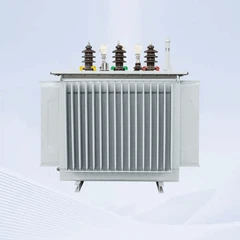
The transformer itself is a liquid-immersed distribution unit with the core, windings and insulating oil enclosed in a fully sealed, welded tank, so that no oil can migrate into the surrounding soil and no groundwater can enter the oil. The tank is built to the general requirements of the IEC 60076 series, and the insulating oil is specified to IEC 60296 in the class appropriate to the climate. The tank paint and the external housing are chosen for a soil and water environment, with coating systems selected on the durability categories of ISO 12944.
| Element | Requirement normally specified | Reference |
|---|---|---|
| Transformer tank | Welded, permanently sealed, no breather or conservator | IEC 60076-1 |
| Insulating oil | Mineral insulating oil, class matched to climate | IEC 60296 |
| Temperature rise | Limits for liquid-immersed units at rated load | IEC 60076-2 |
| Short-circuit withstand | Ability to withstand external short circuit | IEC 60076-5 |
| Enclosure and terminations | Sealed, watertight boxes with IP68 cable entries | IEC 60529 |
| External coating | System selected for buried or immersed service | ISO 12944 |
Above-Grade Cabinet and Below-Grade Pit
The above-grade cabinet contains the high-voltage ring-main or tee-off switch, the low-voltage distribution and fusegear, and the operating positions for the transformer, arranged so that a single operating rod reaches the transformer through a sealed port. The cable boxes and terminations are watertight and fully shielded, which allows the incoming and outgoing cables to be sealed against a pit that can fill with water during a storm.
The pit is normally cast in reinforced concrete with a sump and a drainage connection, and its floor sits below the transformer base so that any condensation or leakage from the cable boxes collects away from the equipment. Where drainage by gravity is not possible, a pumped sump with a level alarm is used. A surrounding layer of granular backfill and a waterproof membrane reduce the water reaching the vault, and the roof slab is designed for the traffic loading of the surface above it.
Thermal and Loading Considerations
An underground installation is thermally harsher than an equivalent pad-mounted unit because the vault air is stagnant and the surrounding soil is a heat sink with a limited thermal conductivity. Two practices compensate for this. First, the transformer is de-rated for the pit ambient, which is higher than the surface ambient in summer, and the calculation should be based on the vault temperature rather than the outdoor design temperature. Second, natural ventilation through the above-grade cabinet is arranged so that hot air leaves at the top and cool air enters at the bottom, with the openings positioned to avoid a short circuit between inlet and outlet.
Where the load is heavy and ventilation is restricted, the allowable loading should be checked against the cyclic and emergency loading guidance in IEC 60076-7 rather than against the nameplate rating, because the oil and winding time constants govern how long a peak load can be carried without consuming insulation life.
Selection, Installation and Inspection
For a new installation, the parameters that must be fixed early are the rated capacity and voltage ratio, the impedance, the cooling class, the oil class for the climate, the cable entry arrangement and the degree of protection of every box. Because the vault is difficult to modify after commissioning, the cable entry, earthing points and lifting provisions should be agreed before the concrete is poured.
In service, the sealed design removes the usual oil sampling routine but does not remove the need for inspection. Insulation resistance and winding resistance tests at planned intervals reveal a trend long before a fault. Vault water level, the operation of the sump pump, the condition of the door seals and gasket faces, and the cleanliness of the HV and LV cable boxes are the items that most often determine whether an underground installation reaches its design life. Any water found in the vault should be investigated against the drainage design rather than simply pumped out.
Frequently Asked Questions
Q: Can an underground transformer keep operating if the vault floods?
A: The transformer tank and the cable boxes are sealed, so a temporary submergence of the pit does not by itself destroy the insulation. Operation should not continue while water is present, and the vault should be pumped, inspected and the terminations dried before the unit is re-energised.
Q: Which oil is used in a buried distribution transformer?
A: Mineral insulating oil to IEC 60296 is the standard choice, with the class selected for the lowest ambient expected at the site. The tank is sealed for life, so the oil is not sampled routinely.
Q: Why is an underground transformer de-rated?
A: The vault air is warmer than the outside air and circulation is restricted, so the same losses produce a higher winding temperature. The rating is reduced by the difference in ambient, and the load curve should be checked against IEC 60076-7.
Q: What protection does the enclosure need?
A: Every cable box and termination compartment should be watertight and fully shielded, with cable entries rated to IP68 under IEC 60529. The internal metalwork should be bonded to the earthing system at two points.
Q: How is maintenance carried out without access to the transformer?
A: Through the above-grade cabinet: the switch is operated by rod, test terminals are brought to the surface, and the transformer is lifted out through the roof opening when internal work is required. The pit is entered only after ventilation and gas checks.
Q: Where is an underground transformer most appropriate?
A: Dense city centres with high land value, sites where planning rules forbid an above-ground compound, and locations with heavy street furniture such as signs, lighting and traffic equipment that already occupy the surface space.
Send Inquiry