


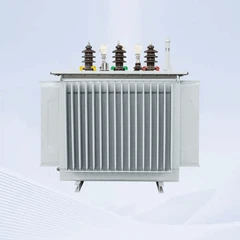
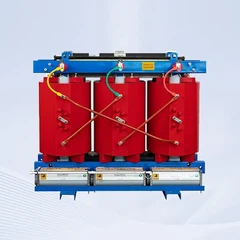





What You Need to Know about Oil-immersed Transformer
Nov 14, 2025
Leave a message
An oil-immersed transformer (also known as an oil-filled transformer) is a type of distribution transformer or power transformer where the core and windings are submerged in insulating oil inside a sealed tank. The oil serves two key purposes:
Insulation: Preventing electrical discharges between internal components.
Cooling: Dissipating the heat generated by the iron core and windings during operation.
Oil-immersed power transformers have many benefits, particularly their efficient cooling capabilities. They are used in many industries and can be found at both electrical substations and power distribution centers.
1.What Is an Oil-Immersed Transformer?
Transformers change an alternating current (AC) to a higher or lower voltage. A current may need to move to a higher voltage as higher voltages are easier and faster to transport. A current may need to decrease its voltage in residential, commercial, and industrial areas.
One type of transformer is an oil-immersed transformer. Transformers often operate in high-energy, high-heat situations. An oil-filled transformer suspends the transformer of a steel tank filled with oil. The oil cools and insulates the transformer. The device uses convection to move the oil around and through the transformer, cooling it off.
To avoid oil deterioration, transformer oil must be kept at an operating temperature of less than 85°C. For the transformer to run correctly and to prevent excessive oil deterioration, the daily average operating temperature should be around 30°C.
Basic parameters:
Primary Voltage Ratings: 34.5-19.92/13.8-7.957/13.2-7.62/12.47-7.2, 24.94, 26.25, 33 or others
Secondary Voltage Ratings: 480/277V, 400/230V, 380/220V or customized
H.V. Tap Range: ± 2×2.5% HV taps or others
Type: Oil immersed distribution transformer
BIL: 30/95kV
Standards: IEEE, UL, ISO, IEC, GB
Application: Industrial Power Distribution, Commercial Buildings, Agriculture, Power Distribution Substations
Power Rating: 30kVA - 2500kVA
Certificate: ISO, CE, UL, IEEE
Cooling Method: ONAN, ONAN/ONAF, KNAN, KNAN/KNAF
Oil: Mineral Oil or FR3
Operation: Step Down & Step Up
The oil-immersed transformer has three-dimensional wound iron core has no air gap in its magnetic circuit because its three core columns are three-dimensionally arranged in an equilateral triangle, and the winding is tighter, the three magnetic circuits have the same length and the shortest, and the cross-sectional area of the core leg is closer to a circle, so the performance is further improved, the loss is reduced, the noise is reduced, the three items are balanced, and the third harmonic component is reduced. But since the pressure regulating switch is inside the tank. The contacts of the switch are not visible from the outside when adjusting the pressure. There are two reaction phenomena: if the contact is not good, the circuit is broken. If the contact is not good, it is easy to burn the switch when the load is too large.
The oil-immersed transformer is an important piece of equipment in power systems, it is mainly used to change voltage and transmit electrical energy. Oil-immersed transformers work mainly on the principle of electromagnetic induction. It is suitable for power grid transformation of urban and rural, industrial and mining enterprises, and more suitable for combined transformers and transformers for prefabricated substations.
2. Structure and operation principle of Oil-immersed transformer
An Oil-filled transformer is structurally similar to that of a transformer. It's one of the types of transformers classified according to the form of core insulation. Hence, it has the identifiable feature of oil-immersed coils to lower the heat map of the devices within it.
The basic elements of an oil-immersed are consist of the magnetic core, windings, and bushings. The magnetic core provides a path for magnetic flow. Windings create a magnetic field and consist of a conductor coil, wrapped around the core and insulated with pressboard barriers and screens. The thickness of the winding insulation increases with voltage. Bushings connect transformer windings to a substation.
Oil-type transformers are used in power distribution or electrical substations. Their core and coils are immersed in Oil, which cools and insulates. Oil circulates through ducts in the coils and around the coils and core assembly, moved by convection. The Oil is cooled by the outside of the tank in small ratings, and by an air-cooled radiator in larger ratings.
Structure and operation principle of Three-phase transformer
2. Structure and operation principle of Oil-immersed transformer
An Oil-filled transformer is structurally similar to that of a transformer. It's one of the types of transformers classified according to the form of core insulation. Hence, it has the identifiable feature of oil-immersed coils to lower the heat map of the devices within it.
The basic elements of an oil-immersed are consist of the magnetic core, windings, and bushings. The magnetic core provides a path for magnetic flow. Windings create a magnetic field and consist of a conductor coil, wrapped around the core and insulated with pressboard barriers and screens. The thickness of the winding insulation increases with voltage. Bushings connect transformer windings to a substation.
Oil-type transformers are used in power distribution or electrical substations. Their core and coils are immersed in Oil, which cools and insulates. Oil circulates through ducts in the coils and around the coils and core assembly, moved by convection. The Oil is cooled by the outside of the tank in small ratings, and by an air-cooled radiator in larger ratings.
Structure and operation principle of Three-phase transformer
3. 5 Types of Oil-Filled Transformers
There are five types of oil-filled transformers. Here are a few of the most common below.
- Single-phase transformers use one pair of windings. It's used in lower-load situations, such as rural areas.
- Three-phase transformers are made up of three pairs of windings. The windings typically go around a core sectioned into three parts. Three-phase transformers are used in higher-load areas and can supply three circuits with energy.
- Power transformers are designed to handle much higher loads. They can step voltages up or down and transmit a current from one place to another.
- Distribution transformers transmit lower voltages from the electrical grid to homes and businesses. They are much smaller than power transformers.
- Pole-mounted transformers are connected to an electrical pole.
- Pad-mounted transformers are mounted to a concrete pad on the ground.
Purpose of using Oil Immersed Transformer
Oil-type transformers can be ground-, pad- or pole-mounted for use outdoors. They deliver efficient performance in diverse applications, including transmission and distribution networks, renewable energy generation, and small industries.
The oil transformer has a huge capacity, so it will save a lot of electrical energy, minimize power loss, save energy sources, and reduce costs for users. More than that, the Oil in the machine cools the internal wire cores to contribute to the durability and electrical properties of the transformer equipment.
4.What's the difference between oil-immersed and dry-type transformers?
Whether you're selecting a transformer for industrial, commercial, or utility use, understanding these differences is crucial for making the right choice. Following HENAN GNEE ELECTRIC CO., LTD. helps you determine the best solution for your specific needs.
Today I'm going to be talking to you about the different types or methods of cooling for Transformers. For distribution class transformers there are two
categories. That's going to be a dry-type or an oil or liquid-immersed. They're exactly as they sound. Dry-type is completely dry with no liqui whatsoever in it. Those are not a product that we manufacture. We build the other one, the oil-immersed or liquid-immersed. And it is exactly as it sounds. The transformer is literally immersed in oil. So that's done for two reasons.
First one is cooling. As the transformer is in operation it will start to generate a lot of heat and that heat needs to be removed from the transformer and oil is a very effective way to do that. With your dry-type transformers those are only cooled by air. With oil, the heat capacity increases so it can hold more heat and it can dissipate more heat to keep that transformer cool,because if the transformer starts to get too hot it will start to do damage to the insulation and will start to impact the life of the transformer which we don't want. The core components of the transformer and all the circuitry is down in the bottom half of the transformer tank.
So this is the enclosure that holds all the main components and also holds the oil. So as the main components inside the transformer tank start to heat up it will start to heat up the oil around it and as that oil heats up it will start to rise and come up to the top or near the top of the transformer. That's where these come in. This is what essentially dissipates all the heat.
So,as the transformer oil rises it will start to flow into these cooling fins or what we call radiators through these different headers and as they come into these cooling fins it will start to run down each individual fin as it can dissipate heat. So, the more surface area you have on these,the more heat you can dissipate. As that heat is dissipated, the oil will cool down and actually start to sink to the bottom of the radiators and then eventually it will make its way back into the transformer tank by these headers on the bottom side of the cooling fin.
So, as these transformers are running, oil is constantly circulating. It's natural convection that cools this transformer and keeps it running at a safe temperature for operation. So that's the first reason for using oil in a transformer. The second reason refers to what's called creep and strike. What those are, are basically the minimum amount of distance that must be maintained between two conducting components before they will try to connect electrically either through the air or through a med medium or along the surface of a medium.
In open air, if you have those distances that are set let's say for example this far apart, they drastically shrink in oil.
So, you can get conductive components much closer together in oil than you can in open air without risk of any arcs or faults or short circuit.
So, you can make a much more compact design. You do not need as much insulation, and it makes the transformer a little safer overall just by reducing those clearances needed between different conductive components.
Advantages and disadvantages of dry type transformers
Dry type transformers are designed without any insulating liquid, and they rely on air to cool and insulate the windings. They are environmentally friendlier than oil-immersed transformers as they do not require any oil, which could spill and pollute the environment. Dry-type transformers can also be safer, as there is no risk of oil leaks or explosions. Moreover, dry-type transformers do not require any special infrastructure or preparation, such as oil containment pits, which makes them easier to install and maintain.
However, dry-type transformers also have some disadvantages. Due to the lack of cooling liquid, they are less efficient than oil-immersed transformers, which means that they tend to be more massive and occupy more space for the same power rating. Dry-type transformers also have a lower temperature tolerance, which limits their application in high-temperature environments. Finally, dry-type transformers are generally more expensive than oil-immersed transformers.
Advantages and disadvantages of oil immersed transformers
Oil immersed transformers, also known as liquid-filled transformers, are immersed in an insulating oil that cools and insulates the windings. This oil is an essential component of the transformer, as it provides better insulation and cooling properties than air or other gases. Oil-immersed transformers have several advantages over dry-type transformers. Firstly, they are more efficient, as the oil helps to dissipate heat and reduces energy losses. Secondly, they can operate at higher temperatures, which makes them suitable for high-temperature applications. Thirdly, oil-immersed transformers are generally more cost-effective than dry-type transformers, especially for higher power ratings.
However, oil-immersed transformers also have several disadvantages. Firstly, they are more prone to leaks and explosions, which could be hazardous to both people and the environment. Secondly, they require special infrastructure and preparation to prevent oil spills and leaks, such as oil containment pits, which could be costly and time-consuming to build and maintain. Thirdly, they require regular maintenance, including oil testing and replacement, which could be expensive and time-consuming.
Dry type and oil immersed transformer applications
Dry-type transformers are typically used in indoor applications, such as buildings, hospitals, and data centers, where fire safety is a significant concern. They are also suited for outdoor applications, such as in areas with harsh climates, where oil-immersed transformers may not be as suitable. In contrast, oil-immersed transformers are typically used in outdoor applications, such as in power plants, substations, and distribution networks, where higher power ratings and better efficiency are required.
Operating temperature of oil immersed transformer
When the oil-immersed transformer is working, it is necessary to ensure that the working temperature will not cause the transformer oil to deteriorate too quickly, thereby increasing the operating cost. When the oil at the operating temperature of the oil-immersed transformer reaches 85 degrees Celsius, it will alarm, and when the maximum temperature reaches 95 degrees Celsius, the switch of the transformer will be turned off.
Therefore, the oil temperature that specifies the operating temperature of the upper layer of the oil-immersed transformer cannot exceed 85°C. The rated capacity of the transformer refers to the maximum power allowed for long-term continuous operation when the transformer can obtain economical and reasonable efficiency and normal expected service life under the specified ambient temperature. The ambient temperature specified by the transformer is that the maximum temperature is 40°C, the maximum daily average temperature is 30°C, the maximum annual average temperature is 20°C, the minimum temperature for outdoor transformers is -25°C, and the minimum temperature for indoor transformers is -5°C.
According to operating experience and special research, when the insulation temperature of the transformer winding is in the range of 80-140 °C, the loss of insulation life will be doubled for every 6 °C increase, and the service life will be reduced by half. This is the 6 °C rule for transformer operation. The maximum allowable temperature of the transformer winding for long-term operation is the normal life temperature, and the maximum allowable value of the winding hot spot temperature is the safe temperature.
In order to make the insulating material obtain the most economical service life, it is divided into different heat-resistant grades such as Y, A, E, B, F, H, C, etc., according to its maximum allowable working temperature under normal conditions. Among them, the Y grade insulation has the highest allowable temperature The working temperature is 90°C, A grade is 105°C, E grade is 120°C, B grade is 130°C, F grade is 155°C, H grade is 180°C, and C grade is above 180°C.
Conclusion
Both dry-type transformers and oil-immersed transformers have their advantages and disadvantages, and their suitability depends on the specific requirements of the application. Dry-type transformers are environmentally friendlier and safer but tend to be less efficient and more expensive. Oil-immersed transformers are more efficient and cost-effective but are more prone to leaks and require regular maintenance. Understanding the differences between these two types of transformers is essential to selecting the right one for the intended application.
One of the advantages of dry-type transformers is that they are environmentally-friendly and pose lower fire hazards compared to oil-filled units. Additionally, they have a simpler design, are easier to install, and require less maintenance than oil-filled counterparts. Dry-type transformers are also less noisy than oil-immersed transformers, making them better suited for applications that require low noise levels.
Despite these benefits, dry-type transformers also have some drawbacks. For instance, they have lower overload capacity and are not suitable for applications that require large power output. Dry-type transformers are also more expensive to purchase than oil-immersed transformers.
In contrast, oil-immersed transformers have higher overload capacity and are more suitable for high voltage applications. They are also more resilient to extreme conditions, such as high temperature and moisture. However, their use carries an inherent fire and environmental risk. In case of a malfunction or leakage, the oil can cause severe environmental pollution, not to mention the risk of fire that can occur due to a spark or overheating.
In summary, the choice between dry-type and oil-immersed transformer depends on the application requirements, budget, and safety considerations. While dry-type transformers are cost-effective, efficient, and practical for low voltage applications, oil-immersed transformers are more suitable for high voltage applications, especially in harsh environments. In general, the selection of the appropriate transformer should be based on a thorough analysis of the specific needs, taking into account the advantages and disadvantages of each type.
gnee Transformer
22kV - 400/230V & 24kV - 416/240V
| Item | Capacity | No load | Load loss (75oC) | Impedance | Dimensions(mm) | Total weight | Oil | ||
|---|---|---|---|---|---|---|---|---|---|
| kVA | Watt | Watt | % | Height | Length | Width | kg | Liter | |
| 1 | 50 | 160 | 950 | 4 | 1,100 | 1,000 | 700 | 500 | 135 |
| 2 | 100 | 250 | 1,550 | 4 | 1,250 | 1,050 | 750 | 750 | 200 |
| 3 | 160 | 360 | 2,100 | 4 | 1,300 | 1,150 | 750 | 990 | 250 |
| 4 | 250 | 500 | 2,950 | 4 | 1,350 | 1,200 | 750 | 1300 | 300 |
| 5 | 315 | 800 | 3,900 | 4 | 1,400 | 1,400 | 800 | 1300 | 350 |
| 6 | 400 | 960 | 4,600 | 4 | 1,400 | 1,500 | 850 | 1550 | 380 |
| 7 | 500 | 1,150 | 5,500 | 4 | 1,500 | 1,550 | 900 | 1750 | 430 |
| 8 | 630 | 1,350 | 6,500 | 4 | 1,550 | 1,600 | 850 | 2,150 | 450 |
| 9 | 800 | 1,600 | 11,000 | 6 | 1,600 | 1,800 | 1,100 | 2,500 | 650 |
| 10 | 1,000 | 1,950 | 13,500 | 6 | 1,750 | 1,900 | 1,100 | 3,200 | 700 |
| 11 | 1,250 | 2,300 | 16,400 | 6 | 1,850 | 2,000 | 1,150 | 4,000 | 850 |
| 12 | 1,500 | 2,800 | 19,800 | 6 | 1,950 | 2,100 | 1,250 | 4,150 | 1,150 |
| 13 | 2,000 | 3,250 | 24,000 | 6 | 2,050 | 2,250 | 1,350 | 5,650 | 1,450 |
| 14 | 2,500 | 3,500 | 28,500 | 6 | 2,150 | 2,450 | 1,450 | 6,450 | 1,750 |
1-2. 33kV - 400/230V
| Item | Capacity | No load | Load loss (75oC) | Impedance | Dimensions(mm) | Total weight | Oil | ||
|---|---|---|---|---|---|---|---|---|---|
| kVA | Watt | Watt | % | Height | Length | Width | kg | Liter | |
| 1 | 50 | 170 | 950 | 4 | 1,300 | 1,000 | 700 | 550 | 165 |
| 2 | 100 | 260 | 1,550 | 4 | 1,400 | 1,050 | 750 | 800 | 230 |
| 3 | 160 | 370 | 2,100 | 4 | 1,450 | 1,150 | 750 | 990 | 280 |
| 4 | 250 | 520 | 2,950 | 4 | 1,500 | 1,200 | 750 | 1450 | 350 |
| 5 | 315 | 850 | 3,900 | 4 | 1,550 | 1,350 | 800 | 1450 | 400 |
| 6 | 400 | 1000 | 4,600 | 4 | 1,550 | 1,450 | 850 | 1700 | 450 |
| 7 | 500 | 1,200 | 5,500 | 4 | 1,650 | 1,500 | 900 | 1900 | 500 |
| 8 | 630 | 1,400 | 6,500 | 4 | 1,700 | 1,650 | 850 | 2,300 | 550 |
| 9 | 800 | 1,700 | 11,000 | 6 | 1,750 | 1,850 | 1,100 | 2,650 | 700 |
| 10 | 1,000 | 2,000 | 13,500 | 6 | 1,900 | 1,950 | 1,100 | 3,350 | 750 |
| 11 | 1,250 | 2,350 | 16,400 | 6 | 2,000 | 2,000 | 1,150 | 4,150 | 900 |
| 12 | 1,500 | 2,850 | 19,800 | 6 | 2,100 | 2,100 | 1,250 | 4,300 | 1,200 |
| 13 | 2,000 | 3,300 | 24,000 | 6 | 2,200 | 2,250 | 1,350 | 5,800 | 1,450 |
| 14 | 2,500 | 3,800 | 28,500 | 6 | 2,350 | 2,450 | 1,450 | 6,600 | 1,750 |
Distribution Transformer Outline
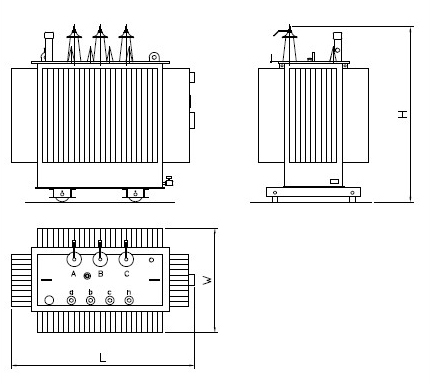
Open Type with Conservator Tank (Mineral Oil)
1. Specifications (Technical Data are subjected to change without notice.)
1-1. Open Type with Conservator Tank 22kV – 400/230V & 24kV - 416/240V
| Item | Capacity | No load | Load loss (75oC) | Impedance | Dimensions(mm) | Total weight | Oil | ||
|---|---|---|---|---|---|---|---|---|---|
| kVA | Watt | Watt | % | Height | Length | Width | kg | Liter | |
| 1 | 50 | 160 | 950 | 4 | 1,250 | 1,300 | 850 | 650 | 150 |
| 2 | 100 | 250 | 1,550 | 4 | 1,350 | 1,300 | 850 | 750 | 200 |
| 3 | 160 | 360 | 2,100 | 4 | 1,450 | 1,400 | 850 | 950 | 250 |
| 4 | 250 | 500 | 2,950 | 4 | 1,550 | 1,500 | 850 | 1200 | 320 |
| 5 | 315 | 800 | 3,900 | 4 | 1,600 | 1,550 | 850 | 1250 | 350 |
| 6 | 400 | 960 | 4,600 | 4 | 1,650 | 1,600 | 900 | 1550 | 380 |
| 7 | 500 | 1,150 | 5,500 | 4 | 1,700 | 1,700 | 950 | 1800 | 450 |
| 8 | 630 | 1,350 | 6,500 | 4 | 1,750 | 1,800 | 950 | 2,100 | 600 |
| 9 | 800 | 1,600 | 11,000 | 6 | 1,850 | 1,900 | 1,050 | 2,650 | 650 |
| 10 | 1,000 | 1,950 | 13,500 | 6 | 2,050 | 2,050 | 1,150 | 3,200 | 700 |
| 11 | 1,250 | 2,300 | 16,400 | 6 | 2,100 | 2,250 | 1,200 | 4,000 | 900 |
| 12 | 1,500 | 2,800 | 19,800 | 6 | 2,250 | 2,250 | 1,350 | 4,200 | 1,100 |
| 13 | 2,000 | 3,250 | 24,000 | 6 | 2,350 | 2,300 | 1,400 | 5,500 | 1,200 |
| 14 | 2,500 | 3,500 | 28,500 | 6 | 2,500 | 2,500 | 1,550 | 6,500 | 1,800 |
スクロール可能です.
1-2. Open Type with Conservator Tank 33kV – 400/230V
| Item | Capacity | No load | Load loss (75oC) | Impedance | Dimensions(mm) | Total weight | Oil | ||
|---|---|---|---|---|---|---|---|---|---|
| kVA | Watt | Watt | % | Height | Length | Width | kg | Liter | |
| 1 | 50 | 170 | 950 | 4 | 1,450 | 1,400 | 900 | 700 | 200 |
| 2 | 100 | 260 | 1,550 | 4 | 1,550 | 1,400 | 900 | 800 | 250 |
| 3 | 160 | 370 | 2,100 | 4 | 1,650 | 1,500 | 900 | 1,000 | 300 |
| 4 | 250 | 520 | 2,950 | 4 | 1,750 | 1,600 | 900 | 1250 | 350 |
| 5 | 315 | 850 | 3,900 | 4 | 1,750 | 1,650 | 900 | 1350 | 400 |
| 6 | 400 | 1000 | 4,600 | 4 | 1,800 | 1,700 | 950 | 1650 | 450 |
| 7 | 500 | 1,200 | 5,500 | 4 | 1,850 | 1,800 | 1000 | 1900 | 500 |
| 8 | 630 | 1,400 | 6,500 | 4 | 1,900 | 1,900 | 1,000 | 2,200 | 650 |
| 9 | 800 | 1,700 | 11,000 | 6 | 2,000 | 2,000 | 1,100 | 2,750 | 700 |
| 10 | 1,000 | 2,000 | 13,500 | 6 | 2,200 | 2,150 | 1,200 | 3,500 | 750 |
| 11 | 1,250 | 2,350 | 16,400 | 6 | 2,250 | 2,350 | 1,250 | 4,500 | 950 |
| 12 | 1,500 | 2,850 | 19,800 | 6 | 2,400 | 2,350 | 1,400 | 4,800 | 1,150 |
| 13 | 2,000 | 3,300 | 24,000 | 6 | 2,500 | 2,400 | 1,450 | 6,200 | 1,250 |
| 14 | 2,500 | 3,800 | 28,500 | 6 | 2,650 | 2,600 | 1,600 | 7,200 | 1,850 |
Distribution Transformer Outline
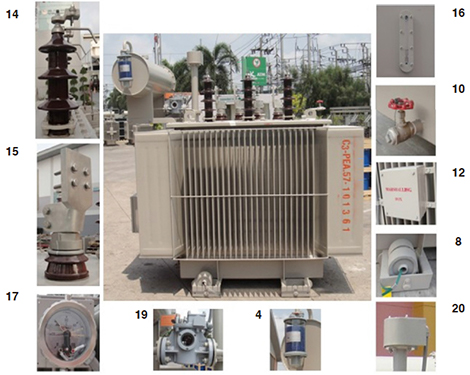
Send Inquiry