





Why Are Dry-Type Transformers the Power Heart of Modern Buildings?
Jun 04, 2025
Leave a message
How do dry-type transformers convert high-voltage electricity into safe low-voltage power?
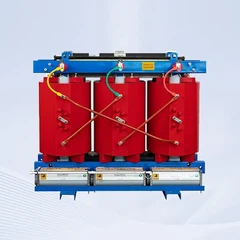
Dry-type transformers achieve voltage conversion through the principle of electromagnetic induction. Their core lies in the winding structure of dry-type power transformers, where the primary windings are connected to high-voltage electricity (e.g., medium-voltage dry-type transformers handling voltages above 600V). The secondary windings reduce the voltage to safe, equipment-usable levels through the coil turns ratio. For instance, a dry-type step-down transformer can reduce 10kV high voltage to 400V low voltage to power factory machinery or building lighting. Their "dry-type" characteristic refers to the absence of oil or insulating oil, instead using epoxy resin or air cooling, making them both fire-resistant and environmentally friendly.

How do three-phase dry-type transformers ensure stable equipment operation in industrial settings?
Three-phase dry-type transformers are specifically designed for three-phase electrical systems, efficiently balancing three-phase loads and reducing voltage fluctuations. Industrial equipment such as motors and production lines relies on stable three-phase power. These transformers ensure smooth power output (e.g., 500kVA or 1500kVA) through three sets of independent windings operating synchronously. For example, a 1500kVA dry-type transformer can meet the high-power demands of large data centers or chemical plants, while its low harmonic interference characteristics also minimize equipment losses.
Why are medium-voltage dry-type transformers suitable for urban high-rise building power needs?
Medium-voltage systems (e.g., 6-35kV) reduce energy losses during long-distance transmission. Medium-voltage dry-type transformers can be installed directly in building electrical rooms, stepping down voltage locally and eliminating the need for separate substations. This is particularly critical for high-rise buildings: they occupy minimal space, offer high fire safety (no flammable insulating oil), and operate with low noise – all aligning with building environmental and safety codes.

How do dry-type transformers avoid fire risks, making them ideal for public spaces?
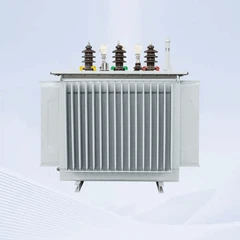
Traditional oil-immersed transformers carry risks of oil leaks or explosions. In contrast, dry-type transformers use insulating materials like epoxy resin or composites that prevent ignition even during overloads or faults. For instance, in densely populated areas like shopping malls and hospitals, choosing a three-phase dry-type transformer isolates high voltage while eliminating safety hazards. Their cooling systems maintain temperature rise through natural air convection (AN) or forced-air cooling (AF), extending service life.
How to select the appropriate capacity, e.g., 500kVA or 1500kVA dry-type transformers?
Capacity selection requires matching load demands. A 500kVA dry-type transformer suits medium-sized factories or basic power supply for commercial buildings, while a 1500kVA model fits high-energy-consumption scenarios like data centers or large production lines. Users must calculate total power requirements (including peak loads) and reserve a 20%-30% margin for future expansion.
Conclusion
Dry-type transformers, with their safety, efficiency, and flexibility, are core components of modern power systems. Whether in industrial manufacturing, urban construction, or public spaces, their voltage conversion, three-phase power supply, medium-voltage compatibility, and fire-resistant characteristics meet diverse needs.
Click to learn more
What is the Difference Between Oil-Immersed and Dry-Type Transformer?
For power upgrades or equipment selection requirements, please contact our technical team for customized solutions!
Send Inquiry