







Future Green Development Of Oil-immersed Transformers
Feb 19, 2025
Leave a message
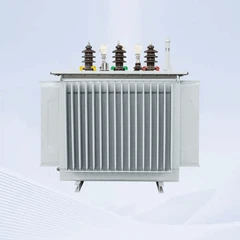
Future green development of oil-immersed transformers
With the advancement of global energy transformation and the "dual carbon" goal, traditional oil-immersed transformers are facing an urgent need for green upgrades. Its future development direction will focus on environmentally friendly material substitution, energy efficiency improvement, intelligent management and low carbonization throughout the life cycle, so as to break through the high pollution and high energy consumption bottlenecks of traditional mineral oil and achieve a balance between environmental friendliness and efficient operation.

1. Application of environmentally friendly insulating media
Traditional mineral oils are gradually being replaced due to problems such as flammability and difficulty in degradation. Plant-based insulating oils (such as rapeseed oil and soybean oil) and synthetic ester oils have become the mainstream choice, with the advantages of biodegradability, high ignition point (>300℃) and low toxicity, which can reduce the risk of leakage pollution. For example, Europe has promoted ester oil transformers, whose carbon footprint is more than 40% lower than that of mineral oil.
2. Energy efficiency upgrade and loss control
Through amorphous alloy cores, stepped lamination technology and low-loss winding design, no-load losses can be reduced by 60%-70%. With digital design software (such as finite element simulation), the magnetic circuit distribution is optimized to further improve efficiency. International standard IEC 60076-30 has promoted the popularization of transformer energy efficiency grades (such as A++), helping to save energy in the power grid as a whole.

3. Intelligence and condition monitoring
Integrate IoT sensors and edge computing technology to monitor parameters such as oil temperature, partial discharge, and gas in oil in real time to achieve fault warning and life prediction. For example, AI algorithms can determine the degree of insulation aging through DGA (dissolved gas analysis) to reduce unplanned downtime. Smart transformers can also participate in grid demand response, dynamically adjust loads, and reduce carbon emissions.
4. Circular economy and resource recycling
Promote modular design to facilitate the disassembly and reuse of key components (such as iron cores and coils). Waste insulating oil can be regenerated through molecular sieve adsorption, distillation and purification technologies, with a recovery rate of over 90%. The EU's Circular Economy Action Plan has required transformer manufacturers to provide recycling solutions to promote a green closed loop for the entire industry chain.
5. Policy and market drive
Environmental protection regulations in various countries are becoming stricter. For example, China's "Transformer Energy Efficiency Improvement Plan" forces the elimination of inefficient products below S9, and the EU's "Ecodesign Directive" restricts the use of PFAS-containing materials. At the same time, the ESG investment orientation prompts companies to give priority to purchasing green transformers, forming a market pull for technology upgrades.
In the future, oil-immersed transformers will deeply integrate new materials, digitalization and recycling technologies, become low-carbon nodes of new power systems, and help build a safe, efficient and sustainable energy network.
Send Inquiry