







How To Choose The Right 25 KVA–500 KVA Distribution Transformer
Nov 12, 2025
Leave a message
Selecting the optimal distribution transformer capacity-be it 25 kVA, 50 kVA, 75 kVA, 100 kVA, 250 kVA, 300 kVA, or 500 kVA-is a critical decision for commercial, industrial, and utility-scale projects. A correctly sized transformer enhances energy efficiency, minimizes power losses, safeguards electrical equipment, and ensures long-term reliability for the electrical infrastructure.
1.What Is a Distribution Transformer?
Distribution transformers are electrostatic devices responsible for distributing electrical energy to homes, businesses, and end-users.
A distribution transformer is an electrical device that performs the final voltage reduction in an electrical power grid, stepping down high-voltage power from distribution lines to a lower, safer voltage that is suitable for residential, commercial, and industrial use. It is a critical component of the power distribution system, ensuring that the electricity delivered to customers is at a usable and safe level.
Common MV Input:
6 kV / 10 kV / 11 kV / 13.8 kV
22 kV / 24 kV / 33 kV / 34.5 kV
Common LV Output:
400/230 V (Europe & Asia)
480/277 V (North America)
208/120 V (Commercial buildings)
415/240 V (Industrial plants)
These transformers support industries, construction sites, commercial centers, oil & gas fields, solar plants, and distribution networks.
2.What Does a Distribution Transformer Do?
The main purpose of a distribution transformer is to facilitate safe and efficient power transmission.The main functions of distribution transformers are to reduce voltage, minimize power loss, ensure safe use of electricity, and facilitate efficient distribution of electrical energy to consumers.
1. Voltage conversion
The main function of a distribution transformer is to step down the voltage received by a transmission line to a level suitable for distribution to homes, businesses, and other consumer facilities.
Typically, distribution transformers step down high voltages (such as 11 kV or 33 kV) to lower voltage levels (such as 400 V or 230 V) typically used in domestic and industrial applications.
2. Minimized power loss
Distribution transformers play an important role in minimizing power loss during power transmission.
By reducing the voltage, the current increases, which helps minimize resistive losses that occur in the power transmission cables.
3. Isolation
Distribution transformers provide electrical isolation between the high-voltage transmission system and the low-voltage distribution system.
This isolation ensures safety by protecting personnel and equipment from potentially dangerous high voltages.
4. Failsafe
Distribution transformers employ protection mechanisms to protect against power distribution system failures. These mechanisms include devices such as fuses and circuit breakers that disconnect transformers from the distribution network in the event of an electrical fault.
5. Distribution Network Flexibility
Distribution transformers enable distribution networks to be divided into smaller segments, increasing grid flexibility and reliability. They allow the efficient distribution of power among various loads and geographic locations.
6. Load balancing
Distribution transformers help balance electrical loads across the distribution system. By supplying power to different users, they ensure an even distribution of power demand and prevent system overload.
3. Capacity Guide: When to Use 25–500 kVA Transformers
25 kVA Transformer
Best for:
Small houses, rural homes
Farms, irrigation pumps
Small telecom towers
Light commercial loads
50–75 kVA Transformer
Best for:
Small businesses
Shops, restaurants
Villas and residential communities
EV charger stations (low power)
100–200 kVA Transformer
Best for:
Commercial buildings
Small industrial workshops
Schools, hospitals
Warehouses, hotels
300–500 kVA Transformer
Best for:
Industrial factories
Oil & gas facilities
Large commercial complexes
Data centers (LV distribution)
Renewable energy systems (solar/wind)
4. Common Voltage Configurations (LV/MV)
Distribution transformers typically use these popular vector groups:
 Dyn11 – Most common (balanced LV output)
Yyn0 – Utilities and small substations
Dyg11 – Industrial loads requiring phase shift
Delta–Wye (Δ/Y) – North American standard
Wye–Wye (Y/Y) – Renewable energy systems
Also include keyword variants:
"Star-delta transformer"
"Delta-star transformer"
"Wye-delta distribution transformer"
"Phase-shifting transformer (11° angle)"
5. Typical Price Range (25–500 kVA Transformers)
(Prices vary depending on copper/aluminum winding, oil type, cooling method, and certification.)
| Capacity | Price Range (FOB China) |
|---|---|
| 25 kVA | $380 – $650 |
| 50 kVA | $450 – $900 |
| 75 kVA | $600 – $1,100 |
| 100 kVA | $900 – $1,500 |
| 150 kVA | $1,200 – $2,000 |
| 200 kVA | $1,500 – $2,500 |
| 300 kVA | $2,900 – $4,500 |
| 500 kVA | $4,800 – $7,900 |
Relevant keywords:
"distribution transformer price"
"25 kVA transformer cost"
"300 kVA transformer price list"
"500 kVA transformer manufacturers"
6. Technical Specifications You Should Check
When choosing a transformer, always evaluate:
Rated power (kVA)
Input & output voltage levels
Frequency (50/60Hz)
Winding material (copper/aluminum)
Cooling system (ONAN/ONAF/AN/AF)
Impedance (%)
Temperature rise (55°C/65°C)
BIL (Basic Insulation Level)
Protection & enclosure rating (IP/NEMA)
Efficiency level (DOE, CEC, EU)
Tap changer: ±2×2.5% / ±5% / ±10%
7.Common Mistakes to Avoid
 Buying a transformer with wrong vector group
Ignoring installation environment (indoor/outdoor)
Not checking BIL levels for medium-voltage systems
Choosing undersized kVA capacity
Forgetting cooling requirements (ONAN vs ONAF)
Not verifying certification requirements for US/EU
8.Why Buy from a Professional Manufacturer?
A certified manufacturer like Evernew Transformer provides:
Custom LV/MV configurations (6kV–500kV)
Copper or aluminum windings
Cast resin or oil-filled options
Global export experience (US, Canada, Europe, South America)
Fast delivery
Factory testing & quality assurance
OEM / ODM / SKD production
9.Oil-Immersed vs Dry-Type Transformers
What is a Dry-Type Transformer?
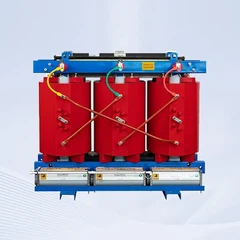
A dry-type transformer is a motionless piece of equipment that uses environmentally acceptable temperature insulation systems. They are also known as "cast resin type transformers."
The transformer is housed in a case with adequate ventilation, which results in the coils being cooled by the air inside the case. Additionally, they include varnished copper or aluminum windings. Because of the cooling constraints, dry-type transformers' maximum voltage is restricted to 35kV.
What is an Oil-Filled Transformer?
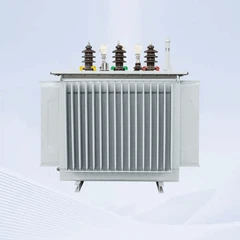
Oil-filled or oil-immersed transformers are voltage conversion devices that use oil to keep the transformer cool. This type of transformer structure is mounted in a welded steel oil tank filled with oil.
When an oil-immersed transformer is in use, the heat generated by the coil and iron core is first transferred to the insulating oil, then to the cooling fluid. Due to the liquid's inflammability, oil-filled transformers are mostly used in outdoor installations.
Oil-type transformers can be put on the ground, on a pad, or on a pole. They function well in various environments, including transmission and distribution lines, renewable energy generation, and small businesses.
Difference between Dry-Types and Oil-Filled Transformer
The following table highlights all the significant differences between dry-type and oil-filled transformers
| Parameter | Dry-Type Transformer | Oil-Filled Transformer |
|---|---|---|
| Insulating Material | In dry-type transformers, solid insulating materials like epoxy resin or polyester resin are used. | In oil-filled transformers, dielectric oil is used as the insulating material. |
| Alternate name | Dry-type transformer is also called cast resin transformer or epoxy resin transformer. | Oil-filled transformer is also called oil-immersed transformer. |
| Cooling medium | In dry-type transformers, air is used as the cooling medium. | In oil-filled transformers, oil and air both are used as the cooling medium. |
| Maintenance | Dry-type transformers require less maintenance. | Oil-filled transformers require regular maintenance. |
| Capital cost | The capital cost of dry-type transformer is higher. | The capital cost of oil-filled transformer is relatively lower than that of the dry-type transformer. |
| Operational cost | The operational cost of dry-type transformer is lower due to need of less maintenance. | The operational cost of oil-filled transformer is higher, as it requires regular maintenance and monitor. |
| Risk of fire and explosion | In dry-type transformer, non-flammable and self-extinguishing insulating materials are used. Hence, these transformers have lower risk of fire and explosion. | In oil-filled transformer, the oil used is an inflammable material. Thus, they have risk of fire that needs extra care. |
| Suitability | Dry-type transformers are suitable for low and medium voltage and indoor applications. | Oil-filled transformers are suitable for medium and high voltage and outdoor applications. |
| Efficiency | Dry-type transformers have lower efficiency. | Oil-filled transformers have higher efficiency. |
| Weight | Dry-type transformers are lighter. | Oil-filled transformers are heavier. |
| Size | Dry-type transformers have compact size and hence require less space. | Oil-filled transformers are larger in size and consume more space. |
| Installation cost | The installation cost dry-type transformers is lower. | Oil-filled transformers involve high installation cost. |
| Impact on environment | Dry-type transformers produce less waste. Thus, they are environment friendly. | Oil transformers have risk of leakage or spill of oil that can harm environment. |
| Dielectric strength | Dry-type transformers have solid insulation material that provides high dielectric strength. | Oil-filled transformers have oil as the insulation material that provides excellent dielectric strength. |
| Lifespan | Dry-type transformers have longer lifespan. | Oil-filled transformers have relatively shorter lifespan. |
| Transport | The transportation of dry-type transformers is easier due to absence of liquid. | The oil-filled transformers are difficult to transport. |

10.Should I Choose A Dry Transformer Or An Oil Transformer?
Before choosing between a dry or an oil transformer, you must consider the following factors.
Operational Fee
The operational losses of dry-type transformers are significantly higher than oil-cooled transformers.
In contrast, oil-cooled transformers are better in terms of efficiency. They also have longer lifespans.
Location
Selecting a transformer is very crucial. It is generally agreed that dry-type transformers are harmless to the environment because they do not pose a fire risk when used in indoor applications.
Due to the potential for oil leakage, which could result in a fire, oil-cooled transformers are best suited for installation in outdoor settings.
Recyclability
When they reach the end of their service life, dry-type transformers have significantly fewer alternatives for recycling their cores and coils than oil-type units.
Oil-cooled devices have a longer operating life and are easier to maintain, so not only do they generate less waste, but they also require lesser repairs.
11.FAQs Related to Dry-Type Vs Oil-Filled Transformers
Here is a set of some of the most commonly asked questions related to the difference between dry-type transformer and oil-filled transformer.
1. What is the difference between liquid and dry type transformers?
In dry-transformers, a solid insulating material is used, whereas, in a liquid transformer, dielectric oil is used as the insulating material.
2. What is the difference between air and oil cooled transformers?
In an air-cooled transformer, natural air is used for keeping the transformer cool, while in an oil cooled transformer, the insulating oil provides the cooling mechanism.
3. What is the difference between wet type and dry type transformers?
A wet transformer is one in which the insulating and cooling medium is used in the liquid form, whereas a dry transformer uses a solid material as an insulating medium.
4. What are the advantages of dry type transformer over oil type?
Dry-type transformers are easy to handle and transport. They are compact and lightweight. They have lower operational cost and less maintenance requirement. Dry-type transformers have longer lifespan.
5. What are the disadvantages of dry type transformer?
Dry-type transformers are not suitable for high-voltage applications. They are highly expensive and difficult to repair and they have high operational cost.
6. Why is it called a dry type transformer?
A transformer is said to be a dry type transformer if it is cooled by normal air ventilation and does not require any oil or liquid for cooling its windings and core.
7. Where is dry type transformer used?
Dry type transformers are used in indoor substations, inside buildings and tunnels, in mines, on ships and offshore platforms, food processing industries, nuclear power plants, etc.
Send Inquiry