





What Are The Characteristics Of Dry-type Oil-immersed Transformers?
Aug 09, 2024
Leave a message
"The dry-type transformer modernizes the outdated, bulky, and heavy testing transformers and can be installed with the high-voltage silicon stack it is produced with, providing DC high-voltage test power. It is equipped with a control box (Taiwan), an automatic protection micro-ampere-safe table, a spark gap, and other supporting equipment. It is particularly suitable for on-site testing, making the heavy workload more convenient, fast, simple, and flexible, and greatly improving efficiency.
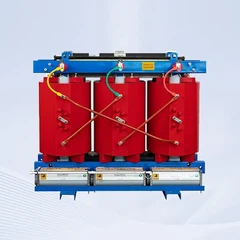
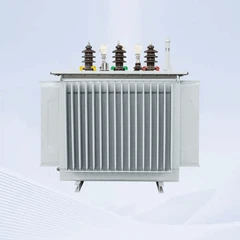
The biggest difference between oil-immersed transformers and dry-type transformers is the presence of oil. Since oil is a liquid with fluidity, oil-immersed transformers require a shell filled with transformer oil that immerses the transformer coil, which is not visible from the outside. In contrast, dry-type transformers are oil-free and lack a shell, allowing the transformer coil to be directly seen. One characteristic of oil-immersed transformers is the oil pillows on top that store transformer oil, though new models are now being produced without them.
For heat dissipation and the flow of internal insulation oil, oil-immersed transformers are designed with an external heat exchanger, similar to a radiator, while dry-type transformers do not have a heat exchanger. Instead, they feature a fan below the transformer coil, similar to a household air conditioner.

For fire prevention reasons, oil-immersed transformers are usually installed in separate transformer rooms or outdoors, while dry-type transformers must be installed indoors, typically in low-voltage distribution rooms, with low-voltage distribution cabinets placed side by side."
Package&delivery

Send Inquiry