

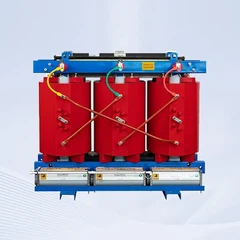
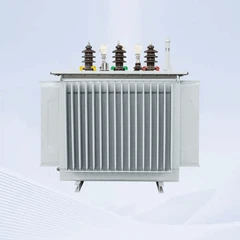




What is the frequency range of dry transformers?
Aug 27, 2025
Leave a message
Hey there! I'm a supplier of dry transformers, and today I want to have a chat about the frequency range of these nifty devices.
First off, let's understand what dry transformers are. They're a type of transformer that don't use any liquid for insulation. Instead, they rely on solid insulation materials, which makes them safer and more environmentally friendly compared to their liquid - filled counterparts. They're used in a wide range of applications, from small commercial buildings to large industrial complexes.
So, what's the frequency range of dry transformers? Well, the most common frequency range for dry transformers used in power distribution is 50 Hz or 60 Hz. These frequencies are the standard in most countries around the world. In regions like Europe, Asia, and Africa, 50 Hz is the norm, while in North America and some parts of South America, 60 Hz is used.


The reason for these specific frequencies is mainly historical and has to do with the early development of the electrical power grid. Back in the day, engineers had to make a choice about the frequency at which electricity would be generated and distributed. Once a frequency was adopted in a particular area, it became the standard, and all electrical equipment, including dry transformers, was designed to operate at that frequency.
But dry transformers aren't just limited to 50 Hz or 60 Hz. There are also applications where they need to operate at higher frequencies. For example, in some electronic devices and high - tech equipment, frequencies in the range of a few kilohertz (kHz) to several hundred kHz might be required. These high - frequency dry transformers are smaller and lighter compared to their low - frequency counterparts because the magnetic core can be made smaller due to the higher frequency operation.
Let's talk a bit about how the frequency affects the performance of dry transformers. At higher frequencies, the core losses in the transformer increase. The core losses are made up of two components: hysteresis losses and eddy current losses. Hysteresis losses occur because the magnetic field in the core has to change direction with each cycle of the alternating current. The faster the frequency, the more often the magnetic field has to change, resulting in higher hysteresis losses. Eddy current losses are caused by the induced currents in the core material. At higher frequencies, these induced currents become larger, leading to increased eddy current losses.
To minimize these losses at higher frequencies, special core materials are used in high - frequency dry transformers. These materials have low hysteresis and eddy current losses, which helps to improve the efficiency of the transformer.
Now, let me tell you about some of the products we offer as a dry transformer supplier. We have a great selection of Single Phase Dry Type Transformer. These are perfect for small - scale applications where only a single phase of power is required. They're reliable, efficient, and easy to install.
Another product we have is the Dyn1 Cast Resin Transformer Copper. This type of transformer is known for its excellent performance and durability. The cast resin insulation provides good protection against moisture and other environmental factors, making it suitable for a wide range of outdoor and indoor applications.
We also offer the SC(B) Series Resin Encapsulated Dry Type Transformers. These transformers are designed for industrial and commercial use. They have a high power rating and are built to last. The resin encapsulation ensures that the transformer is well - protected and can operate in harsh conditions.
If you're in the market for dry transformers, whether it's for a 50 Hz or 60 Hz application, or even a high - frequency one, we've got you covered. Our team of experts can help you choose the right transformer for your specific needs. We understand that every project is different, and we're committed to providing you with the best solution.
When you're considering a dry transformer purchase, it's important to think about the frequency requirements of your application. Make sure the transformer you choose is designed to operate at the right frequency. Otherwise, you might experience issues with performance, efficiency, and even safety.
We've been in the dry transformer business for a long time, and we've built a reputation for quality and reliability. Our transformers are tested rigorously to ensure they meet the highest standards. We use the latest technology and the best materials to manufacture our products, so you can be confident that you're getting a top - notch dry transformer.
If you have any questions about the frequency range of dry transformers or need help selecting the right product for your project, don't hesitate to reach out. We're here to assist you every step of the way. Whether you're a small business owner looking for a single - phase transformer or an industrial giant in need of a high - power transformer, we can provide you with the perfect solution.
So, if you're interested in learning more about our dry transformers or want to start a purchase negotiation, just get in touch. We're eager to work with you and help you find the ideal dry transformer for your needs.
References:
- Electrical Power Systems Engineering textbooks
- Manufacturer's guides on dry transformers
- Industry research papers on transformer technology
Send Inquiry