








Can 100KW of Equipment Use a 100kVA Transformer?
Apr 22, 2026
Leave a message
"Can 100KW of equipment use a 100kVA transformer?" This is one of the most common questions GNEE's sales and technical teams receive every day. Many users instinctively think "100 is 100" - if the equipment is rated at 100KW, a 100kVA transformer should be a perfect match, right? The answer is no, and the risk is significant.
As an ISO9001:2015 certified manufacturer with over 18 years of experience and a state-of-the-art production facility, GNEE has seen too many cases of transformer burnout, frequent tripping, and production stoppages caused by incorrect sizing.
Today, we will explain once and for all: What is the relationship between transformer capacity (kVA) and equipment power (kW)? And what size transformer does 100KW of equipment actually need?

Side-by-side comparison of a burned-out transformer coil due to overload vs. GNEE's new copper winding
Can 100KW of Equipment Use a 100kVA Transformer? – The Core Formula Decides
To answer whether 100KW of equipment can use a 100kVA transformer, you must first understand three core concepts: kW (kilowatt), kVA (kilovolt-ampere), and cosφ (power factor). The relationship between these three is the foundation of all transformer sizing.
Three Concepts You Must Distinguish
| Term | Full Name | Meaning | Simple Analogy |
|---|---|---|---|
| kW | Kilowatt | Actual "active power" consumed by equipment | The nutrition you actually absorb |
| kVA | Kilovolt-ampere | Total "apparent power" including active + reactive | The whole bowl of rice served to you |
| cosφ | Power Factor | Active power ÷ Apparent power; measures efficiency | The "nutrition utilization rate" of the bowl |
The Core Conversion Formula
kW = kVA × cosφ
Or written as:
kVA = kW ÷ cosφ
Key conclusion: Unless the power factor cosφ = 1 (pure resistive load), the transformer capacity in kVA must be numerically greater than the equipment power in kW.
Common Estimate: 1 kVA ≈ 0.8 kW
In industrial projects, the power factor is typically estimated at 0.8 as a conservative value. This means:
- A 100kVA transformer can power approximately 80 kW of typical industrial load
- 100KW of equipment requires at least a 125kVA transformer
In short: Using a 100kVA transformer for 100KW of equipment is like asking someone who can safely carry 80 pounds to carry 100 pounds - possible for a short time, but guaranteed to fail over the long term.
Given Equipment Power, How to Calculate Required Transformer Capacity?
This is the most common sizing scenario: you know the total power of all equipment in your facility (in kW) and need to determine what size transformer (in kVA) to buy.
Calculation Formula
Transformer Capacity (kVA) ≥ Total Equipment Power (kW) ÷ Power Factor (cosφ)
Worked Example
Scenario: A factory has total equipment power of 80 kW, with a power factor estimated at 0.8.
80 kW ÷ 0.8 = 100 kVA
Conclusion: You need a transformer rated 100 kVA or larger.
Back to the Original Question: What Size Transformer for 100KW of Equipment?
Given: Equipment power = 100 kW, cosφ = 0.8
100 kW ÷ 0.8 = 125 kVA
Answer: 100KW of equipment requires at least a 125kVA transformer. Using 100kVA is severely undersized.
You Must Leave a Margin (10%–20%)
The formula above calculates only the "theoretical minimum." GNEE strongly recommends adding an additional 10%–20% margin for the following reasons:
- Not all equipment starts simultaneously: But some equipment (especially motors) draws 5–7 times rated current during startup.
- Future expansion: Adding one piece of equipment later means replacing the entire transformer - much more expensive.
- Avoid continuous full load: Transformers running at 100% load continuously experience higher temperature rise and shorter life.
- Recommended sizing: 100 kW ÷ 0.8 × 1.2 (20% margin) = 150 kVA
Given Transformer Capacity, How to Calculate Maximum Safe Load?
Another common scenario: you already have a 100kVA transformer and want to know the maximum kW of equipment you can safely connect.
Calculation Formula
Maximum Load (kW) ≤ Transformer Capacity (kVA) × Power Factor (cosφ)
Worked Example
Scenario: Existing 100 kVA transformer, power factor estimated at 0.8.
100 kVA × 0.8 = 80 kW
Conclusion: The safe load for this 100kVA transformer should not exceed 80 kW. If your total equipment power exceeds 80 kW, you need to upgrade the transformer or add power factor correction capacitors.
What Happens When You Exceed the Safe Load?
| Overload Level | Consequence |
|---|---|
| Within 10% | Slightly higher temperature rise, mild life reduction |
| 20%–30% | Frequent overload alarms, accelerated insulation aging |
| Above 50% | Winding overheating and burnout, possible fire |
Power Factor (cosφ) – The Critical Variable 80% of People Ignore
Many customers remember only the rule of thumb "1 kVA ≈ 0.8 kW," but different types of equipment have vastly different power factors. Ignoring power factor is the number one cause of sizing errors.
Typical Power Factor Values by Equipment Type
| Equipment Type | Typical Power Factor (cosφ) | Examples |
|---|---|---|
| Pure resistive load | ≈ 1.0 | Electric furnaces, incandescent lamps, electric heaters |
| Motor loads | 0.7 – 0.85 | Pumps, fans, compressors, conveyors |
| Electronic loads | 0.5 – 0.7 | VFDs, switch-mode power supplies, LED drivers |
| Welding equipment | 0.4 – 0.6 | Spot welders, arc welders (intermittent duty) |
Lower Power Factor Requires Larger Transformer
Comparison example:
- 80kW electric furnace (cosφ=1.0): 80 ÷ 1.0 = 80kVA → 100kVA is sufficient
- 80kW water pump (cosφ=0.8): 80 ÷ 0.8 = 100kVA → needs 100kVA
- 80kW VFD load (cosφ=0.6): 80 ÷ 0.6 = 133kVA → needs 150kVA
For the same 80kW of equipment, required transformer capacity can vary by nearly double depending on power factor!
How to Improve Power Factor?
If your transformer capacity is fixed but a low power factor is limiting your load capacity, you can:
- Install power factor correction capacitors: Can raise power factor from 0.7 to above 0.95, effectively increasing load capacity
- Replace with high-efficiency motors: High-efficiency motors generally have better power factor
- Avoid no-load operation: Unloaded motors have extremely low power factor (0.1–0.3)
Practical Sizing Guide – What Size Transformer for Different Applications?
Below is a sizing guide based on GNEE's years of experience (margin of 20% already included).
| Application | Total Equipment Power | Recommended Transformer Capacity | Notes |
|---|---|---|---|
| Small machine shop | 80 kW | 125 kVA | Motor-heavy, high starting current |
| Injection molding workshop | 100 kW | 150–200 kVA | Cyclic loads, requires large margin |
| Air compressor station | 100 kW | 150 kVA | Direct-start motor impact |
| Commercial lighting + HVAC | 100 kW | 125 kVA | Lighting cosφ≈1, HVAC ≈0.8 |
| Electric furnace heating | 100 kW | 110 kVA | Resistive load, smaller margin acceptable |
| Data center | 100 kW | 130–150 kVA | UPS loads, high reliability required |

Real installation photos of GNEE transformers in compressor station
Sizing Checklist – 5 Questions to Avoid Mistakes
Before contacting GNEE for a quote, answer these 5 questions. The more detailed your answers, the more accurate our recommendation.
Five Must-Answer Questions
- Equipment list: What are all the electrical loads? What is the kW rating of each?
- Motor types: Are there large motors (>30kW)? Are they direct-on-line started?
- Diversity factor: Do all equipment run simultaneously or at different times?
- Expansion plan: Will you add equipment in the next 1–3 years?
- Site power factor: Is there a capacitor bank on site? What is the current power factor?
GNEE Free Sizing Service: Send your equipment list to our technical team.
We will use professional software to calculate:
- Minimum required transformer capacity
- Recommended optimal capacity (including margin)
- Whether power factor correction is needed
- Estimated annual electricity cost and ROI analysis
Conclusion: Sizing a Transformer Is Not About Matching Numbers – It's About Power Factor
Let's return to the original question: Can 100KW of equipment use a 100kVA transformer? The answer is absolutely not. The core reason is that between transformer capacity (kVA) and equipment power (kW) lies a critical factor: power factor (cosφ). Using the industrial standard estimate of cosφ = 0.8, a 100kVA transformer can safely power only 80kW of load. For 100KW of equipment, you need at least a 125kVA transformer - and GNEE recommends 150kVA.
GNEE's advice: Do not risk equipment burnout and days of production downtime just to save a few hundred dollars on a smaller transformer. Size up. The peace of mind lasts 20 years.
Are you confused about what size transformer your equipment needs?
Send your equipment list to GNEE. We will perform a free, precise capacity calculation and solution optimization.
Contact GNEE today for your custom 《Transformer Sizing Report》 and factory-direct pricing. Size it right once - and stop worrying for a decade!
FAQ
Can 100KW of equipment use a 100kVA transformer if it only runs for short periods?
Not recommended even for short periods. Motor starting current can reach 5–7 times rated current. A 100kVA transformer will experience severe momentary overload, potentially tripping breakers or causing localized winding overheating.
I already bought a 100kVA transformer, but my equipment is 100KW. What can I do?
Two options: ① Install power factor correction capacitors to raise the power factor above 0.95 - this would allow approximately 95kW of load (still slightly insufficient); ② Replace with a larger transformer (125–150kVA recommended). GNEE offers old transformer trade-in and replacement services.
For kVA to kW conversion, why do some manufacturers use 0.9?
0.9 is an ideal value. Most industrial sites have actual power factors between 0.7 and 0.85. GNEE recommends using 0.8 for conservative, safe sizing.
What if all my loads are LED lights and computers (switch-mode power supplies) with very low power factor?
These loads generate significant harmonics. They not only require a larger transformer but also benefit from an active power filter (APF). GNEE can provide integrated power distribution solutions.
Should I choose oil-immersed or dry-type transformer?
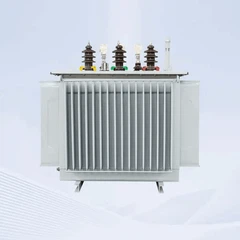
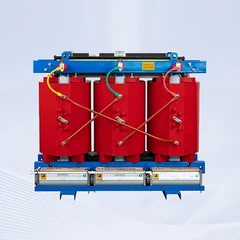
Outdoor or standalone substations → oil-immersed (lower cost, higher overload capacity). Indoor or high fire-safety requirements → dry-type (safer). GNEE supplies both types.
Send Inquiry