







10kV vs 35kV for 2000kVA Transformers: Location & Economics
At GNEE, a leading manufacturer specializing in distribution transformers, one of the most frequent decisions our clients face is the choice between 10kV and 35kV voltage levels when planning the location selection of a 2000kVA oil-immersed transformer. This decision directly shapes the layout, safety clearances, civil works, and total lifecycle cost of medium-voltage distribution networks.
As an ISO-certified factory with over 18 years of experience and shipments to more than 150 countries, GNEE understands that no two projects are identical.
A properly positioned 2000kVA oil-immersed transformer must balance electrical performance with site-specific constraints, ensuring years of reliable service in residential, commercial, or industrial applications.

GNEE transformer production workshop
Whether you are an EPC contractor, utility planner, or plant manager, the interaction between voltage level and physical location determines everything from cable cross-sections to substation footprint. Below, we break down the technical, economic, and practical factors that govern the location selection of 2000kVA oil-immersed transformers at both 10kV and 35kV.
Why 2000kVA Oil-Immersed Transformers Are Central to Modern Distribution Networks
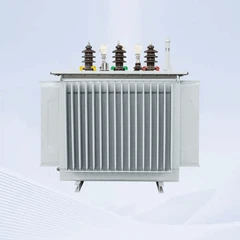
The 2000kVA oil-immersed transformer represents a cornerstone capacity for distributed energy delivery. Designed to step down medium voltage to low voltage, these units serve large residential compounds, water treatment plants, manufacturing facilities, and commercial centers.
Their oil-immersed design offers excellent cooling, overload tolerance, and a proven service record that surpasses dry-type alternatives in outdoor and semi-outdoor environments.
Key attributes that make the 2000kVA oil-immersed transformer so widely adopted include natural cooling (ONAN), robust insulation systems, and compatibility with both 10kV and 35kV primary distributions. However, the voltage level selected at the design stage significantly influences where and how these transformers must be installed.
10kV vs 35kV Voltage Level: How the Choice Reshapes Location Selection for 2000kVA Transformers
The voltage chosen for a 2000kVA oil-immersed transformer drives fundamental siting parameters. The two options-10kV and 35kV-each introduce unique opportunities and constraints.
Site Location Advantages of 10kV 2000kVA Oil-Immersed Transformers
In 10kV distribution networks, location selection of 2000kVA oil-immersed transformers tends to favor proximity to load centers. 10kV cables have higher current for the same kVA rating; the primary current reaches 115.5 A for a 2000kVA unit, so voltage drop and losses increase rapidly with distance. Economical transmission distance is generally limited within 3 km. This forces planners to place the substation as close as possible to the end user-often inside or adjacent to the facility it serves. A 10kV/0.4kV 2000kVA oil-immersed transformer typically fits within compact concrete pads or ground-mounted enclosures, with clearance requirements guided by moderate BIL (Basic Insulation Level). Civil works are generally simpler, and the overall footprint remains manageable for urban and semi-urban sites.
For quick maintenance access, 10kV installations can be integrated into fenced open yards or dedicated indoor rooms, provided adequate ventilation for oil natural cooling is ensured. Fire safety distances follow IEC 61936-1, but the lower insulation level of the 10kV 2000kVA oil-immersed transformer (LI 75 kV AC 35 kV) reduces minimum phase-to-ground and phase-to-phase clearances, giving engineers greater flexibility in tight plots.
Site Location Advantages of 35kV 2000kVA Oil-Immersed Transformers
When a 35kV supply is selected, the location selection of a 2000kVA oil-immersed transformer changes in character. 35kV systems transmit power more efficiently over longer distances, enabling the transformer to be situated farther from the utility substation and sometimes closer to the geographical center of a dispersed load group. The higher voltage cuts primary operating current down to roughly 33 A for 2000kVA, allowing reduced conductor cross-sections and lower line losses, with an economical transmission range extending to 3~15 km. This advantage can offset the cost of a slightly larger site footprint.
However, the 35kV 2000kVA oil-immersed transformer demands increased insulation levels (LI 170 kV AC 70 kV), which translates into greater physical dimensions, heavier total weight (approximately 7,000 kg versus 5,500 kg for a comparable 10kV unit), and broader safety clearances.
The foundation and oil containment pit must be reinforced, and overhead clearance zones expand. Maintenance aisles, access for medium-voltage switchgear, and lightning protection coordination become more demanding, often requiring a dedicated substation building or a spacious outdoor gantry arrangement.
Technical Specifications Comparison for 2000kVA Oil-Immersed Transformers at 10kV and 35kV
Accurate location selection requires a clear picture of the physical and electrical differences between units. The table below summarizes the typical technical parameters that GNEE engineers work with when helping clients site a 2000kVA oil-immersed transformer.
| Parameter | 10kV 2000kVA Oil-Immersed Transformer | 35kV 2000kVA Oil-Immersed Transformer |
|---|---|---|
| Rated Capacity | 2000 kVA | 2000 kVA |
| HV Rating | 10 kV (or 11 kV) | 35 kV (or 33 kV) |
| LV Rating | 0.4 kV / 0.69 kV | 0.4 kV / 0.69 kV |
| Vector Group | Dyn11 / Yyn0 | Dyn11 / Yyn0 |
| Impedance Voltage | 6.0% – 6.5% | 6.5% – 7.0% |
| Cooling Method | ONAN | ONAN |
| Insulation Level (HV) | LI 75 AC 35 kV | LI 200 AC 85 kV |
| Rated HV Current | 115.5 A (10kV) | 33 A (35kV) |
| Recommended economical transmission distance | ≤ 3 km | 3 ~ 15 km |
| Typical HV cable cross-section | 3×300 mm² Cu | 3×95 mm² Cu |
| Approx. short-circuit withstand level | 20 kA / 2 s | 16 kA / 2 s |
| Approx. Dimensions (L×W×H) | 2700×1800×2300 mm | 3000×2100×2500 mm |
| Approx. Total Weight | 5500 kg | 7000 kg |
| Oil Weight | 1200 kg | 1600 kg |
| Minimum safety phase clearance (outdoor) | ≥ 125 mm | ≥ 300 mm |
| Relative substation footprint benchmark | 100% (reference) | 130% ~ 150% |
| Applicable Standards | IEC 60076, GB 1094 | IEC 60076, GB 1094 |
The rated primary current, economical transmission range, cable size and clearance values are typical engineering benchmarks for preliminary site planning. Actual design shall comply with local grid codes and short-circuit parameters.
These values directly influence cable trenches, lifting logistics, and the foundation design-all core elements of the location selection of 2000kVA oil-immersed transformers.
Critical Site Parameters in Location Selection of 2000kVA Oil-Immersed Transformers
Beyond voltage level, several universal site requirements must be met, regardless of whether a 10kV or 35kV 2000kVA oil-immersed transformer is chosen.
Fire Safety and Clearance Requirements for 2000kVA Oil-Immersed Transformer Installations
Oil-filled transformers demand rigorous fire safety planning. Both 10kV and 35kV installations need gravel-filled oil containment pits sized to hold 100% of the transformer oil volume, fire-rated separation walls when near buildings, and sufficient access routes for firefighting. The location selection of a 2000kVA oil-immersed transformer must factor in local fire codes and, increasingly, environmental regulations concerning oil spill containment.
For 35kV units, the required separation distances often increase due to higher fault energy, directly affecting plot size. GNEE always recommends performing a site-specific fire risk assessment during early design.
Environmental and Access Factors in 2000kVA Oil-Immersed Transformer Location
Flood plains, high-water-table zones, and heavily polluted industrial areas degrade the long-term reliability of any 2000kVA oil-immersed transformer. Location selection should avoid flood-prone zones; where unavoidable, elevated plinths must be constructed. Adequate truck access for delivery, crane lifting, and eventual on-site oil handling is non-negotiable. The larger physical envelope of a 35kV unit demands wider doorways or gate openings, a detail sometimes overlooked until the installation day.

Close-up of precision coil winding for oil-immersed transformer
Cost Implications of 10kV vs 35kV on Transformer Location Selection and Infrastructure
The economic dimension often drives the final decision. A 2000kVA oil-immersed transformer rated for 10kV tends to have a lower ex-works price and simpler auxiliary equipment. However, if the load is far from the primary substation, the cost of oversized copper cables and voltage regulation equipment can erode these savings. In contrast, a 35kV 2000kVA oil-immersed transformer will cost more initially-both for the transformer and its heavier-duty switchgear-but may eliminate costly intermediate distribution poles and cable runs.
Site preparation costs also diverge: the 35kV option requires larger foundations, extended clearances, and heavier lifting machinery. GNEE's application engineers routinely help customers model total project cost rather than comparing transformer prices in isolation, because only a holistic view leads to an optimal location selection for a 2000kVA oil-immersed transformer.
GNEE's Expertise in Engineering and Manufacturing 2000kVA Oil-Immersed Transformers
As a factory-direct producer, GNEE brings deep engineering capability to every 2000kVA oil-immersed transformer project. Our design team tailors no-load and load losses, impedance values, and tap-changer configurations to match your exact 10kV or 35kV system requirements. We test every unit according to IEC 60076, performing routine, type, and special tests within our in-house laboratory, ensuring each transformer meets insulation, temperature rise, and short-circuit strength specifications.
Our involvement often begins at the location selection phase: we review site plans, propose foundation templates, verify cable entry directions, and advise on bushings and cooling orientations. This pre-sales support reduces site surprises and integrates the transformer seamlessly into the client's distribution network architecture. Whether you need a compact 10kV design for a tight industrial plot or a robust 35kV unit for a rural feeder, GNEE has the certified production lines and the experienced workforce to deliver.

2000kVA oil-immersed transformer fully assembled and loaded on truck for shipment
Conclusion: Secure Your Network with the Right 2000kVA Oil-Immersed Transformer Location Selection at 10kV vs 35kV
The location selection of 2000kVA oil-immersed transformers in 10kV and 35kV distribution networks is a multidisciplinary challenge that blends electrical engineering, civil works, safety codes, and total cost analysis. A poorly sited transformer-no matter how well it is built-will invite operational headaches for years. By partnering with GNEE, you gain more than a high-quality transformer; you gain a technical ally that can guide your voltage selection, optimize your site layout, and deliver a factory-tested unit ready for decades of service.
Ready to move forward with your project?
Contact our engineering team today for a free, no-obligation consultation on your upcoming 2000kVA oil-immersed transformer requirements. Let us know your site coordinates, load data, and voltage preference-we'll return a customized proposal including lead time, pricing, and site integration support.
Don't leave your distribution network's reliability to chance-request your quote directly from GNEE now and put our experience to work for you.
Send Inquiry