





How to Calculate Efficiency of 1000kVA Cast Resin Dry Type Transformer
As a professional manufacturer, GNEE specializes in high-performance transformer solutions, including Dry-type Transformer, Three-Phase Dry-type Transformer, and advanced Three-Phase Cast Resin Transformer systems.
In modern power systems, the efficiency of a 1000kVA Cast Resin Dry Type Transformer is a key indicator of energy performance and operating cost. Understanding how to calculate transformer efficiency helps engineers and buyers select the right equipment and optimize long-term returns.
Whether applied in industrial plants, commercial buildings, or renewable energy projects, improving efficiency directly reduces energy loss and enhances system reliability.
What Is Efficiency of 1000kVA Cast Resin Dry Type Transformer?
Definition of Transformer Efficiency
The efficiency of a transformer refers to the ratio of output power to input power, expressed as a percentage.
Efficiency Formula:
- Efficiency (%) = (Output Power / Input Power) × 100
For a Cast Resin Power Transformer, efficiency is mainly affected by two types of losses:
- No-load loss (core loss)
- Load loss (copper loss)
High-quality cast resin distribution transformer designs from leading cast resin dry type transformer manufacturers typically achieve efficiency above 98%.

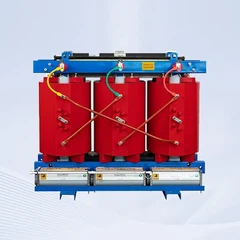
Transformer core and winding structure close-up
Loss Components in 1000kVA Cast Resin Dry Type Transformer Efficiency Calculation
No-Load Loss in 1000kVA Cast Resin Dry Type Transformer
No-load loss occurs when the transformer is energized but not supplying load. It is mainly caused by core magnetization.
Characteristics:
- Constant regardless of load
- Depends on core material and design
- Lower in Low Loss Dry-type Transformer designs
Load Loss in 1000kVA Cast Resin Dry Type Transformer
Load loss occurs when the transformer is supplying current to the load.
Key factors:
- Winding resistance
- Current magnitude
- Temperature rise
Advanced cast coil dry type transformer technology reduces load losses through optimized conductor design.
How to Calculate Efficiency of 1000kVA Cast Resin Dry Type Transformer
Efficiency Calculation Formula for 1000kVA Cast Resin Dry Type Transformer
The practical efficiency formula considering losses is:
- Efficiency (%) = Output Power / (Output Power + Losses) × 100
Where:
- Output Power = Load (kVA) × Power Factor
- Total Loss = No-load Loss + Load Loss
Example Calculation of 1000kVA Cast Resin Dry Type Transformer Efficiency
Assume the following data:
- Rated Capacity: 1000 kVA
- Load: 80% (800 kVA)
- Power Factor: 0.9
- No-load Loss: 1.8 kW
- Load Loss: 8.5 kW
Calculation:
- Output Power = 800 × 0.9 = 720 kW
- Total Loss = 1.8 + 8.5 = 10.3 kW
- Efficiency = 720 / (720 + 10.3) × 100 ≈ 98.59%
This demonstrates that dry cast resin transformers can achieve very high efficiency under optimal load conditions.

Transformer testing and measurement instruments in factory
Factors Affecting Efficiency of 1000kVA Cast Resin Dry Type Transformer
Load Rate Impact on Efficiency
Efficiency varies with load. Maximum efficiency is usually achieved at 60%–80% load.
- Low load → No-load loss dominates
- High load → Copper loss increases
Material and Design Optimization
High-quality materials improve efficiency:
- Silicon steel core reduces hysteresis loss
- Copper windings reduce resistance
- Vacuum casting improves insulation
Dry core transformer and cast resin type transformer designs are optimized for minimal energy loss.
Cooling and Temperature Control
Temperature affects resistance and loss.
Efficient cooling methods:
- AN (Air Natural)
- AF (Air Forced)
Proper cooling ensures stable performance of Indoor Three-Phase Transformer systems.
Parameter Table of 1000kVA Cast Resin Dry Type Transformer
| Parameter | Specification |
|---|---|
| Rated Capacity | 1000 kVA |
| Voltage Level | 10kV / 0.4kV |
| Phase | Three-Phase |
| Frequency | 50Hz / 60Hz |
| Insulation Type | Epoxy Cast Resin |
| Cooling Method | AN / AF |
| No-Load Loss | ≤ 2.0 kW |
| Load Loss | ≤ 10 kW |
| Efficiency | ≥ 98% |
| Insulation Class | Class F / H |
| Protection Level | IP20 / IP23 |
| Application | Industrial / Commercial / Renewable |
Why High-Efficiency 1000kVA Cast Resin Dry Type Transformer Matters
Energy Saving and Cost Reduction
Higher efficiency means:
- Lower electricity loss
- Reduced operating cost
- Faster return on investment
Environmental Benefits
- Low Loss Dry-type Transformer designs reduce carbon emissions and support green energy goals.
Reliability and Long Service Life
Efficient transformers:
- Generate less heat
- Experience slower insulation aging
- Require less maintenance
Dry distribution transformer solutions are widely used in modern energy systems for these reasons.
Why Choose GNEE as Your Transformer Manufacturer?
As one of the trusted cast resin dry type transformer manufacturers, GNEE offers:
- Advanced production technology for cast resin distribution transformer
- Strict quality control and IEC/ANSI compliance
- Full product range including Three-Phase Dry-type Transformer and Cast Resin Power Transformer
- Custom solutions for global projects
We combine engineering expertise with real project experience to deliver reliable transformer solutions.
Conclusion: Optimize Performance with Accurate Efficiency Calculation
Understanding how to calculate efficiency of 1000kVA Cast Resin Dry Type Transformer is essential for selecting the right equipment and maximizing energy performance. By analyzing losses, optimizing load conditions, and choosing high-quality designs, you can significantly improve system efficiency and reduce costs.
👉 Looking for high-efficiency dry-type transformers? Contact GNEE today for expert guidance and customized solutions tailored to your project needs!
What is the primary role of oil in oil immersed transformers?
The oil in oil immersed transformers serves dual functions: insulation and cooling. It acts as a barrier to prevent electrical leaks and dissipates heat generated, preventing overheating and potential electrical faults.
How often should the dielectric strength test be conducted?
Dielectric strength tests are typically recommended annually or as advised by the manufacturer, aligning with operational conditions to maintain optimal transformer performance.
Why is monitoring oil levels essential for transformer maintenance?
Monitoring oil levels is crucial because low oil levels can lead to overheating and reduced insulation ability, increasing the risk of electrical faults.
What measures can prevent thermal overloads in transformers?
Preventive measures for thermal overloads include optimizing load distribution, employing advanced cooling techniques, and continuous temperature monitoring with prompt corrective actions when necessary.
How can thermal imaging help in transformer maintenance?
Thermal imaging captures infrared images to identify hotspots that may indicate electrical issues or potential component failures, allowing for early intervention and prevention of larger failures.
What makes oil transformers more efficient than dry-type alternatives
Oil transformer units achieve superior efficiency through enhanced cooling capabilities that enable higher power densities and reduced losses. The liquid insulation provides better thermal conductivity compared to air, allowing for more compact designs with improved electrical performance. Modern oil transformer designs typically achieve efficiency ratings exceeding 99%, while comparable dry-type units may have efficiency ratings several percentage points lower due to thermal limitations and design constraints.
Send Inquiry