





Daily Maintenance Methods for 100kVA Dry-Type Transformers
Feb 04, 2026
Leave a message
As a leading manufacturer of power transformers with over 18 years of R&D, manufacturing, and global export experience, GNEE is committed to providing high-quality 100kVA Dry-Type Transformers that comply with GB/T 1094, IEC 60076, and international safety standards.
Our products are widely applied in industrial parks, commercial buildings, municipal engineering, and new energy projects. Daily maintenance is the core guarantee to extend the service life of 100kVA Dry-Type Transformers, avoid safety hazards, and reduce operational costs.
This guide details standardized daily maintenance methods, periodic inspection cycles, special environment maintenance, and fault handling tips to help you maintain the transformer efficiently.
The Importance of Daily Maintenance for 100kVA Dry-Type Transformers
100kVA Dry-Type Transformers are core power distribution equipment, and their stable operation directly affects the safety and reliability of the entire power system. Neglecting daily maintenance will lead to problems such as insulation aging, overheating, and poor contact, which may cause shutdowns, equipment damage, or even safety accidents.
GNEE's professional maintenance system is designed to standardize daily upkeep, minimize failure rates, and extend the service life of transformers to 20–30 years (copper winding) or 15–20 years (aluminum winding). Implementing scientific daily maintenance can reduce maintenance costs by 30–40% and ensure long-term stable operation of the equipment.
Daily Routine Inspection (Daily Maintenance Core)
Daily inspection is the most critical part of maintenance, which should be carried out by on-site operation and maintenance personnel every day, focusing on real-time monitoring of the transformer's operating status.
Visual Inspection of Appearance and Structure
Check the overall appearance of the 100kVA Dry-Type Transformer for any abnormalities:
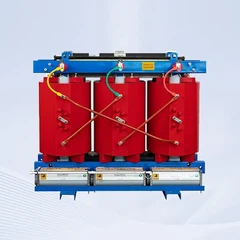
- Inspect the epoxy resin casting (for cast type) for cracks, delamination, or oil stains; check the winding and iron core for dust accumulation, rust, or loose components.
- Verify the metal shell, base, and enclosure are intact, with no deformation or damage.
- Confirm the wiring terminals, busbars, and phase sequence marks are clear and free of oxidation or looseness.
- Check the cooling fan (for AF cooling type) and temperature monitoring sensor for normal installation and no physical damage.
Electrical Parameter Monitoring
Use professional testing instruments to monitor key electrical parameters in real time:
- Measure the no-load current, load current, and voltage of the high-voltage (10kV) and low-voltage (0.4kV) sides; ensure the values are within the rated range.
- Check the tap changer position to confirm it is locked firmly and consistent with the power grid voltage requirements.
- Monitor the temperature of the transformer winding via the built-in PT100 sensor; the normal operating temperature should be below 100℃ (F grade insulation), and the temperature rise should not exceed the standard limit.
Safety and Grounding Check
- Inspect the grounding wire of the transformer shell, base, and low-voltage neutral point to ensure reliable connection, no corrosion, and loose bolts.
- Confirm the grounding resistance meets the standard (≤4Ω for indoor, ≤1Ω for outdoor).
- Check the on-site fire-fighting equipment (dry powder fire extinguisher) is in place and valid, as a safety backup for the transformer's operation.

GNEE On-Site Daily Inspection of 100kVA Dry-Type Transformer
Periodic Maintenance (Weekly/Monthly/Quarterly/Annual)
In addition to daily inspection, periodic maintenance with fixed cycles is required to address potential hidden dangers and ensure the transformer's long-term performance.
Weekly Maintenance
- Clean the surface dust of the transformer with a dry soft cloth or air gun (low pressure, ≤0.2MPa); avoid using water to clean to prevent insulation damage.
- Tighten all wiring terminals, bolts, and fan fasteners with a torque wrench to prevent loose connections caused by vibration.
- Test the cooling fan's start/stop function and air volume; replace the fan if it malfunctions or makes abnormal noise.
Monthly Maintenance
- Check the insulation resistance of the high-voltage and low-voltage windings using a megohmmeter; the insulation resistance should be ≥1000MΩ (at 20℃) for normal operation.
- Inspect the temperature monitoring system and alarm function; simulate an over-temperature signal to verify the alarm and protection actions are effective.
- Check the cable connections for heat generation; if overheating is found, clean the contact surface and retighten the terminals.
Quarterly Maintenance
- Disassemble the enclosure (if equipped) to clean the internal dust and debris of the transformer; pay attention to the heat dissipation channels to ensure unobstructed air flow.
- Detect the wear degree of the tap changer contact; clean the contact surface and apply anti-oxidation grease if necessary.
- Inspect the anti-slip base and foundation for cracks, settlement, or looseness; reinforce the foundation if defects are found.
Annual Comprehensive Maintenance
- Conduct a full performance test of the 100kVA Dry-Type Transformer, including no-load loss, load loss, short-circuit withstand capacity, and lightning impulse withstand voltage.
- Replace aging components such as the temperature sensor, cooling fan, and wiring terminals.
- Organize maintenance records, including inspection data, fault handling, and component replacement, to establish a complete equipment 档案 (file) for subsequent management.
Maintenance Methods for Special Environment 100kVA Dry-Type Transformers
Different application environments require targeted maintenance to adapt to harsh conditions and avoid equipment damage.
High-Humidity Environments (e.g., Coastal Areas, Basements)
- Increase the frequency of dust and moisture removal; use a dehumidifier in the distribution room to keep the relative humidity below 95% (no condensation).
- Apply anti-mold and anti-corrosion coating to the transformer surface and grounding parts to prevent rust and mold growth.
- Conduct an insulation resistance test every half a year to detect insulation degradation caused by moisture in a timely manner.
High-Temperature Environments (e.g., Steel Plants, Industrial Workshops)
- Strengthen the cooling system maintenance; ensure the AF cooling fan runs stably and the heat dissipation channel is unobstructed.
- Install a temperature monitoring alarm with a lower threshold to trigger early warning when the temperature exceeds 90℃.
- Avoid installing the transformer near heat sources; maintain a safe distance of at least 1m from high-temperature equipment.
High-Dust Environments (e.g., Construction Sites, Mining Areas)
- Clean the transformer surface and internal heat dissipation channels every month to prevent dust accumulation from affecting heat dissipation.
- Equip the transformer with a dustproof enclosure (IP30 protection grade) and clean the filter screen regularly.
Standard Product Parameters Table of GNEE 100kVA Dry-Type Transformers
| Parameter Name | Standard Value |
|---|---|
| Rated Capacity | 100kVA |
| Rated Voltage (HV/LV) | 10kV / 0.4kV |
| Insulation Grade | F Grade (155℃) |
| Cooling Mode | AN/AF |
| Protection Grade | IP20/IP23/IP30 |
| Winding Material | Copper/Aluminum |
| Grounding Resistance | Indoor ≤4Ω; Outdoor ≤1Ω |
| No-Load Loss | ≤320W |
Key Notes for Daily Maintenance
- Professional Operation: Maintenance personnel must hold professional electrical operation certificates and avoid blind disassembly or testing.
- Power Off Operation: All maintenance and testing operations (except real-time parameter monitoring) must be carried out after power off to ensure personal safety.
- Record Keeping: Document all maintenance content, data, and fault handling results to form a complete maintenance log for traceability.
- Regular Training: Organize maintenance personnel to receive professional training on the structure and maintenance of 100kVA Dry-Type Transformers to improve professional skills.
Conclusion
Scientific and standardized 100kVA Dry-Type Transformers daily maintenance is essential to ensure the safe, stable, and efficient operation of the equipment, extend its service life, and reduce the total cost of power system operation.
As a professional transformer manufacturer with rich project experience, GNEE provides not only high-quality transformers but also one-stop maintenance technical support, customized maintenance solutions, and professional after-sales service for global customers.
Whether you are in industrial, commercial, or municipal projects, following the above maintenance methods can effectively avoid faults and ensure long-term reliability. Contact GNEE's technical team today to get professional maintenance guidance and a free consultation for your 100kVA Dry-Type Transformer project!
Send Inquiry