







Classification And Handling Analysis Of Common Transformer Faults
Apr 02, 2026
Leave a message
As the core equipment for energy conversion and transmission in the power system, transformers are key to ensuring stable and efficient power supply, widely used in power transmission, industrial production, and urban power distribution.
As an enterprise focusing on R&D, production, sales and installation of power equipment, GNEE ELECTRIC has deep experience in the transformer field, providing high-quality oil-immersed and dry-type transformers as well as comprehensive solutions to over 160 countries and regions.

Explore GNEE Transformer Products
This article focuses on the classification, causes and core handling points of common faults in oil-immersed power transformers, helping industry practitioners identify and handle faults scientifically, extend transformer service life, and ensure safe power system operation.
Core Classification of Oil-Immersed Power Transformer Faults
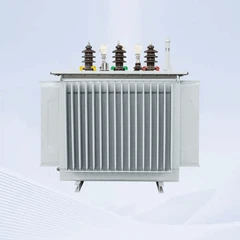
Oil-immersed power transformers, the most widely used type in power systems, have faults mainly divided into internal and external categories. Internal faults can be further classified into thermal and electrical faults by nature, with distinct hazards and manifestations-accurate classification is critical for efficient handling.
(I) Internal Faults: Core Component Failures Inside the Tank
Internal faults occur inside the transformer tank, involving windings, iron cores, and tap changers. They are highly concealed and harmful, potentially causing equipment damage and power outages if not addressed promptly. Main types include:
- Interphase Short Circuit: Caused by insulation aging or winding deformation, it generates massive heat instantly, damaging insulation and windings.
- Turn-to-Turn Short Circuit: A common winding fault leading to local overheating, oil deterioration, and eventual winding burnout.
- Ground Fault: Windings or leads grounding through the shell, generating zero-sequence current and risking insulation breakdown.
(II) External Faults: Accessory Failures Outside the Tank
External faults occur on insulation bushings and their leads, easier to diagnose but capable of triggering internal faults if neglected. Main types include:
- Insulation Bushing Fault: Flashover or breakage due to aging, pollution, or lightning, causing ground short circuits.
- Lead Fault: Interphase faults generating electric arcs that ignite transformer oil and induce internal failures.
(III) Thermal vs. Electrical Internal Faults
Internal faults are categorized by nature, identifiable via oil dissolved gas analysis and insulation monitoring:
1. Thermal Faults
Caused by poor contact, overload, or poor heat dissipation, manifested as local overheating.
Classified by severity:
- Mild (below 150℃): Minor contact issues, manageable via daily inspection.
- Low-Temperature (150~300℃): Slight insulation aging, requiring timely heat source checks.
- Medium-Temperature (300~700℃): Accelerated insulation aging, necessitating shutdown and component replacement.
- High-Temperature (above 700℃): Severe, causing winding burnout and oil carbonization, requiring immediate shutdown.
2. Electrical Faults
Caused by insulation degradation under high electric fields, classified by discharge energy density:
- Partial Discharge: Low energy, eroding insulation over time and leading to breakdown.
- Spark Discharge: Medium energy, damaging local insulation and risking turn-to-turn short circuits.
- High-Energy Arc Discharge: Severe, generating high-temperature arcs that burn core components.
Common Faults and Handling Points
Combined with GNEE ELECTRIC's operational experience, below are key details of 7 common faults, including causes, hazards, and handling measures.
(I) Short-Circuit Fault
The most urgent fault, involving outlet short circuits, internal ground or interphase short circuits, caused by insulation aging, lightning, or line faults. Short-circuit current (dozens of times the rated value) and electrodynamic force cause insulation overheating and winding deformation.
Handling: Shut down immediately, cut power, detect winding deformation via tests, clean fault points, repair minor deformation, or replace severely damaged windings before recommissioning.
(II) Discharge Fault
A core electrical fault, damaging insulation continuously via direct particle bombardment and chemical corrosion from discharge-generated gases (heat, ozone). Caused by weak insulation, dampness, or oil deterioration.
Handling: Locate discharge points via testing, clean and strengthen weak insulation, replace damaged components and deteriorated oil for severe cases.
(III) Insulation Fault
The main cause of transformer aging, involving solid and liquid insulation:
- Solid Insulation (insulation paper, boards): Cellulose-based, with polymerization degree (13000 new, 150-200 end-of-life) determining lifespan. Aging reduces strength and generates harmful byproducts.
- Liquid Insulation (transformer oil): Degrades via pollution (moisture/impurities) or oxidation, reducing insulation and heat dissipation performance. Follow the IEC "6-degree rule": Class A insulation life halves every 6℃ rise (80-140℃).
Handling: Regularly test insulation performance, replace aging components and deteriorated oil, control temperature/humidity, and prevent overvoltage.
Consult Transformer Fault Handling Service
(IV) Iron Core Fault
Third most common fault, caused by poor grounding (multi-point grounding forms circulating current) due to installation/manufacturing negligence, metal debris, or dampness. It causes local overheating, oil deterioration, and gas relay tripping.
Handling: Inspect grounding, remove debris/sludge, replace damp components, and repair worn parts; replace melted silicon steel sheets if necessary.
(V) Tap Changer Fault
Affects voltage regulation, divided into off-load and on-load types. Faults include poor contact, mechanical jamming, insulation issues, and phase out-of-step, leading to overheating or tripping.
Handling: Clean contacts, adjust pressure, correct numbering, repair switching mechanisms, and ensure three-phase synchronization.
(VI) Leakage Fault
Caused by poor seals or welding, common in oil-immersed transformers (27 seal points, 20m welds for 31500KVA units). Air leakage causes insulation dampness; oil leakage risks equipment failure.
Handling: Inspect seals/welds, replace defective seals, repair leaks, and maintain oil levels.
(VII) Oil Flow Electrification Fault
Static electricity from oil flow, with discharge signals 2-3 orders of magnitude higher than normal. Detected with the submersible pump on (even without power).
Handling: Control pump speed, purify oil, and ensure smooth oil flow.
Fault Prevention and GNEE ELECTRIC Support
Prevent faults via regular inspections, routine testing, standardized operation, and high-quality equipment. GNEE ELECTRIC, with SGS/CE/CCC certifications, offers reliable transformers and one-stop services (fault diagnosis, maintenance, customization) to global users.
Get Free Transformer Industry Guide
Send Inquiry