








What is the temperature rise limit for a 630kVA oil-immersed transformer?
Jun 10, 2026
Leave a message
Custom Design & Quality Certification - Tailored for You
630 kVA is more than just a capacity rating; it marks the point where a project enters the stage of "formal industrial power supply".
Once the capacity reaches 630 kVA, the project truly steps into the core realm of industrial-grade electricity. This specification is the most commonly used among power utilities and engineering design institutes - offering moderate capacity and flexible configuration, suitable for a wide range of complex applications. It is widely recognized as the "golden capacity" in industrial power distribution.
Not sure if 630 kVA is exactly right for your load?
Send us your daily load profile – free capacity analysis within 24h.
GNEE Electric is a transformer manufacturer and service provider integrating R&D, production, sales, technical support, and EPC turnkey solutions. As a technology-driven enterprise, we have been recognized as a National High-Tech Enterprise. From our 630 kVA transformers to our full product line, every unit undergoes rigorous quality inspection, ensuring stable performance and reliable quality.


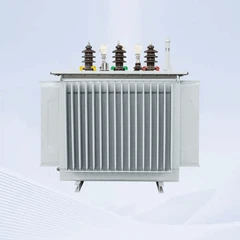
What is the temperature rise limit for a 630kVA three-phase oil-immersed transformer?
The temperature rise limit is one of the most critical factors affecting transformer lifespan and operational safety. Excessive temperature rise can accelerate insulation aging, reduce efficiency, and eventually lead to permanent transformer failure.
According to IEC 60076 and GB/T 6451 standards (Class A cellulose insulation, benchmark conditions: ambient temperature 40°C, altitude ≤1000 m), the typical temperature rise limits are as follows:
Average winding temperature rise: ≤ 65 K
Top oil temperature rise: ≤ 55 K (ONAN, GB/T 6451); IEC 60076‑2 allows up to 60 K top oil temperature rise for ONAN transformers. Please confirm the applicable standard in advance to eliminate acceptance discrepancies during inspection.
Core and structural parts surface temperature rise: ≤ 80 K (to avoid surface insulation contact damage)
Design reference hot-spot temperature: approximately 98 °C, with a typical hot-spot margin of around 23 K above average winding temperature.
Industry widely adopted 6 °C ageing rule: Each permanent 6 K rise above the designed hot-spot temperature will roughly double the insulation ageing rate and halve the expected service life.
Example: At a 40°C ambient temperature, a winding temperature rise of 65K means the average winding temperature may reach approximately 105°C. Continuous operation above this limit will significantly accelerate insulation ageing and raise the probability of overheating faults.
Note: Temperature rise limits shall be corrected for altitudes above 1000 m. For fully sealed transformers or sites with high ambient temperature (e.g., continuous 50°C), additional thermal margin design is required. GNEE can provide targeted temperature rise calculation according to actual project parameters.

630 KVA Transformer Drawing
Working in a hot climate or high altitude?
Get a revised temperature rise calculation tailored to your site.
Main Causes of Excessive Temperature Rise in a 630kVA Transformer
Several factors can cause a 630kVA transformer to exceed its temperature rise limit, potentially reducing insulation life and increasing the risk of failure.
Transformer Overloading
Operating above the rated 630kVA capacity generates additional winding losses and heat. Continuous overloading is one of the most common causes of excessive transformer temperature rise.
High Ambient Temperature
The temperature rise limit of a 630kVA transformer is typically based on a 40°C ambient temperature. In hot regions such as the Middle East, Africa, and Southeast Asia, higher ambient temperatures can significantly increase winding and oil temperatures.
Challenges in Tropical and Desert Climates:
The reference ambient temperature for temperature rise limits is set at a daily average of 40°C. However, in Southeast Asia (such as Vietnam and the Philippines), South Asia (India, Pakistan) and all GCC Gulf regions, the average summer temperature regularly exceeds 45°C. In these areas, the temperature difference for transformer heat dissipation (ΔT) is significantly narrowed, making temperature rise exceedance far more likely under the same load conditions.
Therefore, for export projects serving these regions, GNEE recommends designing transformers with sufficient temperature rise margin (a spare allowance of 5~10K) and equipping them with high-fire-point insulating oil (e.g., Beta oil) as standard configuration to improve thermal stability.
Harmonic Distortion
Non-linear loads such as VFDs, solar inverters, and industrial equipment produce harmonics that create additional losses and internal heating, causing the transformer to run hotter than expected.
Poor Ventilation
Insufficient airflow around the transformer can prevent heat from dissipating effectively. This is particularly common in indoor substations and confined installation spaces.
Cooling System Problems
Blocked radiators, low oil levels, oil leakage, or cooling fan failures can reduce heat dissipation efficiency and cause the transformer to exceed its allowable temperature rise limit.Regular monitoring and maintenance are essential to keep a 630kVA oil immersed transformer operating within safe temperature limits and ensure long-term reliability.
What Happens If a 630kVA Transformer Exceeds the Temperature Rise Limit?
The temperature rise limit is not simply a testing requirement. It directly determines the service life and operational safety of a transformer.
When the winding temperature continuously exceeds the design limit, the insulation system begins to age rapidly. Cellulose paper insulation becomes brittle, oil oxidation accelerates, and dielectric strength gradually decreases.
 If overheating continues for extended periods, the transformer may experience:
- Insulation degradation
- Reduced dielectric strength
- Winding deformation
- Increased oil aging
- Partial discharge
- Internal short circuits
- Permanent transformer failure
In severe cases, overheating can lead to catastrophic transformer burnout and complete replacement of the unit.
How Temperature Affects Transformer Life
Industry studies show that insulation aging accelerates significantly with increasing temperature.
A commonly accepted rule in transformer engineering is:
Every 6°C to 8°C increase above the rated hot-spot temperature may reduce insulation life by approximately 50%.
Example:
| Hot Spot Temperature | Estimated Insulation Life |
|---|---|
| 98°C | 20-30 years |
| 104°C | 10-15 years |
| 110°C | 5-7 years |
| 116°C | 2-3 years |
Although the transformer may continue operating, excessive temperature dramatically shortens its expected service life.
What temperature is too high for a transformer?
| Transformer Condition | Temperature Status |
|---|---|
| Below 90°C | Normal |
| 90-105°C | Acceptable |
| 105-120°C | High Temperature Warning |
| 120-140°C | Severe Overheating |
| Above 140°C | Critical Risk Zone |
Sustained operation above 120°C can cause irreversible insulation damage.
How to Prevent Excessive Temperature Rise in a 630kVA Transformer
Preventing excessive temperature rise is essential for maintaining the performance, efficiency, and service life of a 630kVA oil-immersed transformer.
Several practical measures can help keep the transformer operating within its allowable temperature rise limit:
- Avoid long-term overloading by ensuring the load does not exceed the rated 630kVA capacity.
- Monitor oil and winding temperatures regularly using temperature indicators or online monitoring systems.
- Provide adequate ventilation around the transformer to ensure efficient heat dissipation.
- Inspect and maintain the cooling system, including radiators, cooling fans, and transformer oil levels.
- Perform regular oil testing and preventive maintenance to detect insulation deterioration and overheating risks early.
- Control harmonic distortion caused by non-linear loads such as VFDs and solar inverters, which can generate additional heat losses.
For installations in hot climates or heavy-duty industrial applications, selecting a transformer with enhanced cooling capability can further improve thermal performance and reliability.
By following these practices, operators can reduce overheating risks, extend transformer lifespan, and ensure safe operation under varying load conditions.
630 kVA oil type transformer Specifications
| Product range | GNEE Electric |
|---|---|
| Product or component type | Transformer |
| Transformer type | Oil type transformer |
| dielectric liquid | Mineral oil |
| Network type | AC |
| Standards | IS 1180 |
| Type of installation | Indoor/outdoor |
| maximum altitude | < 1000 m |
| Cooling mode | ONAN (oil natural air natural) |
| Winding material | Copper |
| Degree of protection | IP00 corrugated IS 2099 IP00 corrugated IS 3347 IP55 low voltage cable box |
| Mounting mode | Ground mounted |
| Maximum ambient temperature | 40 °C |
|---|---|
| Ambient air temperature for operation | -6…40 °C |
| Ambient air temperature for storage | -6…40 °C |
| Environmental certification | 0…95 % |
Applications of 630 kVA transformer
A 630 kVA transformer is a widely used capacity for power distribution. It meets industrial electricity needs and offers strong versatility. It plays a significant role in different sectors of our society.

For example, machinery processing factories, electronic factories, hardware factories and small industrial parks.
→ Supports a typical workshop load of 400–550 kVA with 70–85% load rate.
Commercial Buildings
For example, shopping malls, office buildings and hotels. One 630 kVA transformer usually supplies power to one building or one area.
→ Covers 10,000 m² of mall space or a 20‑story office building (480–600 kVA demand).


Residential Area
Usually placed in the community power distribution room. One 630 kVA transformer can meet the daily electricity needs of 200 to 300 households.
→ Based on 2–3 kVA per household coincident peak demand.
Agriculture and Rural Areas
For example, livestock farm ventilation and lighting, agricultural product processing, irrigation pumps.
→ Handles 5–8 irrigation pumps (45 kW each) plus processing equipment with room for expansion.

GNEE Electric Customization Options
Electrical Parameters
· Voltage rating: 6–38.5 kV
· Winding material: Copper or Aluminum
· Vector group: Dyn11, Yyn0, Yzn11
· Energy efficiency level: Three levels are available for your choice
Structure & Installation
· Enclosure and protection class: IP20, IP44, IP54
· Installation type: Floor-mounted, Skid-mounted, Pad-mounted
· Cable entry: Can be customized according to wiring requirements
· Noise reduction design: Customizable low-noise structure
Special Functions & Accessories
· Monitoring and protection devices: temperature monitoring, humidity monitoring, overcurrent protection
· Cooling system: ONAN,ONAF,AN,AF
· Special environment adaptation: High altitude, Low temperature, etc.
· Customized logo and packaging: Customized according to your requirements


Optional Accessories
Transformer accessories play a crucial role in operation monitoring, safety protection and daily maintenance. They are indispensable components that can help ensure the long-term stable operation of transformers.
➡️ Oil Level Indicator
➡️ Oil Temperature Indicator
➡️ Pressure Relief Device
➡️ Buchholz Relay
➡️ Radiator
➡️ Different Types of Bushings
...


Why Choose GNEE Electric?
- Certified Quality – National High-Tech Enterprise. All 630kVA transformers comply with IEC 60076 & GB/T 6451. Temperature rise: winding ≤65K, top oil ≤55K, core ≤80K.
- Custom Design – Voltage 6–38.5kV, Cu/Al windings, Dyn11/Yyn0/Yzn11, IP20–IP54, ONAN/ONAF, plus full accessories (Buchholz, oil indicator, etc.).
- Application-Proven – 630kVA supports 200–300 homes, 10,000m² mall, 5–8 irrigation pumps, or medium factory loads at 70–85% rate.
- Full Transparency – Detailed drawings, full spec sheet (IS 1180, 11/0.433kV, Dyn11, 2920kg), and free load calculation.
Choose GNEE for a transformer tailored to your project – not adapted from stock.
From golden capacity selection and certified temperature rise limits to IEC-compliant performance and full customization – GNEE delivers a 630kVA transformer that fits your real-world conditions, not just a datasheet.
Still comparing suppliers or waiting for unclear quotes?
Let's talk. Send your project specs – we'll reply with a clear proposal, drawings, and budget within 24 hours.


FAQ
Is temperature rise the same as transformer temperature?
No. Temperature rise refers to the difference between transformer temperature and ambient temperature.
What is the maximum allowable temperature for a 630kVA transformer?
Typically around 105°C winding temperature under IEC conditions.
How long can a transformer operate above the temperature rise limit?
Short-term emergency overload may be acceptable, but continuous operation above design limits significantly reduces service life.
Can a transformer recover after overheating?
Temporary overheating may not cause immediate failure, but repeated overheating permanently accelerates insulation aging.
Why do transformers fail due to overheating?
Because excessive temperature destroys insulation, leading to dielectric failure and internal short circuits.
what is 630 kva transformer?what does 630 kva mean?
The 630 kVA transformer is a distribution equipment with a rated capacity of 630 kVA. kVA is the abbreviation for kilovolt-ampere, which is the unit of apparent power. Its main function is to change voltage, transmit and distribute electrical energy. It's most common function is to convert high-voltage electricity into low-voltage electricity for daily use. It is often installed in places with medium electricity consumption to supply stable power.
What is 630 kVA transformer load capacity?
Load capacity is different from rated capacity.
Rated Capacity is a fixed value set by the manufacturer, for example, the rated capacity of a 630 kVA transformer is exactly 630 kva. It is the maximum capacity that the equipment can operate stably for a long time under ideal conditions, and the value remains unchanged.
Load Capacity shows how much load the transformer can actually handle. It is dynamic and can be affected by actual working conditions. When the environment has good ventilation, low temperature, or is operated for a short period of time, the load capacity can be slightly higher than the rated capacity (for example, a short-term overload of 10% to 20%); when the environment temperature is high, the heat dissipation is poor, or there is loads with low power factor, the load capacity can be lower than the rated capacity.
What is the no load loss of a 630 kVA transformer?
No-load loss is a fundamental type of loss for a transformer. It is part of the power dissipated by 630 kva transformer. The no-load losses of different transformers are different.
No-load loss refers to the electrical energy loss generated when the transformer is connected to the rated voltage and the secondary side is in an open-circuit state, that is, without any electrical equipment attached. This loss mainly comes from the hysteresis loss and eddy current loss of the core.
As long as the transformer is powered on, no matter if it carries loads or not, this part of loss will remain stable. The extent of the loss is closely related to the material and manufacturing process of the core. Cores made of better material have lower no load loss.
Send Inquiry